How to Build a Stunning Hangzhou Display Model: West Lake & Water Town Brick Guide
A full how-to for Hangzhou-themed brick builds — West Lake, water towns and landmark pavilions: prep, base, bridges, roof alignment and display tips for adult collectors.
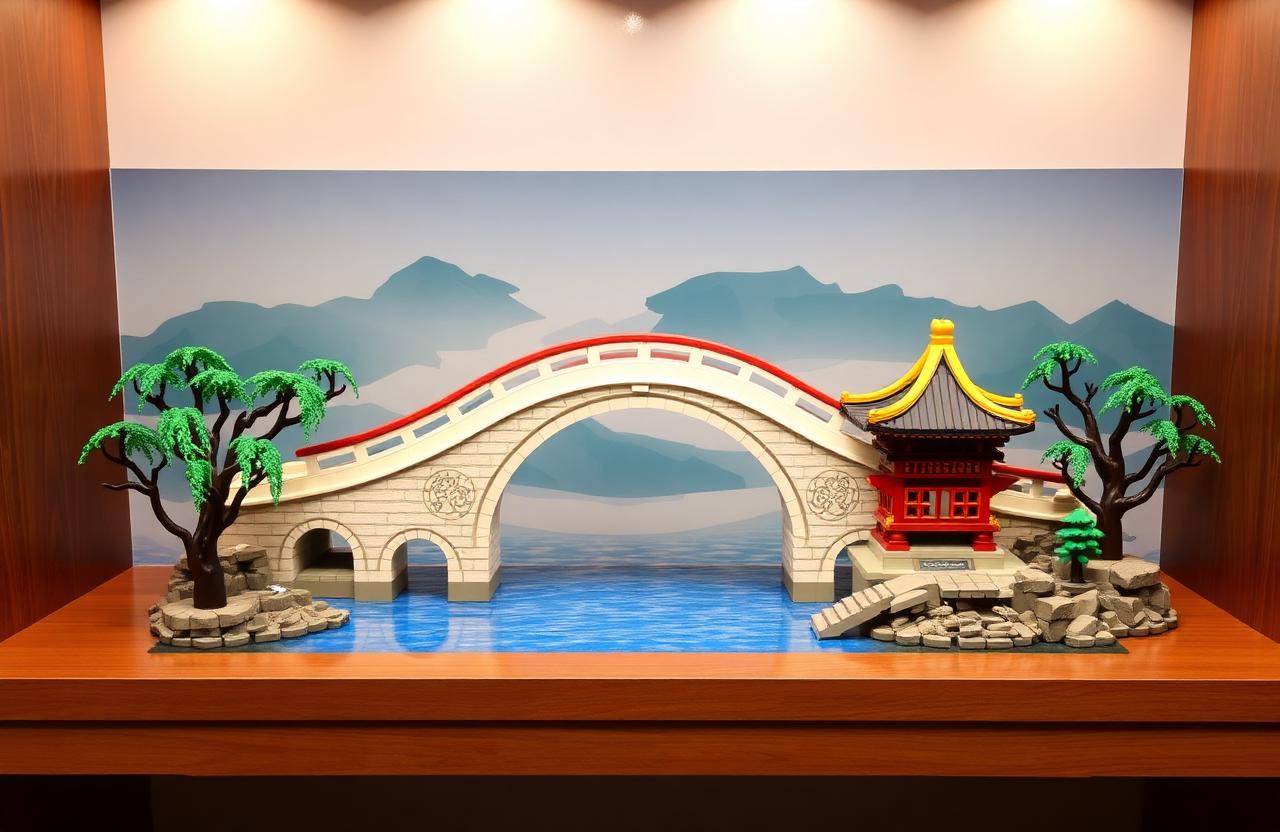
Historical Architecture Series. Display build. Collector appeal. Clear steps.
If you enjoy architectural sets with real atmosphere, this guide is for you. Not just piece placement. Better planning. Better structure. Better final display. A waterside model based on Hangzhou gives you layered roofs, bridges, walkways, shoreline details, and the balance between open space and dense structure.
If your next project includes West Lake building blocks, a Hangzhou landmark brick model, or a Chinese water town building set, this walkthrough will help you build faster and cleaner. Browse more architecture-driven sets on our premium brick collection.
Why Hangzhou-Inspired Brick Models Build Differently
Vehicle sets move fast. Character sets are simple. Waterside architecture is different. A Hangzhou-themed model usually combines water surfaces, bridges or causeways, pavilions and rooflines, trees, lanterns and shoreline details, repeating wall or railing sections, and an open scenic composition.
You are not only making one object — you are building a scene. If the bridge sits one stud off, the path may not align. If the pavilion base shifts slightly, the roof can look uneven. Scenic architecture rewards method over speed. For hobbyists in Europe and North America, these sets also have strong display value — a well-built waterside scene looks more like decor and less like a toy.
What to Prepare Before You Open the Bags
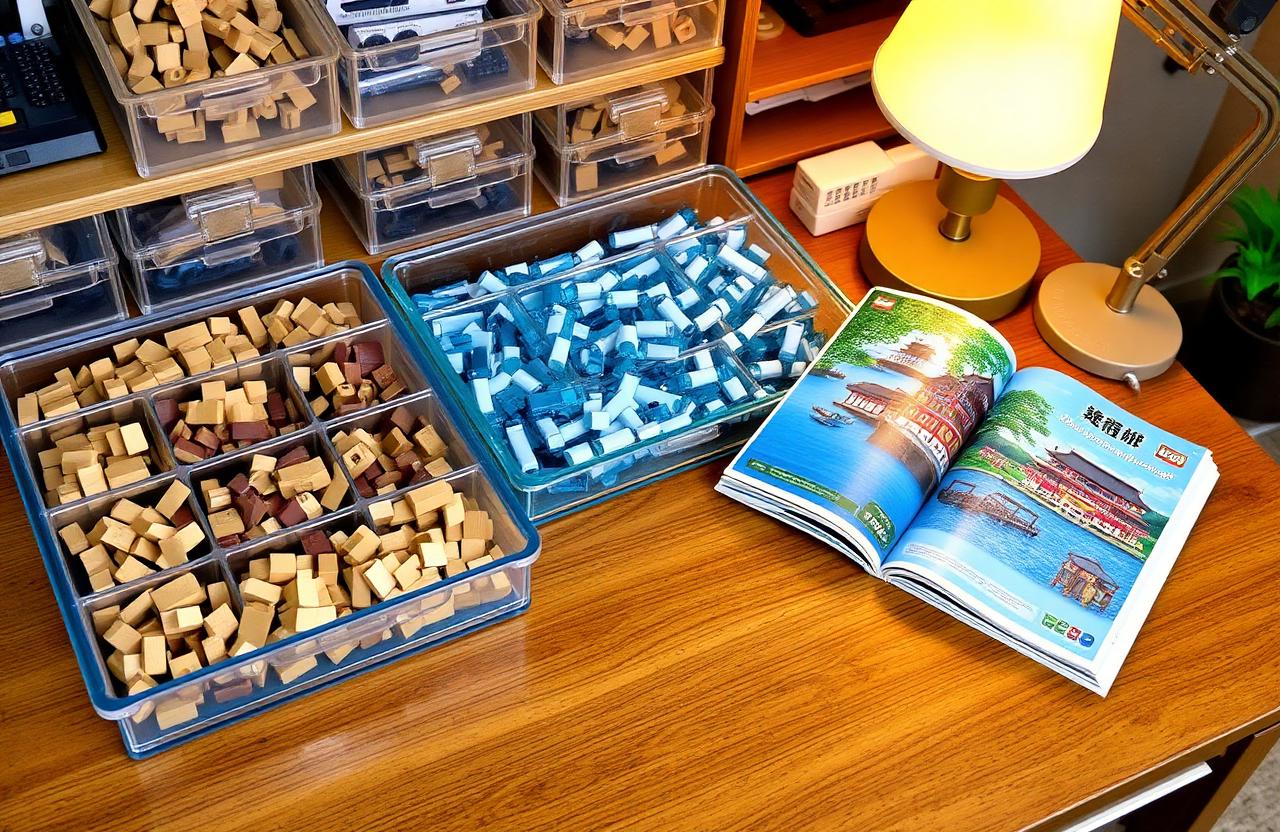
Clear a large, flat workspace with room for the booklet, open part trays, finished mini-sections, spare pieces and the main base area. Use neutral daylight or a bright desk lamp so you can tell tan, dark tan, brown, light blue and gray apart. Sort by function: base plates, standard bricks, tiles, slopes and curves, roof elements, decorative pieces, transparent or water-effect parts, and small connectors. This is especially useful with West Lake building blocks, where scenic sets switch back and forth between structure and decoration. Scan the full instructions before starting to spot repeating modules, symmetrical areas and fragile decorative steps.
Step 1: Build the Base Like It Matters, Because It Does
Every scenic model stands or falls on its base. Waterline, shore edge, path layout, pavilion footprint and bridge location all start here. When working on a Chinese water town building set, focus on flat plate connection, straight outer edges, secure overlap and correct stud placement for later details. Pro tip: lower your eye line to table level — you can spot warping or uneven areas more easily from the side than from above.
Step 2: Build the Water First, Then Protect Its Clean Look
Water elements look simple. They are not. The water area creates mood, frames the architecture and makes every nearby mistake easier to notice. Keep transparent or blue tiles in separate trays, wipe dust from your table first, avoid scratching glossy pieces, and match orientation if the set uses patterned tiles. With West Lake building blocks, the water is part of the composition — finish one water section fully before moving on, and handle the model from the underside while this section is exposed.
Step 3: Assemble Repeating Architectural Sections in Batches
Railings, wall segments, roof corners, pillars, steps, lamps and bridge supports often repeat. Build one carefully, then repeat. This assembly-line method saves time and improves visual consistency. But watch for mirrored sections — not every repeated piece is truly identical, especially roof corners and stair assemblies. For more precision tips, see our complete adult building block guide.
Step 4: Build Pavilions and Landmark Structures as Separate Modules
A good scenic set divides cleanly into modules: pavilion base, wall frame, roof layer, entry steps and side deck. Build each completely, then connect. Module-first building gives easier handling, better angle checking and cleaner corrections. This matters most when the model includes layered roofs — once attached to the main base, they become awkward to hold without stressing fragile clips.
Step 5: Watch Roof Alignment More Than You Think You Need To
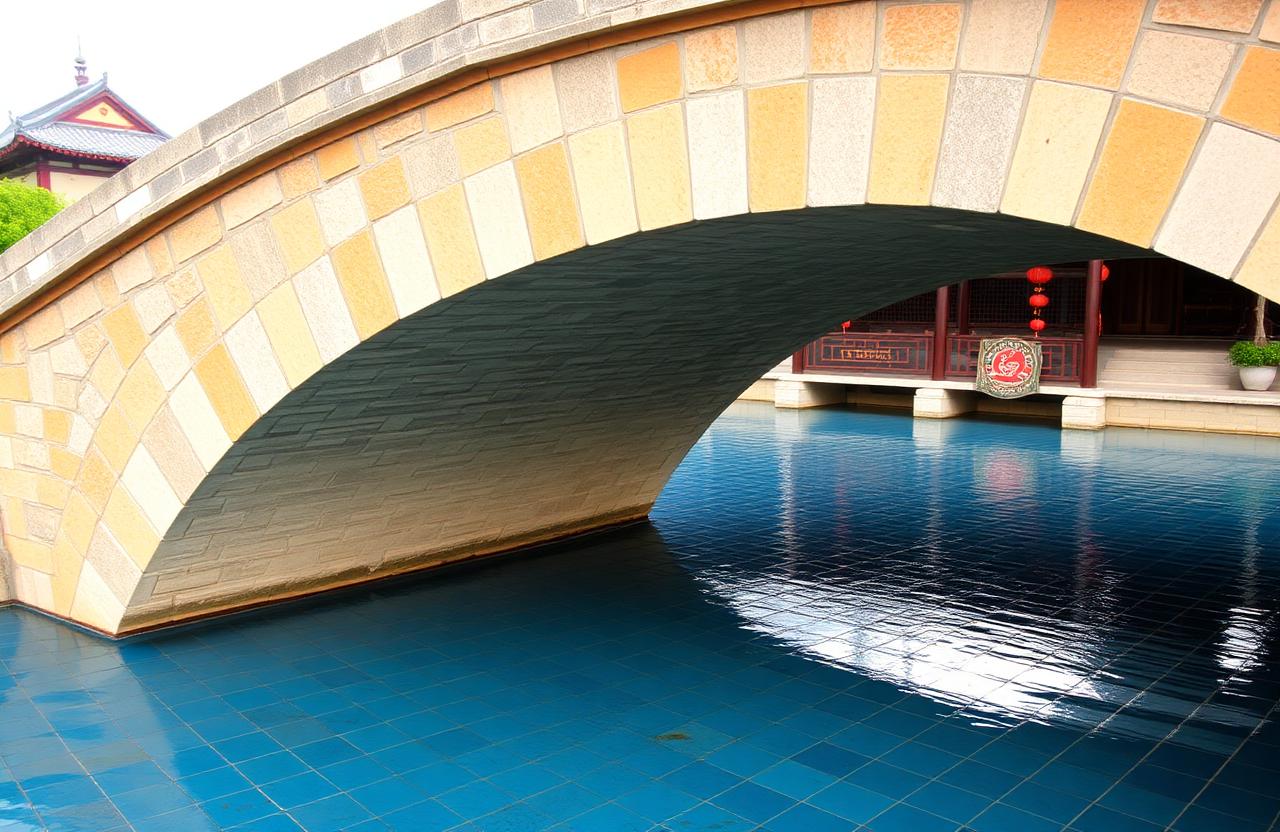
Traditional East Asian architecture lives or dies on roof shape. Confirm left and right sides match, slope pieces sit at equal angles, decorative tips are mirrored correctly, roof tiles run in the same direction, and the upper roof sits centered on the lower support. Check from all four sides — front view is not enough. If something feels tight, stop. Roof misalignment usually means a support column is one plate too high, a clip is reversed, or a decorative layer is blocking the fit.
Step 6: Use the Scene to Guide the Build Order
A balanced West Lake building blocks display follows visual logic: base and water, main path or bridge, central pavilion or landmark, secondary structures, trees and shoreline details, then small finishing accents. Knowing the visual center — usually a bridge, pavilion, waterside platform or landmark gateway — helps you protect the most visible area as the build grows.
Step 7: Build Bridges with Patience, Not Speed
Bridges are high-risk sections — narrow supports, repeated slopes, decorative rails and curves over open water. A bridge in a Chinese water town building set is usually the point that draws the eye first. Build the support structure first, test stability before adding side detail, install the walking surface, add rails last, and attach the bridge to the scene only after a final symmetry check. Common mistake: adding side decorations too early — it makes the bridge harder to handle and easier to bend.
Step 8: Place Decorative Details Last, Not First
Scenic builds tempt you to decorate early. Resist that. Trees, lanterns, flower elements, boat accessories, fence caps, small dock pieces, micro statues and signboards are the parts most likely to get knocked loose while you finish the main structure. Late-stage detailing means fewer broken connections, better visibility when installing core structure, and cleaner spacing of final elements. Decoration should finish the scene, not interrupt the build. For more scenic build techniques, see our Suzhou garden building guide.
Step 9: Check Color Rhythm Across the Whole Model
Scenic architecture depends on visual rhythm — not just structure. Color rhythm in West Lake building blocks comes from balancing blue water, tan or gray paths, dark wood tones, roof color accents and greenery placement. Pause after each major section and ask: is one side visually darker? Are both roof accents placed evenly? Does the shoreline feel balanced? Does the water still read as open space?
Step 10: Build in Sessions for Better Accuracy
Large architecture scenes are better in sessions. A smart plan: Session 1 — inventory, sorting and base. Session 2 — water, shoreline, paths and terrain. Session 3 — pavilion or landmark core, walls and supports. Session 4 — roofs, bridge and secondary structures. Session 5 — decorative details, final inspection and display setup.
Common Mistakes When Building Hangzhou-Style Sets
Rushing the shoreline: rebuild the transition slowly and confirm tile height before moving on.
Installing trees too early: save all greenery for the final stage.
Ignoring roof symmetry: compare left and right slopes before attaching decorative roof tips.
Treating repeated modules as random: build in batches and compare before placement.
Handling the set by the bridge or roof: always lift from the base with two hands.
How to Make the Finished Model Look Better on Display
Use a clean base — wood shelf, matte black riser, neutral acrylic stand or glass display shelf. Pick a hero angle: front three-quarter, bridge-forward, centered pavilion or shoreline diagonal. Warm directional indoor light flatters architectural models and adds depth to roofs and textured paths without making water too reflective. Add a simple label card with model name, theme, build date and inspiration source. Compare alternative architectural sets in our guide to premium brick brands and our Temple of Heaven build guide.
How Families, Adult Hobbyists, and Collectors Can Build the Same Set Differently
Adult hobbyists: sorting efficiency, build accuracy, structural logic and display finish — solo build in planned sessions. Families: shared activity and patience — divide tasks so one sorts, one reads instructions, one builds repeated modules and one checks finished sections. Collectors: clean assembly, theme accuracy, dust control and shelf impact — slower build, fewer corrections, careful placement. Custom builders: build the original first, then modify with extra trees, extended shoreline or lighting add-ons.
Why Hangzhou-Inspired Models Stand Out in Western Collections
Distinct silhouette. Strong atmosphere. Cultural depth. A lot of brick collections in Europe and the US lean heavily toward vehicles, mechs, castles or modern skylines. A scenic Chinese architectural model brings something different to the shelf — open composition instead of visual clutter, water and architecture together, strong seasonal display potential, and more conversation value than generic city builds. Explore more culturally inspired models in our Chinese palace building guide.
Final Build Checklist
Before you call the set finished: base sits flat, water tiles aligned, bridge centered, roof lines matched, decorative pieces secure, color balance even, no extra parts beyond normal spares, and display angle selected.
Conclusion
A Hangzhou-inspired brick build works best when you treat it like a full scene, not just a set of separate steps. Start with a flat, stable base. Keep the water area clean. Build structural modules carefully. Watch roof symmetry. Leave decorative pieces for the end. Whether you are working through West Lake building blocks, building a Hangzhou landmark brick model, or assembling a Chinese water town building set, slow, organized building creates a stronger final result.
FAQs
1. Are Hangzhou-themed building sets good for beginners?
Some are. Smaller scenic models with simple pavilions and fewer tiny details are beginner-friendly. Larger waterside displays with bridges, layered roofs and landscaping are better for intermediate or advanced builders.
2. What is the hardest part of building a Chinese water town model?
Usually the roof alignment and bridge installation. These sections combine structure and decoration, so small mistakes are easier to see in the finished model.
3. How should I display West Lake building blocks after finishing the set?
Use a clean shelf with soft lighting and enough open space around the model. A front-angle or diagonal bridge view usually shows the scene best.
4. How long does a Hangzhou landmark brick model usually take to build?
Smaller sets may take 3 to 5 hours. Larger scenic architecture sets can take 8 to 15 hours or more if you sort parts carefully and build in stages.
5. Can I customize a Chinese water town building set?
Yes. Common upgrades include extra trees, extended shoreline sections, lighting and larger display bases. Build the original design first, then modify it so the scene stays visually balanced.