How to Build Great Wall Models That Look Better and Last Longer
Step-by-step guide to building a Great Wall of China block model — sorting, base structure, towers, slope transitions, reinforcement, and display tips.
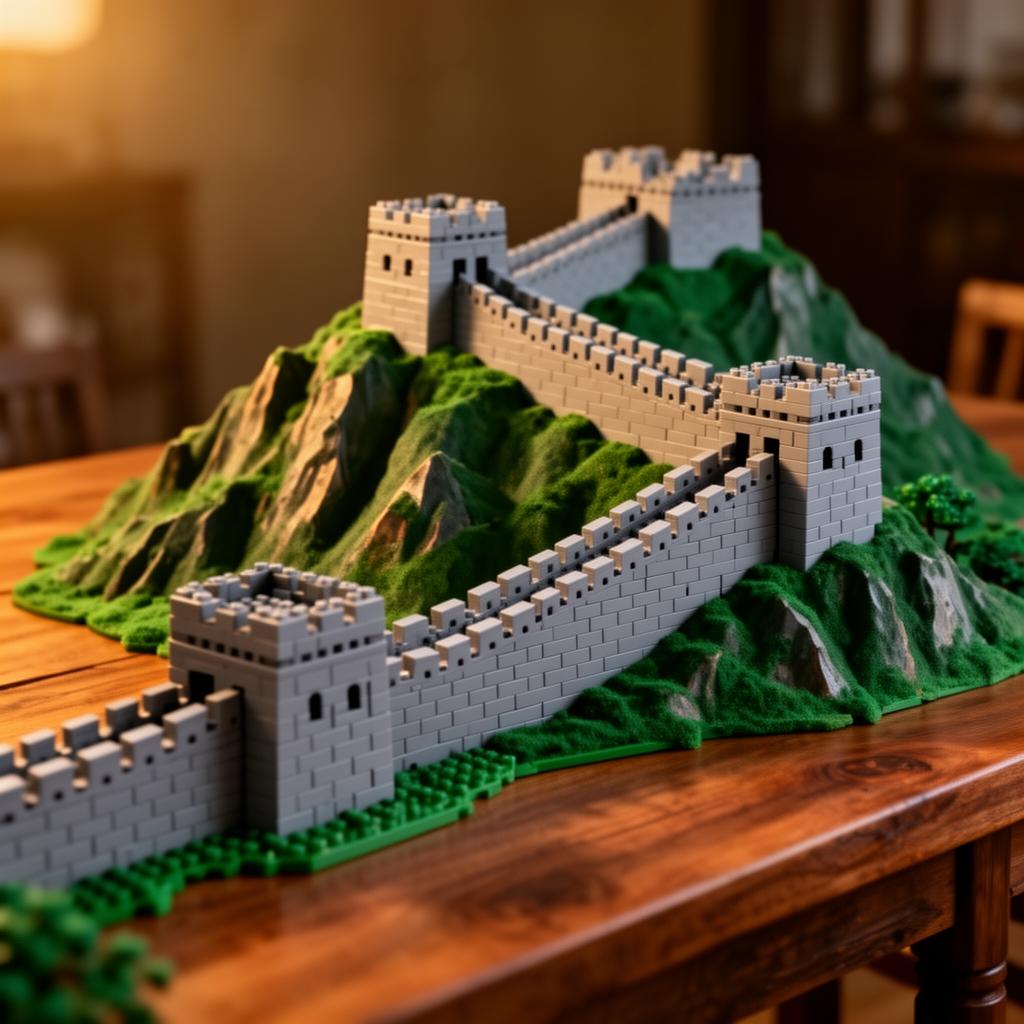
A Great Wall build looks simple at first. Long wall. Repeated stone texture. A few towers. Maybe a mountain base. Then you open the box.
More slopes than expected. More repetition than a castle set. More alignment checks than a city build. And if the terrain is uneven, one small error near the start can throw off the whole line of the wall later. That is why this guide matters.
If you are working on a Great Wall of China building set, a Great Wall brick model, or a display made from Ancient China wall blocks, the best result comes from method, not speed. You need a clean build sequence, a strong base, and a plan for long repeated sections.
This how-to guide shows you how to build Great Wall models step by step. You will learn how to sort parts, handle terrain sections, keep towers square, reinforce weak spans, and display the final model without sagging or breakage. For more architecture-themed builds, browse our premium brick collection.
Why Great Wall Builds Feel Different
A Great Wall model is not built like a temple, vehicle, or modular street scene. Most designs depend on three visual ideas: long horizontal lines, repeated defense sections, and terrain-driven elevation changes. Instead of one central structure, you build a chain of connected segments. Your main challenge is not just assembly — it is consistency.
With a Great Wall brick model, the eye notices uneven parapets, twisted wall segments, stair-step errors on slopes, towers that sit slightly off-center, and texture breaks in repeated stonework. Small mistakes repeat fast. Good habits matter early. For background on related historical sets, see our guide to building Chinese palace blocks.
What You Need Before You Start
Category first. Workspace second. Build third.
- A flat table with enough length for laid-out sections
- Bright overhead light
- Small trays or bowls
- A soft brush for dust during display prep
- Extra space for manuals and finished modules
- Two hands free when moving long sections
If your set uses many gray shades, daylight or a strong white lamp helps. Light bluish gray, dark gray, and textured slopes can look very close under weak lighting. Build for the final footprint, not just the first bag — a Great Wall of China building set often expands sideways more than expected.
Step 1: Check the Set Before Building
Do not dive into Bag 1 right away. First, scan the full set and confirm the main piece groups are there: base or terrain plates, structural bricks, slopes, tiles, parapet pieces, hinges or angle connectors, and decorative elements for gates, flags, or stairs. Quick check, better flow.
Step 2: Sort Pieces by Job, Not Only by Color
Many builders sort by color first. For Great Wall sets, that is only half useful. Gray dominates most builds — if you throw all gray parts together, you slow yourself down.
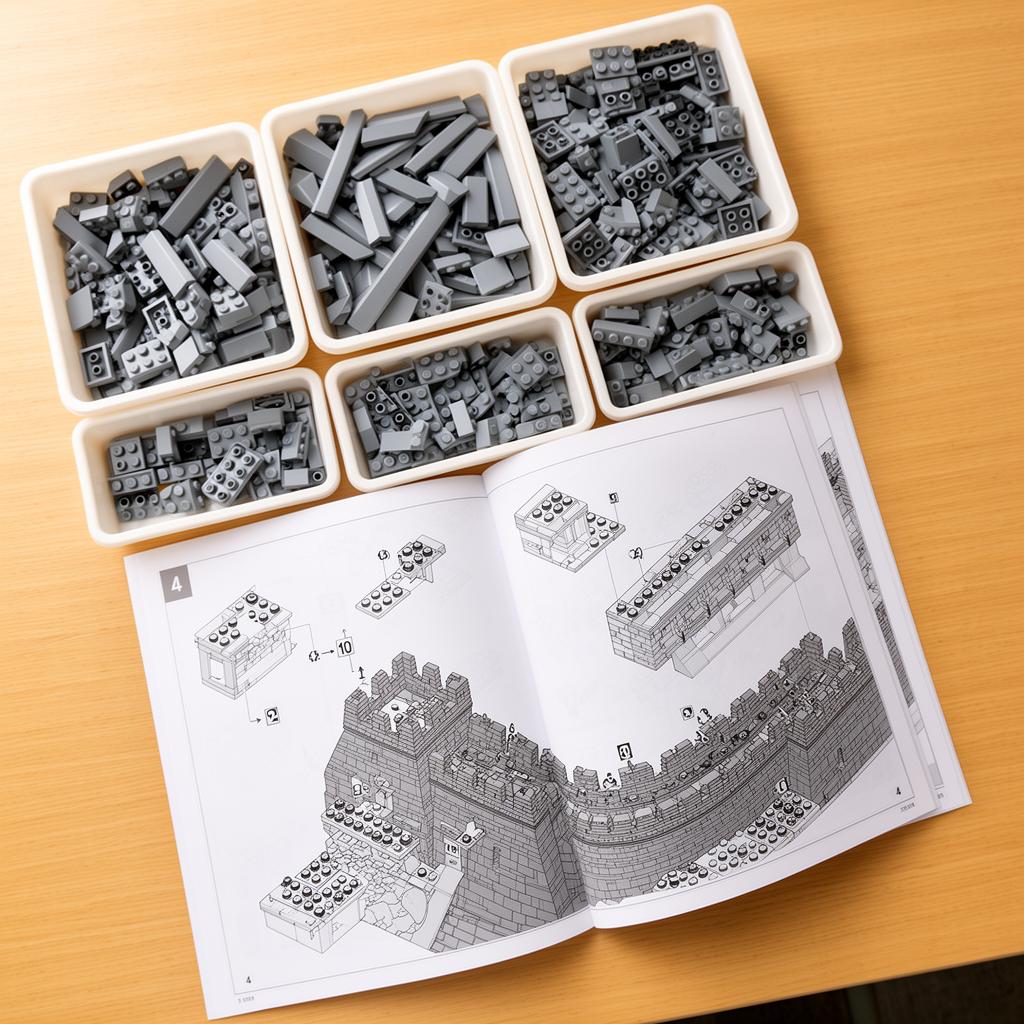
Use separate trays for structural bricks, plates, slopes and wedges, tiles and surface finishers, tower-specific parts, small detail pieces, and hinge or angle connectors. This method works especially well for Ancient China wall blocks because those sets often hide their complexity in shape, not color.
Step 3: Read Ahead Before Each New Terrain Section
A Great Wall model usually changes in one of three ways: flat wall run, incline or descent, or tower transition. Before each new type, read a few pages ahead to spot where the terrain changes, whether the wall mirrors back later, and how the current segment locks to the next one. Read ahead. Spot the change early. Avoid rebuilds.
Step 4: Build the Base Like a Structural Spine
The base does more work than the visible wall. It holds the terrain shape, keeps the line straight, and prevents long sections from flexing when lifted. Press each plate layer down fully, stagger seams when possible, and reinforce long runs with overlapping plates. After every major base section, lift it gently from both ends — if it bends too much, add support before moving on.
Step 5: Treat Towers as Anchors
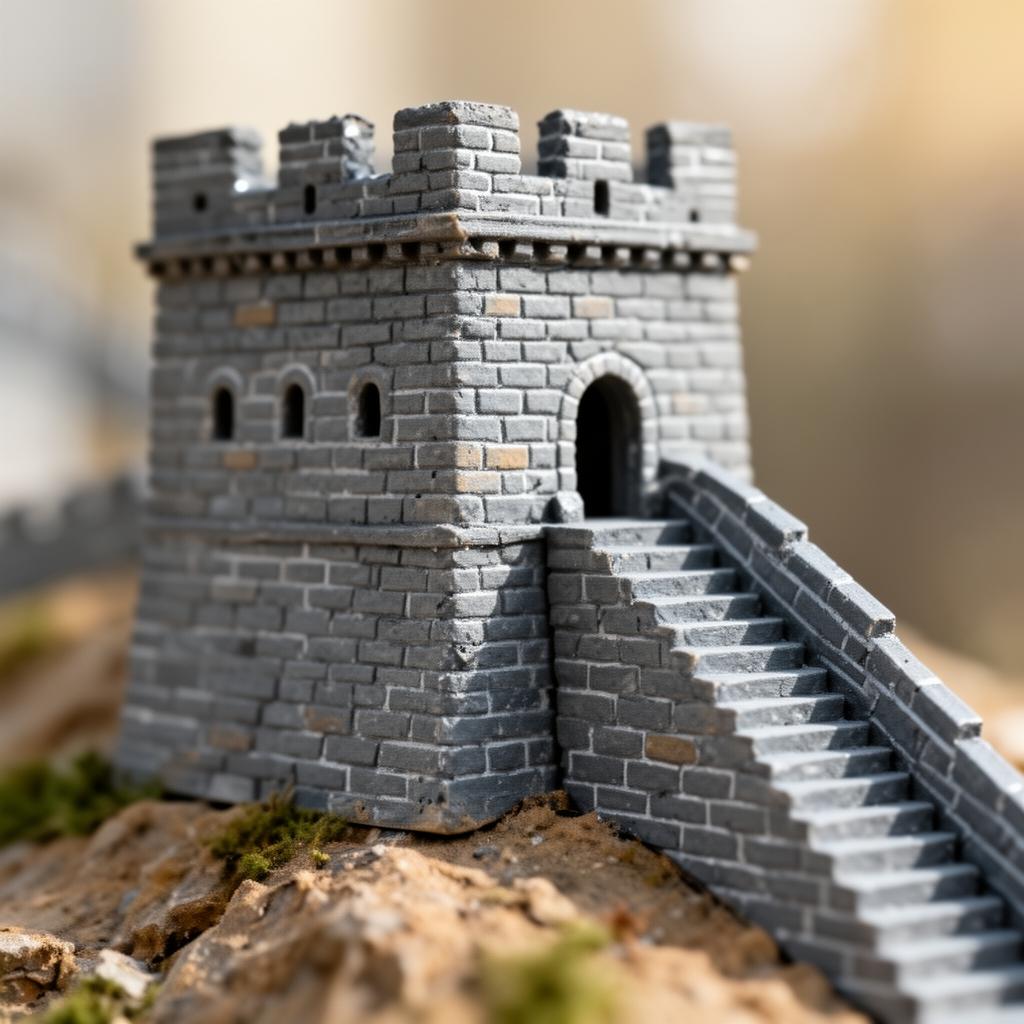
In a Great Wall build, towers are not just decoration — they are anchors. They break up repetition, keep the wall line straight, and lock together terrain sections. Make sure the base footprint is fully square, check corner alignment before adding height, and test-fit the walkway connection before sealing the tower top. A tower that is off by one stud can distort two wall sections at once.
Step 6: Keep Long Wall Runs Straight
Long straight sections look easy. They are not. The problem is gradual drift — a tiny shift in one segment turns into a visible bend later. Build on a flat, stable surface, compare each new section to the previous one, use the top walkway as a visual guide, check parapet height every few segments, and count studs at transition points. This matters in every Great Wall of China building set, but especially in display models meant for shelf presentation.
Step 7: Handle Slopes and Elevation Changes With Care
This is where many Great Wall builds become interesting — and where many mistakes begin. Common slope problems include uneven stepping, loose hinge sections, gaps under the wall shell, parapets that rise at different rates, and tower connections that sit too high or low.
Build the hidden support first. If the instructions show terrain and wall skin together, slow down and confirm the support structure before adding visible texture. Test angle connections early — hinges and angled plates can look correct before they are fully seated. Check the top path: the walkway is the easiest way to see whether the slope feels right. A Great Wall brick model often looks best when the climb feels smooth, even if the terrain is rugged.
Step 8: Use Repetition to Your Advantage
Great Wall builds repeat by design. Treat repetition as a system: identify the core brick stack, the outer stone texture, the parapet pattern, and the top path finish — then repeat only after checking the first section carefully. This works very well for Ancient China wall blocks because many sets are built on a modular rhythm. Do not let repetition turn into autopilot — repeated does not mean identical. For more on managing complex builds, see our complete adult building block guide.
Step 9: Make Stone Texture Look Better
The best Great Wall models do more than stand upright — they look like stone. Mix visible textures evenly across repeated sections, avoid placing identical slope clusters side by side when optional variation exists, keep edge lines rough enough to look natural but not random, and use darker elements to suggest depth in lower areas. A strong Great Wall of China building set should feel architectural first and decorative second.
Step 10: Reinforce Weak Points Before Final Assembly
Before you call the build finished, inspect wall-to-tower connections, long unsupported spans, hinge transitions on slopes, top parapets, stair assemblies, decorative gate sections, and underside terrain supports. Press all top layers down again, make sure every tower is seated flat, and look for leftover structural pieces that should not be spare. A spare hinge, bracket, or major connector is a warning sign.
Step 11: Move the Model Without Breaking It
A completed Great Wall brick model is often longer than it is strong — the biggest risk comes after the build is done. Lift from underneath with both hands, support near towers or thicker terrain sections, never hold the model by parapets, and never pick it up from one end only. If your model is very long, use a tray or board underneath for transport. Plan the display location before final assembly ends.
Step 12: Display the Great Wall the Right Way
A Great Wall model does not read well when squeezed between unrelated builds. Front-facing or slight angle view, enough width to show the full run, stable shelf, no direct sunlight, and eye-level or slightly below for the best terrain view. A Great Wall of China building set usually looks best from a direct side-front angle to show wall length and towers, or a slightly elevated angle to reveal terrain steps. For more landmark display tips, read our Eiffel Tower display guide.
Common Mistakes to Avoid
- Rushing the first wall section — it teaches the pattern for the rest of the build
- Ignoring drift — a small bend becomes obvious over a long run
- Treating every repeated section as identical — one changed connector can affect the next tower
- Underbuilding the terrain — a weak base causes cracks later
- Forcing slope sections — if the angle resists, something below is misaligned
- Lifting by the top — parapets and walkway edges are not handles
- Displaying on an uneven shelf — a long model shows tilt fast
How to Make the Build More Enjoyable
A Great Wall project should feel steady, not rushed. Most builders get a better result when they break the project into clean sessions: base and first wall logic, main repeated wall sections, towers and slope transitions, and final texture and display. For builders comparing premium options, our guide to premium alternative brands helps you pick a quality architecture set.
Why Great Wall Models Appeal to Western Collectors
The Great Wall combines history, symmetry and asymmetry in balance, terrain drama, military architecture, repeatable structure, and strong display value. For European and American builders, that creates a useful mix — different from castles, cleaner than many fantasy builds, and more structural than most decorative landmarks. A well-designed Great Wall brick model rewards builders who like order.
Conclusion
A Great Wall build rewards patience more than speed. Sort by function, read ahead before terrain changes, reinforce the base, keep towers square, check long wall alignment often, treat slope sections carefully, and inspect weak points before display. Whether you are building a Great Wall of China building set for a shelf display, assembling a Great Wall brick model as a weekend hobby, or exploring Ancient China wall blocks as part of a historical collection — build in sections, check often, move carefully, display with space. Clean line. Strong base. Better result.
FAQ
Is a Great Wall model good for beginners?
Some smaller versions are beginner-friendly, but many are better for intermediate builders. A large Great Wall of China building set often includes repetitive structure, terrain angles, and long alignment checks.
What is the hardest part of a Great Wall brick build?
Usually the slope transitions and long wall alignment. One small error in the terrain or hinge section can affect the next few modules.
How long does it take to build Ancient China wall blocks?
That depends on piece count and model size. Smaller sets may take a few hours. Larger displays often take multiple sessions across a weekend or longer.
How do I keep my Great Wall model from breaking when I move it?
Support it from the bottom with both hands. Lift near tower sections when possible. Never move it by the parapets or from one end only.
What makes Great Wall models good for display?
They have strong horizontal lines, repeated towers, and terrain depth — they look structured, historical, and clean from several viewing angles.