How to Build a Chinese Herbal Medicine Shop with Building Blocks
Step-by-step guide to building a traditional Chinese herbal medicine shop brick model — the hundred-drawer cabinet wall, counter props, roof, and display tips.
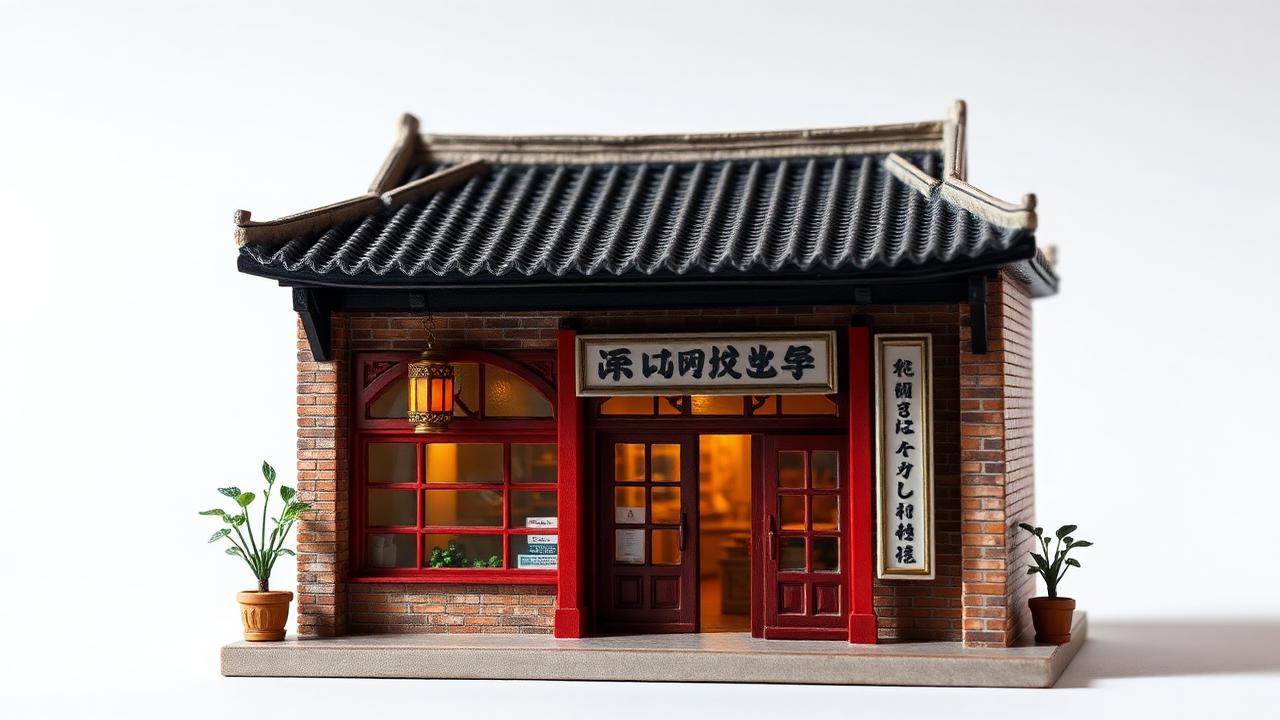
Old apothecary halls carry centuries of history. Wooden drawer walls. Brass scales. Jars of dried roots and herbs. Recreating one in brick form is a rewarding build for anyone who loves detail, culture, and a little challenge.
This guide walks you through building a Chinese herbal medicine shop from the ground up. You'll learn the history behind the design, the parts you need, a step-by-step method, and display tips that make the finished model shine.
- Historical background and design references
- Parts, colors, and techniques for authentic detail
- A step-by-step building sequence
- Common mistakes and how to fix them
- Display and photography ideas
The History Behind the Model
A traditional Chinese pharmacy is more than a store. It's a working hall where herbalists weigh, mix, and prepare remedies. These spaces date back over a thousand years and follow a recognizable layout.
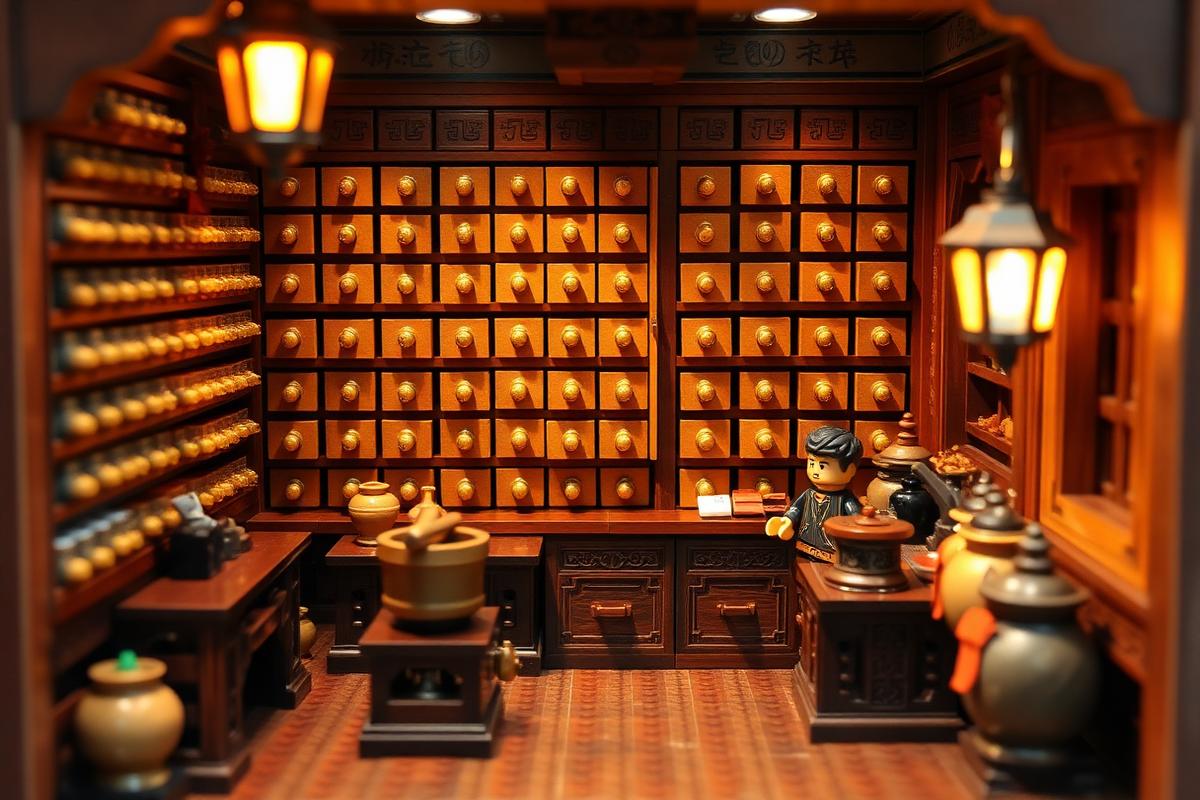
The back wall holds the bai yao gui — the hundred-drawer cabinet. Each small drawer stores a different herb. A tall wooden counter runs across the front. A brass hand scale, mortar and pestle, and ceramic jars fill the workspace.
Colors matter here. Deep reds, dark wood browns, gold trim, and cream walls define the look. Understanding these features helps you plan a convincing Ancient medicine hall model before you place a single brick.
Micro-takeaway: Study the real layout first. Authentic proportions make the biggest difference.
Plan Your Build
Good models start with a plan. Decide the scale, footprint, and level of detail before you buy or sort parts.
Choose a Scale
- Minifigure scale: Larger, easier to detail, great for interior scenes.
- Micro scale: Compact, ideal for shelf display and modular streets.
Minifigure scale suits most collectors. It gives room for drawers, counters, and tiny props. Micro scale fits better into a wider city diorama.
Set a Footprint
A standard modular baseplate of 32x32 studs is a strong starting point. It leaves space for a counter, cabinet wall, and a customer area. If you want a two-story hall, stack a second floor for storage or a tea room. Browse reference sets and building ideas at our product catalog and building blocks for adults hub before you lock in your dimensions.
List Your Colors
- Dark brown and reddish brown (wood tones)
- Tan and dark tan (walls and floors)
- Gold or pearl gold (trim and signage)
- Dark red (doors, banners, accents)
- White and sand green (jars and details)
Micro-takeaway: Sort parts by color and size before building. It saves hours later.
Gather Your Parts
The right pieces bring authenticity. You don't need rare elements — clever use of common bricks does most of the work.
Essential Elements
- 1x2 and 1x1 tiles: Smooth counter and floor surfaces.
- Drawer or cabinet elements: The hundred-drawer wall is your centerpiece.
- Grille and lattice pieces: Window screens and door panels.
- Round 1x1 plates and tiles: Herb jars, coins, and small props.
- Cheese slopes (1x1): Roof tiles and decorative edges.
- Arches and rounded bricks: Traditional doorway shapes.
Quality parts matter for a build this detailed. High-clutch bricks hold tight surfaces and stay put during display. Explore compatible Traditional pharmacy blocks and specialty parts across our full catalog.
Optional Detail Pieces
- Printed tiles for signage and scrolls
- Transparent 1x1 rounds for jar lids
- Minifigure accessories: baskets, bowls, brooms
- Plant elements for dried herbs and bundles
Micro-takeaway: Substitute freely. A round tile becomes a coin, a jar lid, or a lantern base.
Step-by-Step Building Guide
Now the fun part. Build in layers, from the floor up. Test each section before you move on.
Step 1: Lay the Foundation
Start with your baseplate. Add a plate layer to define the floor. Use tan or dark tan tiles for the shop floor and a different shade for the customer walkway. This visual split guides the eye and separates work and service areas. Leave a clear front edge for the entrance. Mark the counter position now so the layout stays balanced.
Step 2: Raise the Walls
Build the side and back walls to at least 8 bricks high. Minifigure-scale interiors need headroom for the cabinet and props. Use tan for plaster walls. Frame the corners with reddish brown to mimic wooden beams. This contrast reads as classic post-and-beam construction, a hallmark of any Ancient medicine hall model. Leave gaps for windows on the side walls. Fill them with grille or lattice pieces for that carved-screen look.
Step 3: Build the Hundred-Drawer Cabinet
This is the heart of the shop. Line the back wall with drawer elements or stacked 1x2 tiles arranged in a grid. Aim for a tall, uniform pattern — rows of small squares that suggest dozens of herb drawers. Add tiny gold or tan handles using round 1x1 plates. Cap the top with a decorative cornice using cheese slopes and tiles. The repetition is what sells the effect, so keep the grid tight and even.
Step 4: Construct the Counter
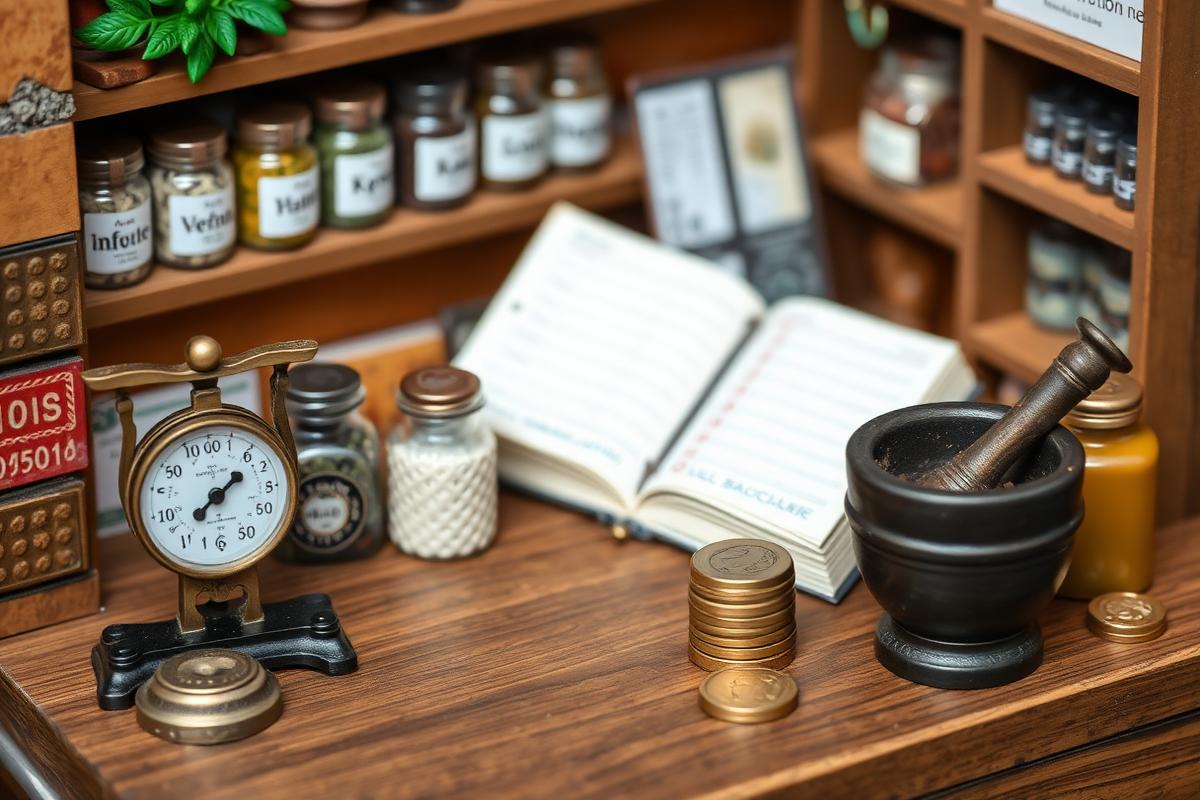
Build an L-shaped or straight counter across the front of the work area. Top it with smooth tiles. This is where the herbalist weighs and mixes.
- A brass scale (use a lever or antenna piece)
- A mortar and pestle (round brick plus a small bar)
- An open ledger (printed or plain tile)
- A stack of coins (round 1x1 plates)
Step 5: Add the Roof and Signage
Cap the structure with a sloped or tiled roof. Traditional halls use curved eaves, but a simple angled roof works well at small scale. Line the edge with dark red or gold tiles for a decorative border. Hang a vertical shop sign near the door. Use a 1x4 tile or a printed banner element. A hanging lantern beside the entrance adds warmth and framing.
Step 6: Dress the Interior
Fill the shelves with jars, baskets, and bundled herbs. Vary the colors — sand green, white, and dark red jars break up the wood tones. Add a broom in the corner and a stool by the counter. Place two minifigures for life: an herbalist behind the counter and a customer at the front. Small stories make static models feel alive.
Micro-takeaway: Build in sections, test as you go, and detail last. Structure first, story second.
Common Mistakes and How to Avoid Them
Overcrowding the Interior
Too many props hide the build. Leave open floor space so the eye can rest. Group items instead of scattering them.
Flat, Lifeless Walls
Bare tan walls look unfinished. Add beams, hanging scrolls, wall shelves, or a framed sign. Texture creates depth.
Weak Color Discipline
Random colors break the illusion. Stick to your five-color palette. Reserve gold for trim only — overusing it cheapens the look.
Skipping the Grid Alignment
An uneven drawer wall ruins the centerpiece. Measure your grid and keep spacing consistent. This one detail defines the whole model.
Ignoring Scale Props
Oversized accessories throw off proportion. Match prop size to your minifigures. A giant jar next to a tiny figure looks wrong instantly.
Micro-takeaway: Restraint beats clutter. Consistency beats variety.
Design Ideas to Personalize Your Build
Add a Second Floor
Stack a tea room, storage loft, or herbalist's study above the shop. A staircase or ladder connects the levels. This doubles your display value.
Build a Street Scene
Connect your shop to a modular block. Add a tea house, a scroll shop, or a food stall. Read our companion guides on the Chinese silk weaving workshop, Chinese embroidery studio, and ancient paper making workshop for street-scene inspiration.
Season It
Swap details for the season. Add red lanterns and banners for New Year. Use plant elements for a spring garden out front. Small changes keep the model fresh. Find modular-compatible sets and expansion ideas across our adult building blocks range.
Micro-takeaway: One shop is a start. A street is a project. A district is a collection.
Display and Photography Tips
Lighting
Add a warm LED brick or string light inside. Soft light through lattice windows creates atmosphere. Aim for a warm tone to match the wood palette.
Backdrop
Photograph against a plain, neutral background. A soft gray or cream wall keeps focus on the model. Avoid busy clutter behind the shot.
Angles
Shoot at minifigure eye level. Low angles make the build feel grand and immersive. Capture one wide shot and several detail close-ups.
Share It
Post your build in online communities. Share your parts list and process. If you need help sourcing parts, our support team can help you plan a build kit.
Micro-takeaway: Good light and eye-level angles turn a model into a scene.
Conclusion
Building a Chinese herbal medicine shop rewards patience and attention to detail. Start with the history, plan your scale, and build in layers. Focus your palette, nail the hundred-drawer wall, and dress the interior with purpose. Avoid clutter, keep your grid tight, and match your props to scale. Then personalize with a second floor, a street scene, or seasonal touches. Finish with warm lighting and clean photography to show it off.
Ready for your next step? Sort your parts by color, sketch a 32x32 footprint, and start with the floor. Your apothecary hall is waiting to be built.
Frequently Asked Questions
How many pieces do I need to build a Chinese herbal medicine shop?
A minifigure-scale build on a 32x32 base typically uses 1,500 to 3,000 pieces, depending on detail and height. A micro-scale version needs far fewer — often under 500. Start small if you're new, then expand with a second floor or street scene.
What building blocks work best for an ancient medicine hall model?
Look for high-clutch, dimensionally accurate bricks that hold detailed surfaces firmly. Drawer elements, grille pieces, and printed tiles add the most authenticity. Quality Traditional pharmacy blocks stay tight during display and photograph cleanly, which matters for detailed cultural builds.
Is this build suitable for beginners?
The full model suits intermediate builders, but beginners can start with a simplified single-room version. Build the walls and counter first, then add the drawer cabinet and props over time. Detailed guides and community support make the learning curve manageable.
How do I make the hundred-drawer cabinet look realistic?
Keep the grid tight and uniform. Use stacked 1x2 tiles or dedicated drawer elements in a consistent pattern. Add small round handles and a decorative top cornice. Even spacing is the single most important factor for a convincing result.
Can I connect this shop to other building sets?
Yes. Build on a standard modular baseplate so your shop links to other modular structures. This lets you create a full traditional street with tea houses, scroll shops, and food stalls that grow into a complete themed district.