Chinatown Modular Building Set, Oriental Modular Building Blocks & Asian Architecture Building Set: Selection, Build & Display Guide
Selection criteria, build planning, lighting, cultural design cues, and long-term display tips for Chinatown modular building sets and Asian architecture brick models.
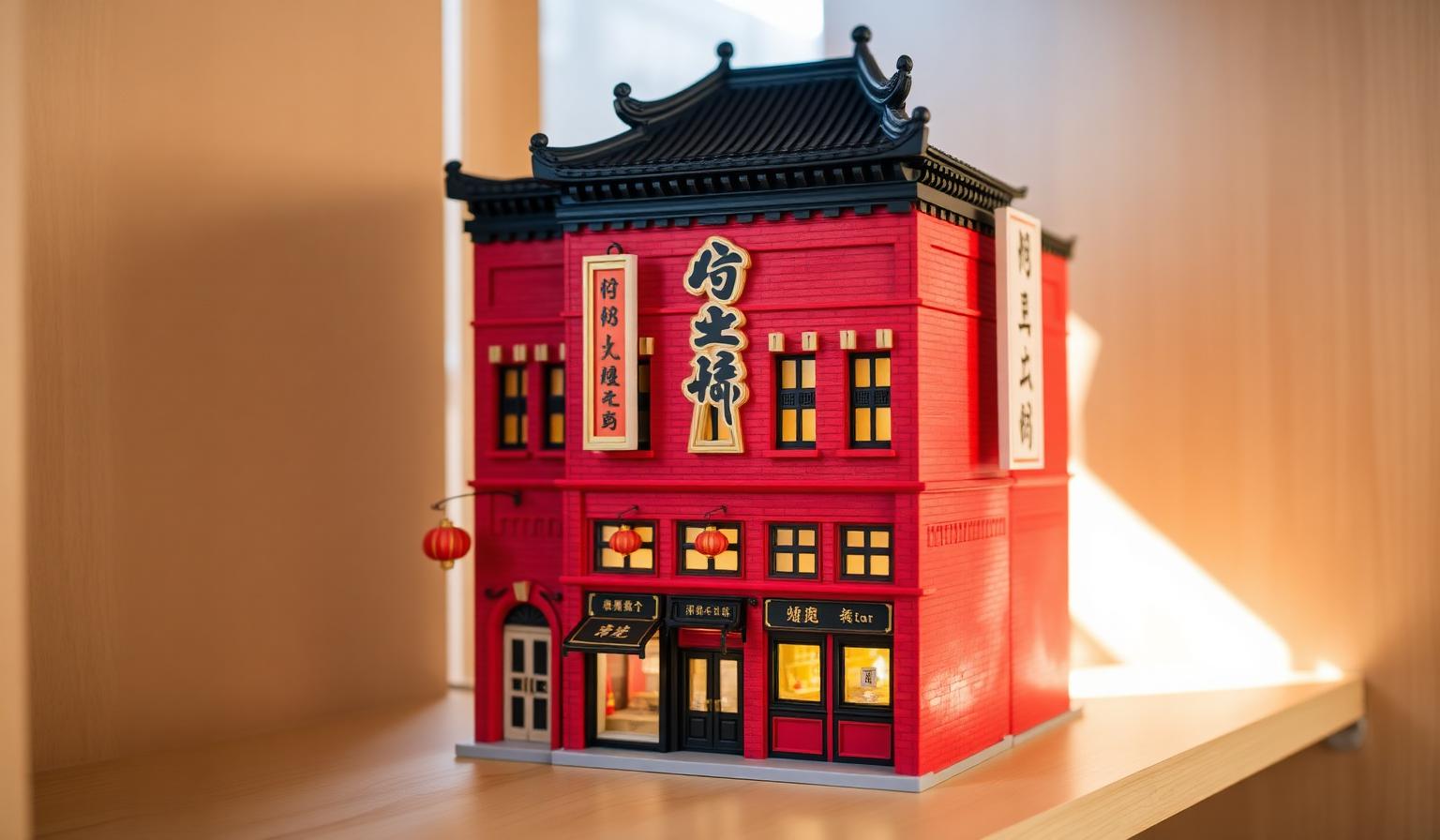
A Chinatown modular building set earns shelf space fast. Dense facades, lanterns, shop signs, stacked floors, and street-level detail give it a strong skyline from 10 feet away and small discoveries at 10 inches. For adult fans, collectors, family builders, and gift buyers across the US and EU, this kind of model works as both a build project and a display piece.
What Makes a Chinatown Modular Building Set Worth Buying?
A good Chinatown modular building set does three jobs: it builds well, displays well, and tells a clear architectural story. Piece count matters, but it does not guarantee a satisfying model. A 2,800-piece set with flat walls can feel empty. A 1,600-piece set with strong color blocking, signs, rooflines, and street details can feel complete.
- Modular floor separation and stable base connection
- Detailed front facade with finished side walls
- Interior shops or apartments
- Display-ready roofline and consistent clutch
- Compatible scale with your current city layout
For current architecture-style alternatives, check the adult building block range before choosing your next layout piece.
How Do You Choose the Right Chinatown-Inspired Set?
Start with your end use: display, city layout, family build, or collector shelf. Adult hobbyists should look for multi-level interiors, SNOT building techniques, roof ornaments, rear access, and strong vertical color rhythm. Collectors need consistent baseplate size, matching pavement height, removable floors, and a palette that matches nearby modular buildings.
City layout builders should verify base width in studs, sidewalk depth, Technic pin connection points, door height, and corner compatibility. A strong Chinatown street feels dense — narrow shops, stacked signs, balcony rails, small food stalls, and side alley details. For broader builder workflows, see our master adult building block guide.
How Do You Evaluate Architectural Detail?
A strong Asian architecture building set does not need to copy a real building exactly — it needs to respect visual logic. Chinatown modulars combine retail storefronts, residential floors, temple-style roofs, signboards, lanterns, tiled entrances, and street markets.
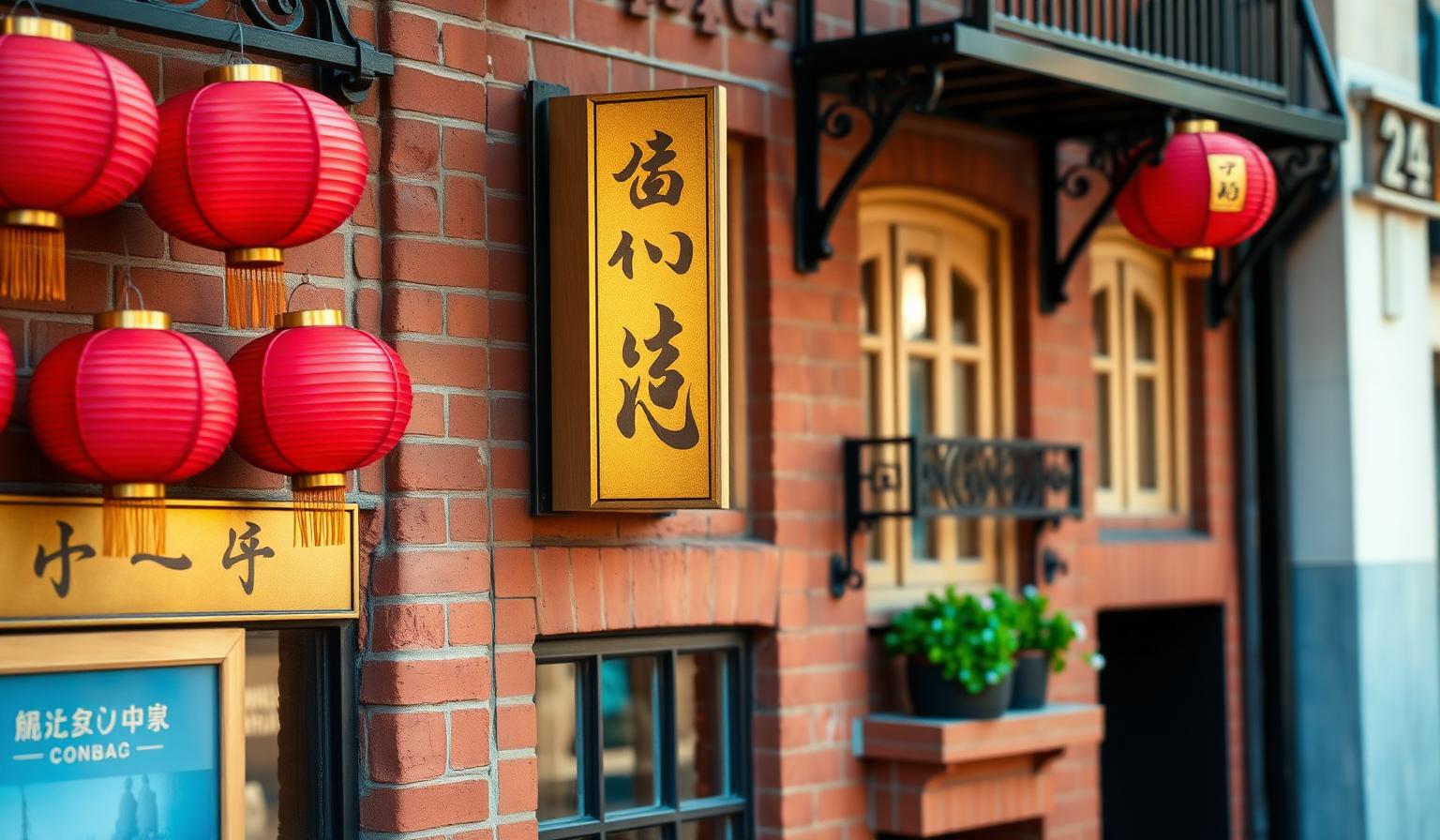
Roofline
The roof carries the silhouette. Look for layered slopes, curved edges, bracket-supported eaves, symmetrical ridge lines, and small decorative end caps. If the upper assembly flexes when moved, reinforce it with hidden plates before display.
Facade
The front face should read clearly from a distance. Use a controlled palette — three main colors plus accent colors. Example: dark red walls, tan trim, black roof, gold sign details.
Interior
Interior detail turns a display model into a full build experience: restaurant kitchen, tea shop counter, herbal medicine shelves, apartment room, staircase, storage crates, noodle stand, and tiled flooring — without compromising structural strength.
How Do You Build It for the Best Result?
Treat the build like a model kit, not a speed run. Complex modulars reward clean sorting, alignment checks, and staged testing.
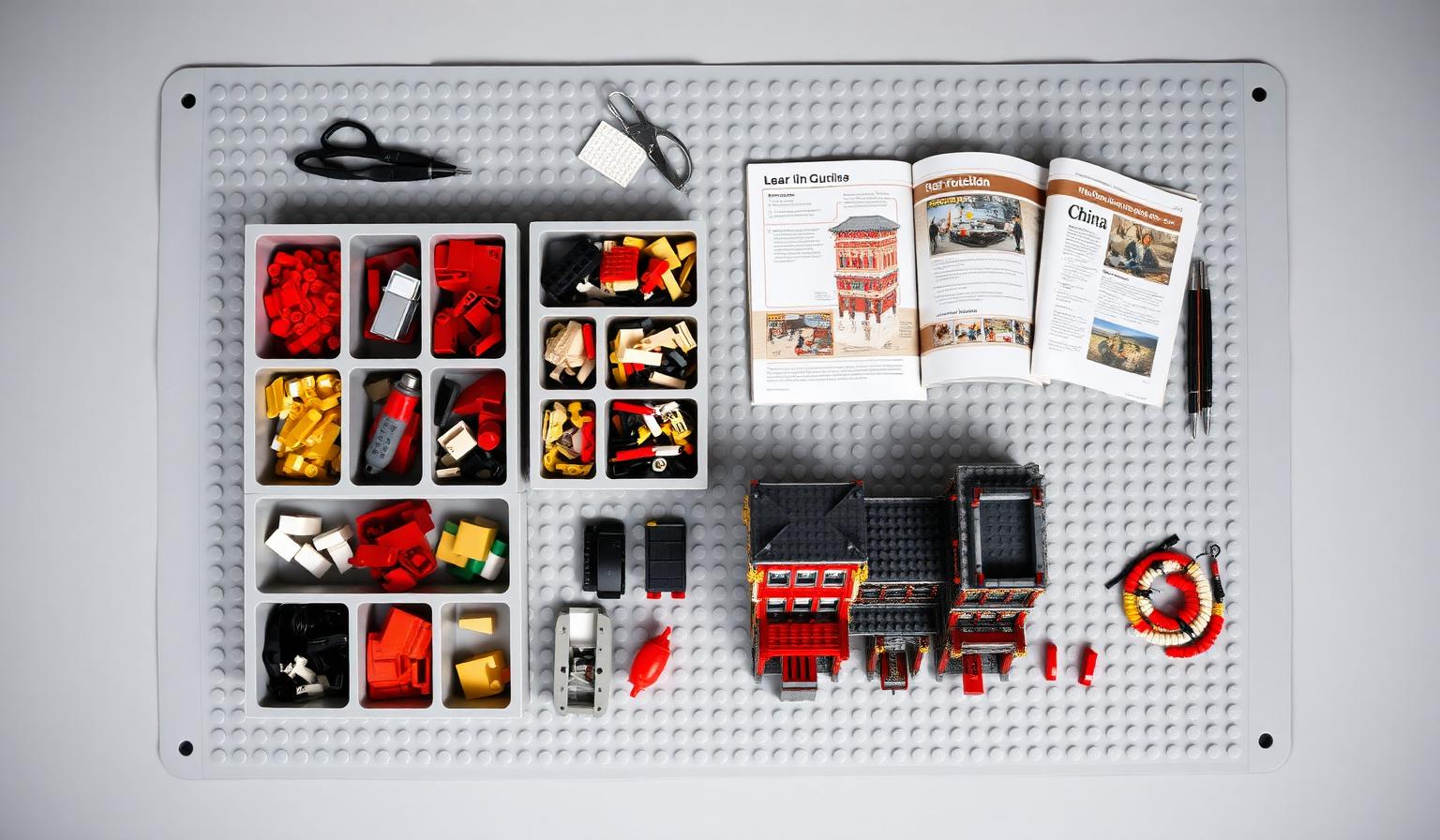
Step 1: Prepare the Build Zone
Use a flat table with strong 5000K light. Sort trays for small parts, a soft mat for dark pieces, a brick separator, tweezers for stickers, and resealable bags for in-progress subassemblies.
Step 2: Check the Base First
The base controls everything. Press all plates flat, confirm sidewalk width and connection points, test door swing, align tiles, and confirm stair placement before moving upward.
Step 3: Build Walls in Pairs
Wall symmetry matters. Build matching left and right wall sections side by side to catch color mistakes early. If a wall section feels weak, add hidden plates or brackets before the roof stage.
Step 4: Handle Stickers Like Display Parts
Stickers are permanent visual elements. Wash hands, use tweezers or a brick separator edge, align one edge, lower slowly, and press from the center outward.
Step 5: Test Each Modular Floor
After each floor is complete, place it on the lower level and remove it again before adding fragile trim. Fast test now, no rebuild later.
How Do You Style a Chinatown Modular Building for Display?
Display decides whether the set looks like a toy, a model, or a miniature street. Eye-level shelf placement works best for facades. Leave 2–4 inches / 5–10 cm above the roofline. Use a clean background — warm white, matte black, dark gray, natural wood, or deep navy. Add street-level life with a food cart, small market stall, delivery bike, lantern poles, bench, potted plants, menu boards, and street signs. One building looks good; three buildings create a district.
How Do You Add Lighting Without Overdoing It?
Use lighting with purpose. Warm white works better than cold white for Chinatown street scenes. Best zones: ground-floor shop, lantern row, signboard, upper apartment window, interior kitchen, streetlamp, roof accent. Hide wires along rear walls or under removable floors. Test modular separation before final wire routing — a floor that cannot lift loses one of the main benefits of modular design.
How Do You Appreciate Cultural Design Without Making It Generic?
Oriental modular building blocks is a common search phrase, but the better buying approach is to look at architectural cues. Chinatown districts in Western cities mix retail at street level with residential floors above, vertical or horizontal signage, dense storefronts, and narrow widths. Good set concepts include tea houses, noodle shops, herbal medicine shops, market halls, dumpling stands, and lantern festival streets.
Traditional palettes often use red, gold, green, black, tan, white, and dark brown. A clean color formula: 50–60% main wall color, 20–30% trim, 10–20% roof, under 10% accent. Use one main focal point per level — shopfront on ground, balcony in the middle, curved eaves on the roofline.
How Do You Make the Build Family-Friendly?
Adult builders handle base alignment, stickers, structural checks, and lighting. Younger builders assemble furniture, shop details, lanterns, food pieces, and street accessories. Assign clear modules — base and sidewalk, shop interior, upper floor furniture, roof ornaments — so the project keeps moving without chaos. Modular buildings also show real engineering ideas in simple form: load-bearing walls, symmetry, pattern repetition, structural bracing, and color planning.
How Do You Customize a Chinatown Modular Building?
Customization turns a standard model into your model. Keep changes reversible at first. Easy upgrades: change shop name tiles, add lanterns, swap interior furniture, build a noodle cart, add rooftop seating. Intermediate mods: expand the base from 16 to 32 studs, add a side alley or rear kitchen, add a second-floor balcony, convert to a corner version. Advanced MOC work: combine two sets into a market hall, replace sticker signs with brick-built lettering, rebuild the roof with layered slopes, motorize signage. Always reinforce before decorating.
How Do You Fit It Into a Larger Collection?
A strong Asian architecture building set can anchor a whole display zone. Pair it with cafes, bookshops, cinemas, hotels, flower shops, and tram streets. Vary rhythm — tall building, narrow shop, corner restaurant, low market stall, festival gate — to guide the eye. Protect long-term display value by keeping models out of direct sunlight, dusting monthly with a soft brush, and removing batteries from lighting kits when unused. See our guide to non-LEGO alternative brands for compatible companions, or browse the full product catalog.
How Do You Avoid Common Buying Mistakes?
- Buying only by piece count: Check final dimensions and structural pieces, not just totals.
- Ignoring display depth: Many Western homes use shallow bookshelves. Measure shelf depth, height, and clearance before ordering — width plus 2 inches / 5 cm, depth plus 1 inch / 2.5 cm, height plus 2–4 inches.
- Overlooking skill level: Match the kit to beginner, intermediate, advanced, or expert builder profiles.
- Forgetting the rest of the street: Even one tree, two figures, a signpost, a food stall, or a small bike improves the whole model.
Practical Example: 32-Stud Chinatown Street Display
Base layout: 32 x 32 stud Chinatown modular, 8-stud sidewalk, 16-stud street lane, 6-stud side alley, one food cart, two lantern poles, 4–6 figures, one delivery bike. Color plan: dark red, tan, black, and gold building; light bluish gray sidewalk; dark bluish gray street; muted accessories with red accents. Lighting: warm shop interior, amber lanterns, low light upstairs, streetlamp near the food cart. Result: compact scene, strong vertical facade, good photo angles, no clutter.
Final Buying and Building Checklist
Before you commit: confirm theme match, footprint fit, modular floors, interior detail, roofline strength, controlled colors, clear focal point, and customization potential. During build: sort parts first, build on a flat surface, check base alignment early, test every floor, apply stickers carefully, reinforce weak sections, and add lighting only after test fitting. For display: place at eye level, use a clean background, add street context, avoid direct sunlight, leave roof clearance, and use warm lighting.
Frequently Asked Questions
Q: What is the best size for a Chinatown modular building set?
A: For most adult collectors, 32 x 32 studs is the safest size. It fits standard modular city layouts and still offers enough room for interiors, signage, sidewalk detail, and a strong roofline.
Q: Are Oriental modular building blocks good for adult builders?
A: Yes — when the set includes advanced techniques, layered architecture, detailed interiors, and modular floor separation. Check dimensions, piece quality, and building complexity before buying.
Q: How can I display an Asian architecture building set without a full city layout?
A: Use a single shelf scene. Add a neutral background, two figures, a food cart, warm lighting, and a small sidewalk extension.
Q: Should I add lights to a Chinatown modular building?
A: Yes, if controlled. Use warm LEDs for shop interiors, lanterns, signs, and streetlamps. Test wire routes before final installation so floors still remove cleanly.
Q: What should gift buyers look for in a Chinatown modular set?
A: Clear instructions, numbered bags, a manageable footprint, and recognizable details like lanterns, signs, shops, and roof elements. 1,200–2,500 pieces is a good range.