Ancient Chinese Town Blocks, Tang Dynasty Street Building Set & Historical China Brick Models: Choose, Build & Display Guide
How to choose, build, and display a Tang Dynasty street building set — historical design cues, build technique, scene planning, and full district expansion.
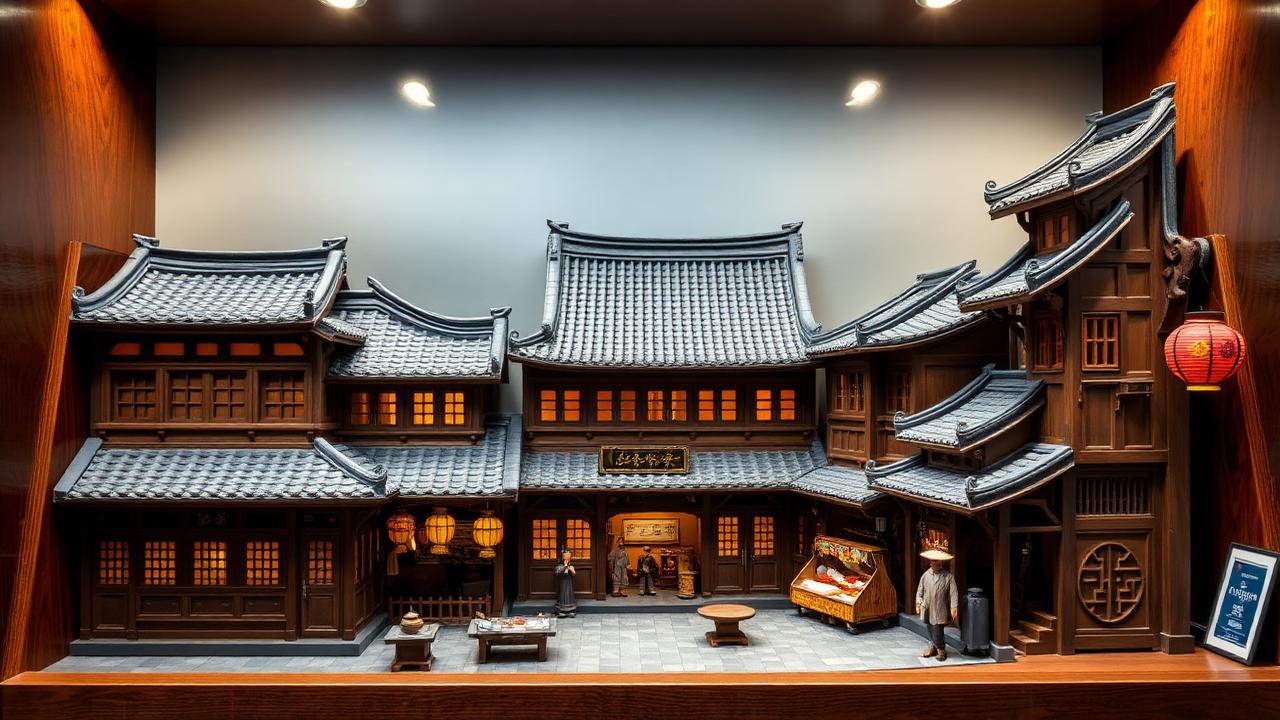
Ancient Chinese town blocks deserve more than shelf space — they deserve a scene. Tang Dynasty streetscapes, timber-framed facades, curved grey-tile roofs, open-fronted teahouses, silk merchant stalls, and lantern-lit alleys: a Tang Dynasty street building set built and displayed with intent looks different from a standard modular city addition. It tells a historical story.
This guide covers how to choose the right set, evaluate historical accuracy, plan and execute the build, style a finished street scene, and expand into a coherent Tang Dynasty district display.
What Makes a Tang Dynasty Street Set Different
Tang Dynasty architecture (618–907 CE) used specific structural principles that translate well into brick building: symmetry, elevated bases, heavy bracketed eaves, curved roof ridges, raised central halls, enclosed courtyards, and layered roof tiers.
- Wider, lower silhouette rather than tall vertical facades
- Emphasis on roof over walls
- Courtyard-based spatial logic
- Fewer glass windows, more open or lattice-framed openings
- Warm earth tones: tan, dark tan, reddish brown, sand green, dark gray, gold
- Street-level features: markets, scholars, merchants, travelers
A set with tall facades, red-brick walls, and neon signs is not the same category. Browse our themed product catalog when shortlisting candidates.
How to Choose the Right Set
Define the Display Purpose
- Collector / Display Buyer — single large model (2,000–3,500 PCS townhouse or market hall) with strong roofline presence.
- Hobbyist / Builder — advanced techniques: bracket work, layered roof construction, courtyard geometry.
- Scene Builder / Diorama Creator — multiple smaller connectable sets (teahouse, stall, gate, well).
- Gift Buyer — 800–2,000 PCS, recognizable theme, manageable base footprint.
Evaluate Historical Design Cues
Check roof form (curved ridge, upturned corners, multi-tier), eave depth (wide overhang with bracket support), wall material (timber-frame with plaster or stone base), openings (lattice grids, arch doors), color (tan, dark tan, reddish brown, dark gray, muted gold), raised base, courtyard space, dark bluish gray roof tiles, ridge ornaments, and evenly spaced columns. No brick set achieves perfect historical accuracy — the best ones use visual logic and design intent.
Check Scale and Compatibility
Historical China brick models face one consistent display challenge: scale mismatch. Tang architecture is wide and low; modern modular city buildings are tall and narrow. Dedicate a separate shelf or zone, treat historical sets as a distinct district, and match base plate heights. Common footprints range from 16x16 (stalls) to 48x48 (large market halls).
How to Plan a Tang Dynasty Street Scene
Anchor the Scene with One Hero Build
Place the anchor first — a multi-story inn, large market hall, temple gate, courtyard residence, or government hall — then design the rest of the street around it.
Add Secondary Structures and Street Detail
Secondary builds (street-facing teahouse, silk merchant stall, covered market corridor, low garden wall with gate, roadside shrine, well, tree) create visual rhythm. Keep secondary builds shorter than the hero. Add ground-level life: hanging signs, merchant carts, period figures (merchants, scholars, guards), lanterns, a central unpaved road, stone bridge, horse or sedan chair. See our master adult building block guide for workflow strategies.
How to Evaluate Build Quality Before You Buy
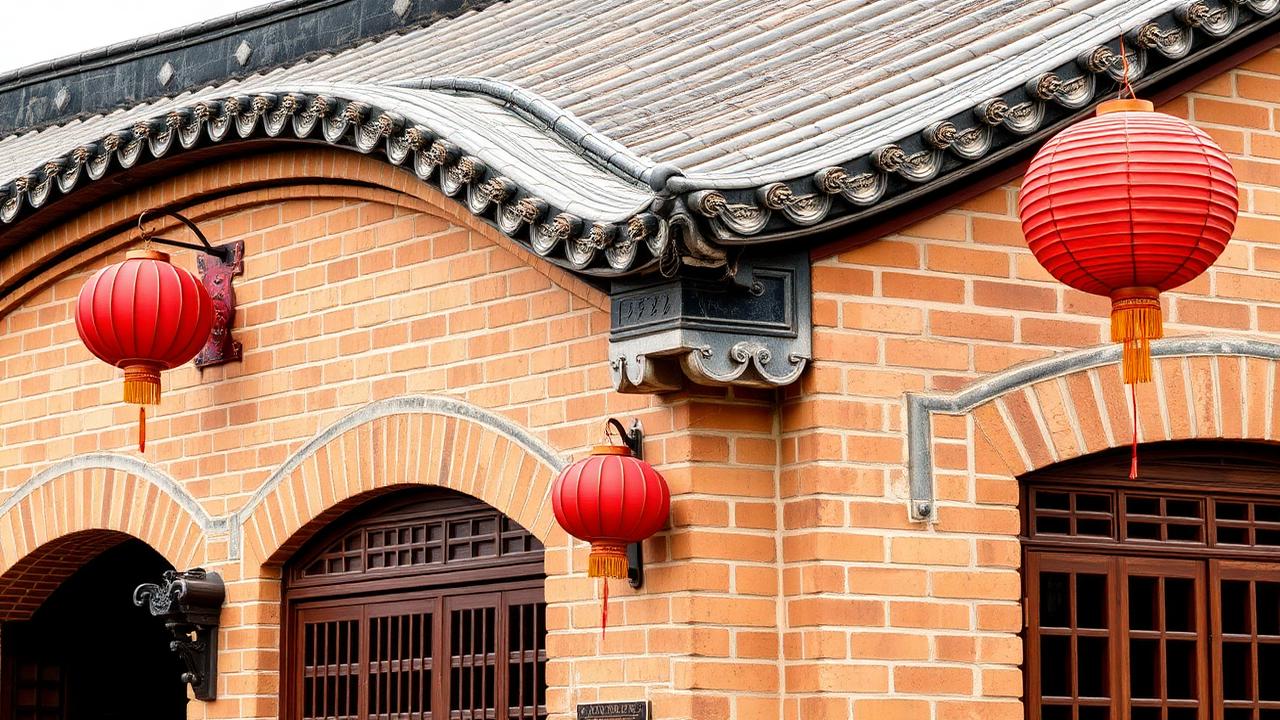
Roof Engineering
Strong signals: two- to four-tier layered slope construction, hidden plate reinforcement inside the eave structure, bracket representation using 1x1 modified or headlight bricks, ridge line using tiles or custom elements, upturned or decorated corner treatment, multiple connection points to main structure. A roof that flexes under hand pressure will not survive 12 months on a shelf.
Courtyard, Base and Color Discipline
The base should raise cleanly on stacked plates with flat courtyard tiles and a structurally independent gate frame. Authentic palettes: tan and dark tan walls, reddish brown structural timber, dark bluish gray tiles, dark red and sand green accents. Avoid bright red full-wall finishes and uncontrolled gold throughout.
How to Build for Display-Grade Results
Sort by Part Type First
Dark tan, reddish brown and dark brown all look similar under warm indoor light. Sort plates by size, slopes by angle, modified bricks by type, tiles flat in a tray, and printed parts away from loose small pieces. Use a soft mat for dark parts.
Build the Base, Build in Pairs, Build the Roof Center Outward
Check base alignment three times (after baseplate, after lower floor, before walls). Build matching halves side by side — symmetry errors caught early cost 5 minutes; caught at the roof stage they cost an hour. For multi-tier roofs: build central ridge, attach inner slopes, build bracket-eave transition, attach outer slope layer, add corner elements, then decorative ridge.
Stickers and Printed Signs
Tang Dynasty signs often run vertically. Test orientation before applying — vertical signs applied sideways are a permanent error. Where possible, choose sets that use printed tiles instead of stickers.
How to Display a Tang Dynasty Street Scene
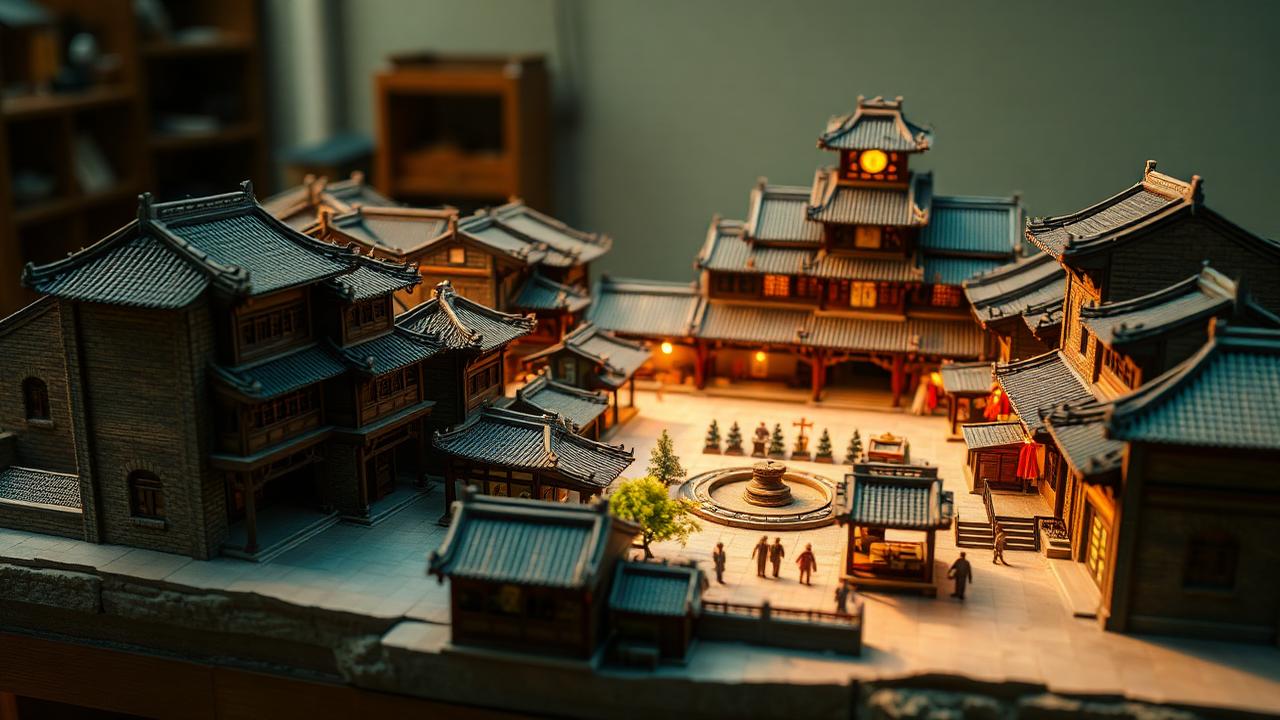
Viewing Angle and Background
Direct front view works for symmetrical structures; 45-degree angle works for L-shaped or multi-building scenes (ensure side walls are finished). Use a recessed background: matte charcoal, warm off-white, bamboo panel, rice paper texture, dark wood, or plain dark green. Avoid patterned wallpaper behind detailed rooflines.
Light It Like a Street Scene
Warm white 2700K–3000K LEDs inside buildings, small amber LEDs for hanging lanterns, one streetlamp-style LED post near the road, side lighting for roof shadow, no overhead glare. Keep wire routing under removable floor sections.
Period-Appropriate Accessories
Horse, cart, scroll prop, firepit, hanging merchant goods, clay pots, lanterns, stone well, small tree or bamboo. Avoid modern vehicles, Western modular accessories, or tech props. Keep figure count to 4–8 in a medium scene.
How to Expand Into a Full Tang Dynasty District
Tang cities used a ward-grid system. A simple home layout: central main road (6–8 studs wide), side alleys (4–6 studs), market zone with stalls, residential block set back from road, and a gate or archway marking entry. Even a 48 x 96 stud layout can suggest a full district if the road logic is clean.
Height Variation and Night Market Mode
Use three height zones — ground (road and stalls), platform (main buildings raised 2–4 plates), elevated (gate towers, pagoda, watchtower). Add a night market mode with amber/red LED lantern strings, lit stalls, brazier near food stall, and a dark sky backdrop. A layout that shifts between day and night markets is a strong collector feature.
Customization Ideas for Historical China Brick Models
- Low-effort: cobblestone road tiles, custom merchant signs, low courtyard walls, hanging red lanterns, stone bridge over a blue tile channel, produce crates.
- Intermediate: extend base to 48 studs for side courtyard, walled perimeter, mezzanine floor, restaurant conversion, moon gate.
- Expert: combine two sets into a market complex, Tang-style city wall section, full bracket-layer roof reconstruction, motorized lantern rotation or LED trigger lighting.
Strengthen structure before adding detail. For broader brand context, see our guide to non-LEGO alternative brands and our adult building block collection.
Common Buying Mistakes to Avoid
- Wrong era, wrong style — Ming or Qing cues marketed as Tang.
- Ignoring base depth — Tang-style buildings often run 32–48 studs deep.
- Buying without a scene plan — plan street surface, secondary structure, figures, tree, and background first.
- Underestimating build time — advanced sets run 6–15 hours; plan multiple sessions.
Frequently Asked Questions
Q: What are ancient Chinese town blocks?
A: Brick-compatible building sets that recreate historical Chinese town architecture — shophouses, teahouses, market halls, courtyard residences and gates — typically in Tang, Song, Ming or Qing dynasty styles.
Q: How do I identify a true Tang Dynasty street building set?
A: Check curved upturned rooflines, multi-tier bracketed eaves, dark bluish gray tiles, raised bases, courtyard geometry, and a warm earth-tone palette dominated by tan, reddish brown and dark gray.
Q: Are historical China brick models compatible with standard brands?
A: Yes. They use the standard 5mm stud system and connect with any major brand's baseplates and modular layouts.
Q: How big should my first Tang street scene be?
A: Start with one hero building plus 1–2 secondary structures and 4–8 period figures on a 48x48 or 48x96 stud base. Expand later with gates, towers, and additional shophouses.
Q: What lighting works best for Tang Dynasty dioramas?
A: Warm white 2700K–3000K LEDs inside buildings and small amber LEDs for hanging lanterns. Avoid cold white light — traditional Chinese architecture reads better under warm directional lighting.