How to Build an Ancient Chinese Tea Plantation Scene with Building Blocks
Step-by-step guide to building a misty Chinese tea mountain with bricks — terraced fields, farmhouse, stone paths, and tiny pickers, all on your shelf.
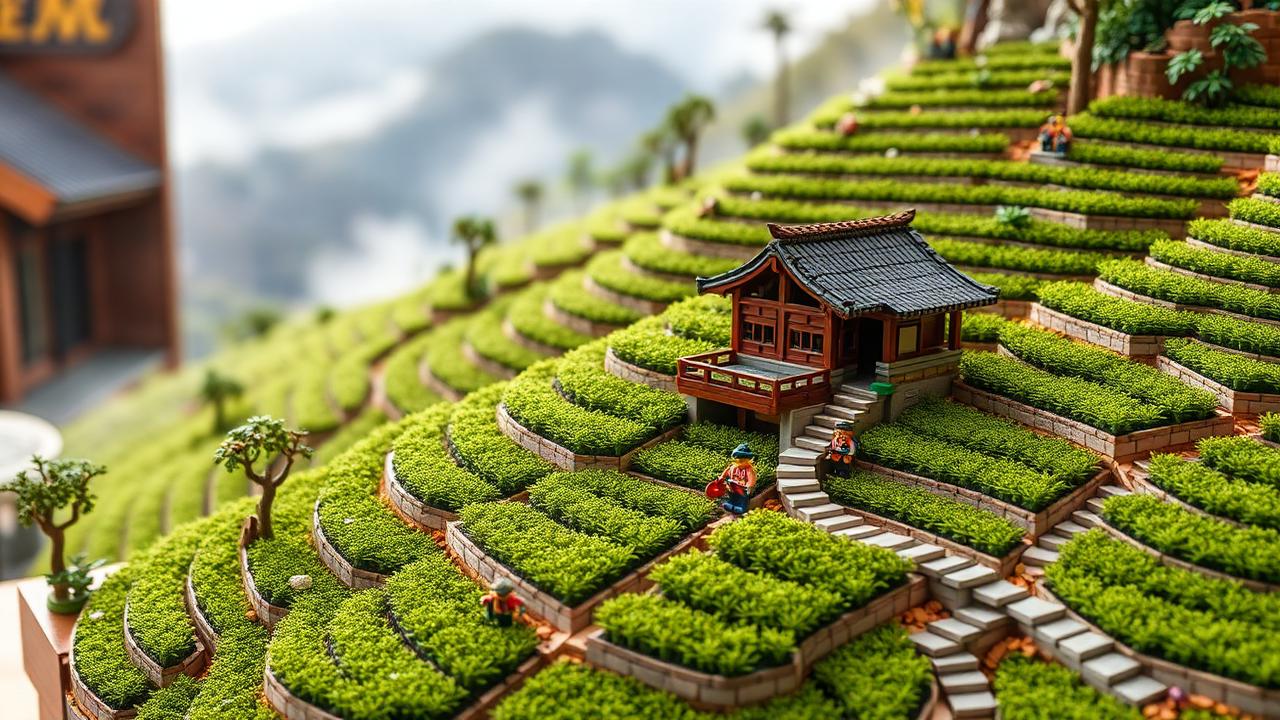
Mist rolling over green terraces. Stone paths winding up a mountainside. A small farmhouse where workers sort fresh leaves. This is the scene you can build on your shelf, one brick at a time.
Chinese tea culture goes back more than 4,000 years. The terraced tea farms of Yunnan, Fujian, and Hangzhou are some of the most beautiful agricultural landscapes on earth. Recreating one in brick form is a rewarding challenge that mixes terrain building, architecture, and storytelling.
What You're Building
A traditional tea plantation isn't a flat field. It's a hillside carved into stepped terraces, each one holding rows of low tea bushes. This terrace system stops erosion and makes the steep slopes farmable.
A good Ancient tea plantation blocks set includes sloped plates, green foliage pieces, stone-textured bricks, and small figures for picking leaves. Together they recreate the rhythm of a working tea mountain.
- Adult hobbyists who love landscape builds and complex terrain.
- Families wanting a STEM-friendly project tied to geography and history.
- Collectors after a display piece with real visual movement.
- Creators who enjoy customizing terrain and adding their own structures.
What You'll Need Before You Start
- A themed kit. Start with a dedicated Chinese tea farm model set — see our Ancient Chinese market street guide for compatible historical themes.
- A large flat workspace. Terrain models spread out. Give yourself room.
- Sorting trays. Greens, browns, and grays will dominate. Keep them separate.
- A digital or printed guide. Zoomable PDFs help with tricky slope steps.
- A brick separator. Layered terrain means lots of adjustments.
- Time. Set aside three to five hours for a mid-size scene.
Browse the full range of culture-themed terrain kits in our adult building blocks collection before you buy.
Step 1: Sort and Inventory Your Pieces
Resist the urge to dive in. Sort first. Empty each bag into its own tray. Group parts by function: terrain slopes, baseplates, foliage, stone elements, building bricks, and figure accessories. Count any rare pieces against the parts list.
Tea farm kits include many small green plant pieces and tiny tools — baskets, hats, leaf-printed tiles. These are easy to lose and hard to replace mid-build.
Pro tip: Keep all foliage in one container and all figures in another. You'll reach for them in different stages.
Step 2: Build the Foundation and Layout
Every mountain starts with solid ground. Connect your baseplates first. Lay them out and decide where the slope will rise and where the flat valley will sit. Most builders put the tallest terraces at the back and the lowest at the front for depth and a clear viewing angle.
Plan the Flow First
- The rising hillside for terraced tea rows.
- A flat base area for the farmhouse and drying yard.
- A path or stairway connecting top to bottom.
- A water feature if your kit includes one.
Step 3: Shape the Terraced Terrain
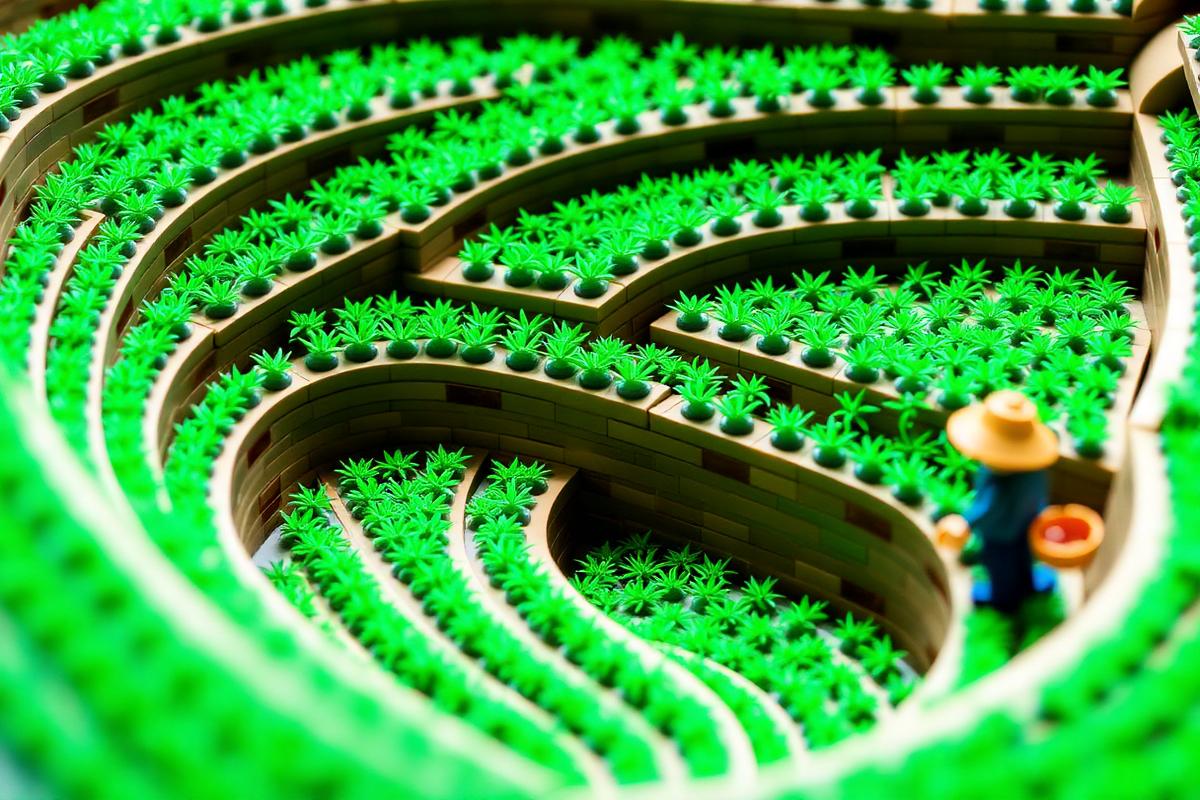
Real tea terraces step up the hillside like a giant staircase. You'll recreate this by building layered platforms, each one set back slightly from the one below.
How to Stack Clean Terraces
- Build your first low platform at the front using stacked plates.
- Set the next level back by two or three studs and raise it higher.
- Repeat upward, keeping each step roughly even in height.
- Use slope and curve pieces on the front edges to soften the look.
A quality Tea mountain building set gives you the angled pieces that make these curves possible. Generic boxes force you to fake the slopes with stacked bricks, which never looks as smooth.
Common Mistakes to Avoid
- Building terraces too tall. Real tea steps are low. Keep them shallow.
- Forgetting to lock layers. Use overlapping plates so terrain doesn't separate.
- Straight edges only. Curve your terraces to follow the hillside naturally.
Step 4: Plant the Tea Rows
Now your bare hillside becomes a living farm. Tea bushes grow in tight, even rows that follow the curve of each terrace. Line up small green foliage or round plant pieces along every step. Mix two or three shades of green if your kit allows — real tea fields aren't a single flat color.
Add Realistic Variety
- Use darker greens lower down, lighter greens up top.
- Leave narrow walking gaps between some rows for workers.
- Add a few taller bushes or a single old tea tree as a focal point.
Need extra foliage? Browse compatible plant and landscape packs in our main shop to expand your rows.
Step 5: Add the Farm Buildings
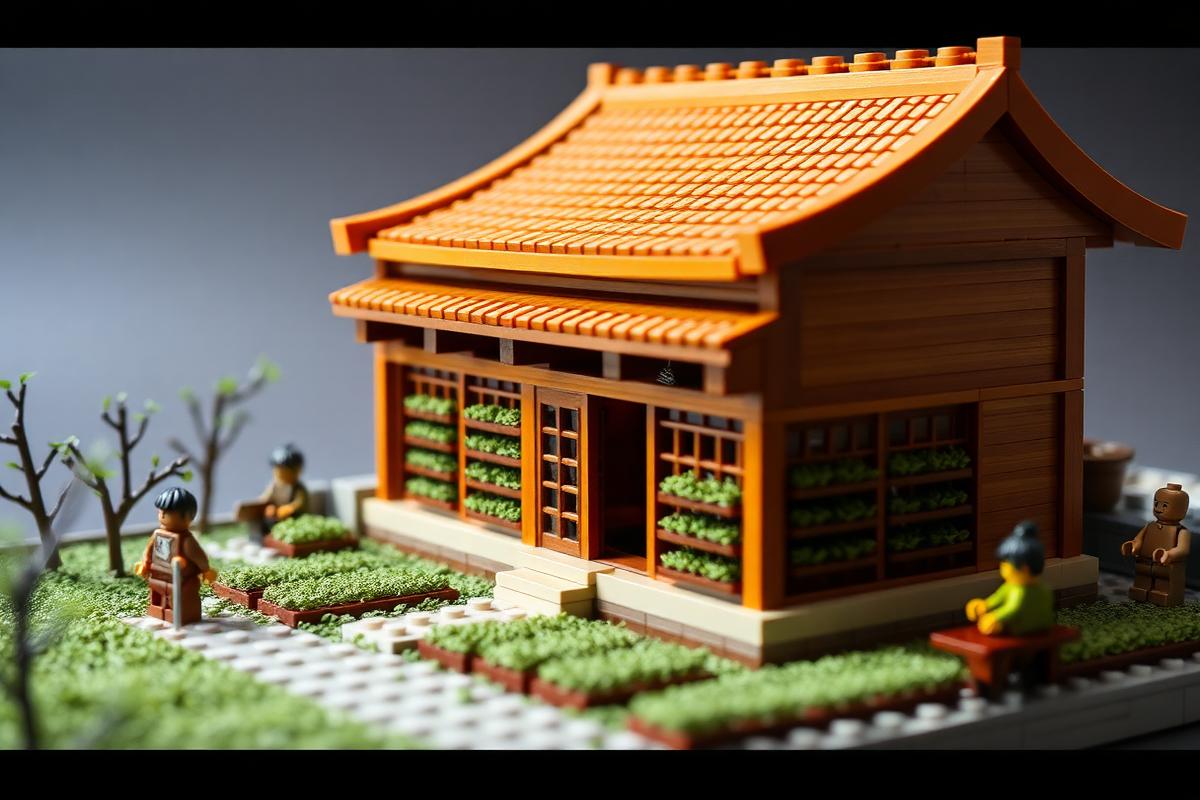
The classic centerpiece is a simple farmhouse or processing shed. Build it on your flat base area near the bottom of the slope.
Buildings to Include
- A farmhouse with a tiled or curved roof in warm wood tones.
- A drying yard with flat racks or trays of leaves.
- A small storage hut for baskets and tools.
- A tea-tasting pavilion if you want a refined touch.
Traditional Chinese rural buildings use earthy browns, gray stone, and gentle sloped roofs. For more roofline practice, see our Forbidden City gate guide.
Step 6: Connect Paths, Stairs, and Water
Add a winding stone path or stairway that climbs from the farmhouse up through the terraces. Tea workers need a way to reach every level, and the path draws the viewer's eye upward through your build.
Bring in Water and Stone
- Add a mountain stream or small pond at the base for drainage realism.
- Place stone retaining walls along terrace edges for an authentic look.
- Scatter a few rocks and boulders on the unfarmed slopes.
- Include a small wooden bridge over the stream if space allows.
Step 7: Final Details and Display
Place your figures throughout the scene. A picker bending over a bush. A worker carrying a full basket down the stairs. Someone resting in the pavilion with a cup of tea. Add the small accessories you set aside in Step 1 — baskets, conical hats, drying trays, and tea pots.
Choosing the Right Display Spot
- Keep it out of direct sunlight to protect the greens from fading.
- Display it at eye level so the terraces step up dramatically.
- Use a glass case to keep dust off the many small foliage pieces.
- Add an LED kit to cast a soft morning-mist glow over the hills.
Tips for Building with Kids
- Split the work. Let kids plant the tea rows while you shape terrain.
- Teach geography. Explain why tea grows on misty mountain slopes.
- Talk history. Share how tea traveled the ancient trade routes.
- Brew a cup. Finish with a real tea tasting to connect model and culture.
Customizing Your Tea Mountain
Creators love remixing terrain kits. Stretch your plantation across multiple baseplates for a sprawling estate. Add a teahouse village at the foot of the mountain. Combine two Ancient tea plantation blocks sets to build a towering multi-peak range. For more cultural builds, see our Chinese calligraphy studio guide and dim sum tea house guide.
Why These Sets Stand Out
- Real slope parts. Angled and curved pieces that create smooth terraces.
- Varied foliage. Multiple greens for depth, not one flat shade.
- Tight-fitting bricks. Layered terrain stays locked together.
- Clear instructions. Step-by-step terrain guides for every skill level.
- Missing pieces guarantee. Quality brands replace lost parts free.
Final Thoughts
Building an ancient Chinese tea plantation is more than a weekend project. You're shaping terrain, planning like a real farmer, and honoring a tradition thousands of years old. Start with a quality kit, sort carefully, build your terraces low and even, and plant your rows with patience. The misty terraces are waiting.
Frequently Asked Questions
How long does it take to build a tea plantation block model?
Most mid-size sets take three to five hours for an adult builder. Larger multi-peak scenes can take a full day or two. With kids, split it across sessions — terrain work and tea-row planting make natural stopping points.
Are these sets compatible with other major building block brands?
Yes. CraftBlockWorld bricks are built to standard building block dimensions. You can mix in trees, water pieces, or figures from other kits without compatibility issues.
What age group is suitable for a tea plantation building set?
These kits suit builders aged 8 and up. Younger children can help with simpler steps like planting tea rows or placing figures. Adult hobbyists tend to enjoy the terrain shaping and roof work most.
Do I need experience with terrain or landscape builds?
No. Terraced terrain looks complex but follows a simple repeating pattern — each step set back and raised slightly. If you can stack plates evenly, you can build a tea mountain.
How do I keep all the small foliage pieces from getting lost?
Sort them into a sealed container before you start and only pull out what each terrace needs. Quality brands offer a missing-pieces guarantee for free replacements.