How to Build a Story-Driven Spirit Fox Village: A World-Building Guide
Most brick builders focus on finishing a set. Story-driven builders focus on bringing a world to life. There's a big difference. When you build a mythology-themed model as a living scene—complete with characters, history, and hidden details—you create something far more memorable than a static display piece.
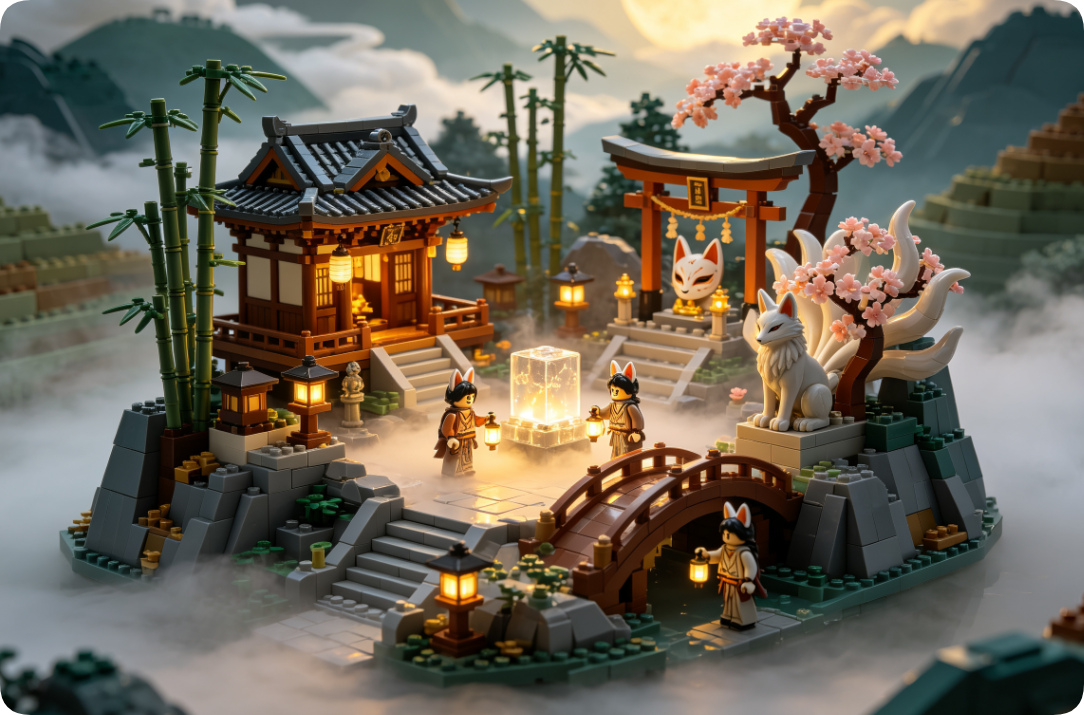
Most brick builders focus on finishing a set. Story-driven builders focus on bringing a world to life. There's a big difference. When you build a mythology-themed model as a living scene—complete with characters, history, and hidden details—you create something far more memorable than a static display piece.
This guide takes a fresh approach to assembly. Instead of walking you through numbered bags step by step, we'll show you how to think like a world-builder. You'll learn how to layer narrative into your construction, arrange scenes for maximum storytelling impact, and add custom touches that turn a standard kit into a personal creation.
Whether you're a solo hobbyist chasing a relaxing weekend project or a parent building alongside your kids, these techniques apply to any folklore-themed build. Let's get into it.
Why Story-Driven Building Changes Everything
Traditional building follows one goal: match the finished model on the box. That's satisfying, but it's only half the fun.
Story-driven building asks a different question. What happened here? Who lives in this village? What time of day is it? When you answer those questions before you start clicking bricks together, every placement decision gains purpose.
A Spirit fox village set is perfect for this method. Folklore themes come loaded with built-in narrative hooks—shrines, market stalls, glowing lanterns, and mythical creatures. Each element hints at a larger story you get to finish.
For adult builders in IT, engineering, and design fields, this approach adds creative depth to a technical hobby. For families, it turns build night into a shared storytelling session that sparks imagination in kids aged five and up.
Quick takeaway: Decide on your story before your first brick. It shapes every choice that follows.
Step 1: Define Your World Before You Build
Great scenes start with a concept. Spend ten minutes sketching out the basics of your village's story.
Ask yourself:
- What's the mood? Peaceful morning market, eerie moonlit shrine, or festival celebration?
- Who lives here? Fox spirits, village elders, travelers passing through?
- What's the season? Spring blossoms, autumn leaves, or winter snow?
- What just happened? A festival, a visitor's arrival, a quiet ordinary day?
Mythology inspired blocks shine here because they carry cultural weight. A fox spirit isn't just a minifigure; in East Asian folklore, foxes are shapeshifters and messengers between worlds. Knowing that lore helps you build scenes that feel authentic rather than random.
Common mistake: Building without a plan and ending up with a technically correct but lifeless diorama. Ten minutes of planning prevents hours of "something feels off."
Step 2: Build the Environment First, Not the Buildings
Here's where story-driven building breaks from standard instructions. Instead of starting with the largest structure, start with the ground.
Establish Your Terrain
The base sets your scene's tone. Uneven terrain, raised platforms, and pathways create a sense of place that flat baseplates can't match.
- Layer plates to build gentle hills or stepped foundations.
- Use exposed studs in some areas to suggest rough ground or cobblestone.
- Leave negative space for ponds, streams, or courtyards.
Plan Your Sightlines
Think about where a viewer's eye lands first. Position your most important element—say, a central shrine or the largest fox spirit—at a natural focal point. Guide the eye with pathways that lead toward it.
Test the Flow
Before adding buildings, walk your fingers through the scene as if you were a tiny visitor. Does the layout tell a story? Can you trace a natural path from the village entrance to its heart?
Key takeaway: Environment creates believability. A stunning building on a bare plate looks like a model. The same building surrounded by thoughtful terrain looks like a place.
Step 3: Construct Buildings with Character
Now build your structures—but treat each one as a character in your story, not just architecture.
An Ancient folklore set typically includes several buildings with distinct personalities. A weathered shrine tells a different story than a bustling teahouse. Lean into those differences.
- Vary the heights and angles. Perfect symmetry looks official; slight irregularity looks lived-in.
- Add signs of use. A tilted lantern, a leaning fence post, or a stack of crates suggests daily life.
- Build sub-assemblies separately. Complete each structure as its own module, then position it within your scene. This lets you test placement before committing.
Pro tip: Build two versions of small repeating elements like lanterns or barrels. Having spares lets you adjust your scene's density later without breaking anything apart.
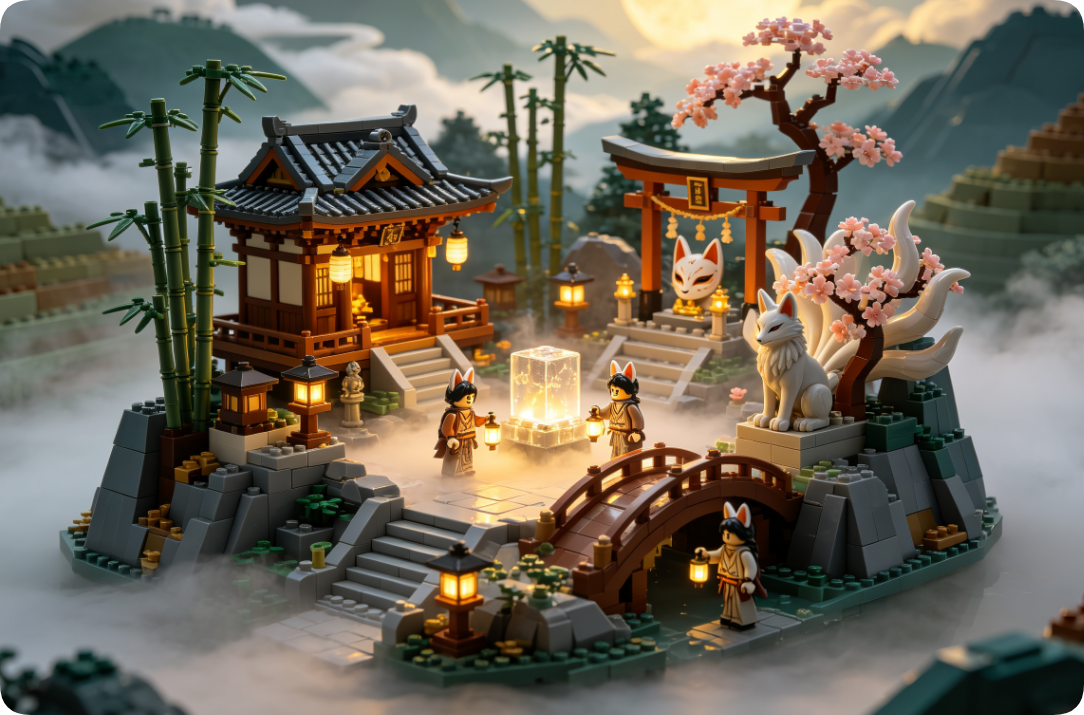
Step 4: Layer in Narrative Details
Details separate a good build from an unforgettable one. This is the storytelling phase, and it's where your early planning pays off.
Place Your Characters with Intent
Don't just scatter figures around. Give each one a moment.
- A fox spirit peeking around a corner suggests mischief.
- Two figures facing each other imply conversation.
- A lone figure gazing at the horizon adds quiet emotion.
Add Micro-Stories
Small vignettes reward close viewers. Try:
- A spilled basket of fruit near a market stall
- A tiny offering placed before the shrine
- Footprints (using round tiles) leading toward a hidden door
Use Color to Set Mood
Warm golds and reds suggest festival energy. Cool blues and greens create a mysterious, moonlit feel. Mythology inspired blocks often include a rich palette—use it deliberately rather than just following the instructions.
Want inspiration for narrative details and creative modifications? The craftblockworld blog regularly features world-building breakdowns and technique deep-dives from experienced builders.
Common mistake: Overcrowding the scene. Empty space gives the eye room to rest and makes your key details stand out. Restraint is a storytelling tool.
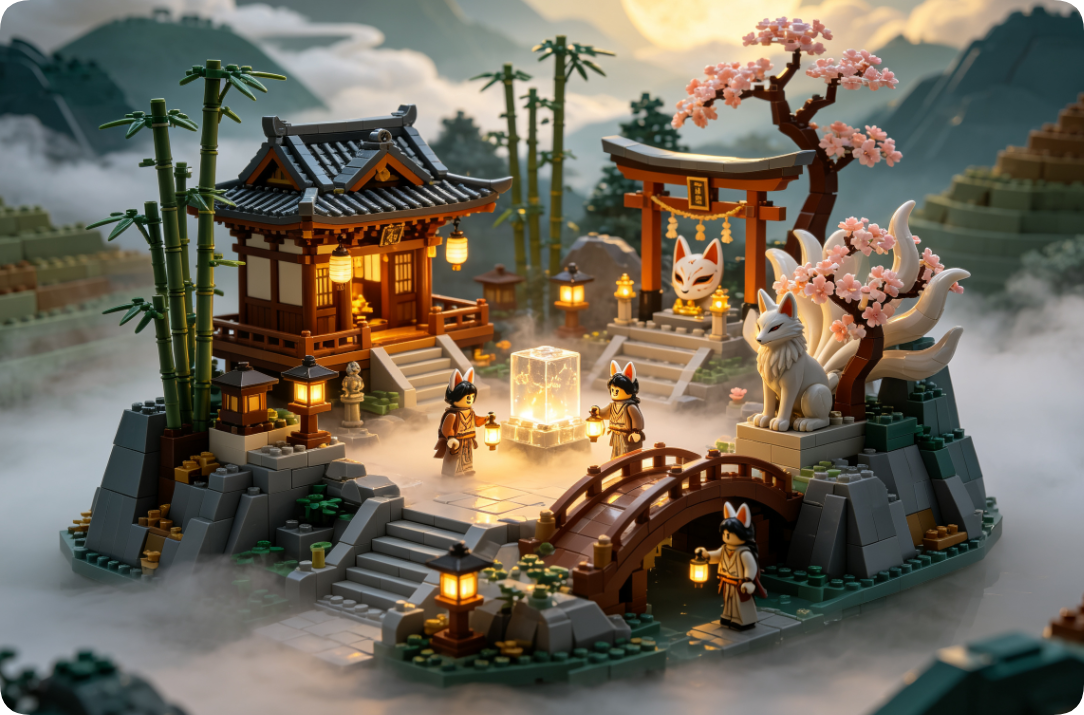
Step 5: Create Depth and Atmosphere
A flat scene reads as a model. A layered scene pulls viewers in. Use these techniques to add dimension.
Build in Foreground, Midground, and Background
Arrange elements at three depths. Small details up front, main buildings in the middle, and taller structures or scenery at the back. This layering mimics how real landscapes recede into the distance.
Play with Height
Bridges, raised walkways, and multi-level buildings break up a flat horizon. A fox spirit perched on a rooftop adds vertical interest and reinforces its mythical, otherworldly nature.
Consider Lighting
If your set includes light elements—or if you add aftermarket LED kits—place them to create mood. A single warm glow inside a shrine transforms the entire atmosphere. Lantern light along a pathway suggests evening and invites the eye to follow.
Key takeaway: Depth is what makes viewers say "wow." Three layers and a few height changes do more than any single fancy technique.
Step 6: Photograph and Share Your World
Your build isn't truly finished until you've captured it. Good photos preserve your work and let you share it with the community.
- Shoot at eye level with your minifigures. Low angles make scenes feel epic.
- Use soft, directional light from a window or lamp to create natural shadows.
- Fill the frame with your scene—crop out the messy desk behind it.
- Try storytelling shots. Focus on a single vignette rather than the whole build for a more cinematic feel.
Curious about the team and philosophy behind these designs? Learn more about craftblockworld and the thinking that shapes each folklore-inspired collection.
Expert World-Building Tips
A few habits separate casual builders from true scene creators:
- Keep a "parts bin" of leftover pieces. Spare plants, tiles, and small elements are gold for custom details.
- Study reference images. Look at real folk villages, shrines, and landscapes for authentic touches.
- Build in stages over several sessions. Fresh eyes catch layout problems that tired eyes miss.
- Document your story. Write a short paragraph describing your village's tale. It deepens your connection to the build and gives you something to share alongside photos.
- Embrace imperfection. Perfectly aligned scenes look sterile. A little asymmetry reads as life.
Bringing Folklore to Life
What makes an Ancient folklore set so rewarding is the cultural richness behind it. Fox spirits, or huli jing in Chinese tradition and kitsune in Japanese lore, are among the most beloved figures in East Asian mythology. They're clever, magical, and morally complex—sometimes tricksters, sometimes guardians.
Building a village around these creatures connects you to centuries of storytelling. When you understand the symbolism—foxes as messengers, shrines as sacred thresholds, lanterns as guides for wandering spirits—your scene gains authenticity that viewers feel even if they can't name it.
This is the deeper appeal of story-driven building. You're not just assembling plastic. You're recreating a myth, adding your own interpretation, and passing that story along to everyone who sees your finished work.
Explore the full range of folklore and mythology-themed collections at craftblockworld and find the set that sparks your next world-building adventure.
Common Mistakes to Avoid
Even experienced builders trip up on story-driven projects. Watch for these:
- Skipping the planning phase and losing narrative focus halfway through.
- Starting with buildings instead of terrain, leaving scenes feeling floaty and disconnected.
- Overcrowding the scene until key details get lost.
- Ignoring sightlines, so viewers don't know where to look.
- Forgetting to photograph your work before repurposing the pieces.
Start Building Your Own Myth
A story-driven Spirit fox village is more than a model—it's a small world you get to author. With a clear concept, thoughtful terrain, characterful buildings, and layered details, you'll create a scene that draws people in and invites them to imagine the tale behind it.
Plan your story first. Build the ground before the buildings. Give every figure a moment, and layer your scene for depth. Then capture it and share it with a community that loves original, imaginative work.
Your myth is waiting. Time to build it.
Frequently Asked Questions
What makes a mythology-themed set good for story-driven building?
Folklore and mythology sets come with built-in narrative hooks—shrines, mythical creatures, lanterns, and cultural symbols that suggest a larger story. These elements give you natural starting points for scene-setting, unlike purely architectural kits. Mythology inspired blocks encourage you to think about who lives in your world and what happened there, making them ideal for creative, narrative-focused projects.
Do I need advanced skills to build a story-driven scene?
No. World-building is about intent, not difficulty. Even a beginner can create a compelling scene by planning a story, building thoughtful terrain, and placing figures with purpose. The techniques scale with your skill level, so you can start simple and add complexity as you grow more confident. Detailed guides and an active builder community make it easy to learn along the way.
How do I keep my scene from looking cluttered?
Restraint is key. Leave negative space so the eye has room to rest, and arrange elements in clear foreground, midground, and background layers. Choose a few standout details rather than filling every gap. Empty space actually strengthens storytelling by drawing attention to your most important elements.
Are these building blocks compatible with other major brands?
Yes. Quality building blocks use standardized dimensions that clip together with mainstream brands. This makes it easy to combine sets, source extra pieces for custom details, or expand your Ancient folklore set with elements from other collections. Mixing kits is a great way to build larger, more personalized scenes.
How can I share my finished village with other builders?
Photograph your scene at eye level using soft, natural light, then post it to online building communities and social platforms. Sharing progress shots, describing your village's story, and asking for feedback are great ways to connect with fellow builders. Original story-driven scenes tend to spark rich conversation and inspire others to try the technique themselves.