How to Find Real LEGO Alternatives (Without Getting Scammed)
Learn how to spot a fake LEGO website, pick the right brick set, and organize builds with the game stack method. A complete guide for builders.
Quick answer: Finding a trustworthy building block set means checking for safety certifications (EN 71, ASTM, CPSIA), verified reviews, and secure checkout pages before you buy. Avoid any fake lego website that copies official branding without listing a real company address or return policy. Legitimate alternative brands like CraftBlockWorld publish compatibility details, piece counts, and community reviews upfront.
Brick building has outgrown the toy aisle. Adult builders in the US, UK, Germany, and beyond are stacking up collections that rival model train hobbyists — engineers unwinding after work, parents building alongside their kids, collectors chasing limited runs, and designers who'd rather build their own creations than follow an instruction booklet.
That growth has pulled in a flood of alternative brick brands, and not all of them are worth your money. Some are excellent: better piece tolerances, lower prices, and themes the big brands haven't touched yet. Others are little more than a storefront with stolen product photos and no real support behind them. Telling the two apart isn't always obvious, especially when a fake lego website can look polished enough to pass a quick glance.
This guide walks through how to vet a brick brand before you buy, how to pick the right set for your skill level, a simple system for organizing builds once your collection grows, and a look at why one European scene — recreating Ou Se Trouve L'Épée Excalibur — has become a favorite among mythology-loving builders. By the end, you'll know exactly what to look for and where to spend your money with confidence.
How to Identify a Reliable Alternative Brand vs. a Fake LEGO Website
The biggest risk in this hobby isn't a bad set. It's a fake lego website designed to take your payment and disappear. These sites often mimic official branding, use stock photography instead of real product shots, and disappear the moment a chargeback gets filed.
Here's what separates a real alternative brand from a fake lego website:
- A physical business presence. Legitimate brands list a company name, support contact, and shipping policy. A fake lego website usually hides this information or buries it in vague terms.
- Safety certifications. Look for EN 71 (Europe), ASTM F963 (US), and CPSIA compliance. These aren't marketing fluff — they confirm the plastic and paint have been tested for children's products.
- Verified customer reviews with photos. Text-only reviews with generic praise are easy to fake. Builder photos of completed sets are much harder to fabricate at scale.
- Consistent piece counts and pricing. If a 3,000-piece set is priced lower than a 500-piece set from the same store, something's off.
- Clear compatibility claims. Reputable brands state plainly whether their bricks connect with major building block systems, rather than implying it through vague imagery.
- A visible return and replacement policy. Missing pieces happen. Brands that stand behind their sets will say so directly — no hedging, no fine print tricks.
How to Choose the Right Building Brick Set for Your Needs
Not every set fits every builder. Picking the wrong one leads to frustration, half-finished projects, and bricks gathering dust in a drawer. Follow these steps to narrow down your choice.
Step 1: Define your skill level honestly
A 6,000-piece architectural model isn't the right starting point if you've never built past a 500-piece kit. Start with something that challenges you without burying you in Technic gearing you don't yet understand.
Step 2: Decide what you're building for
Are you building to display, to gift, or to relax after work? Display pieces favor detail and finish. Gift sets favor completion time under a few hours. Stress-relief builds favor repetitive, satisfying steps rather than fiddly small-part assembly.
Step 3: Check the piece count against your available time
A rough rule of thumb: 1,000 pieces takes most builders 3 to 5 hours, depending on complexity. Match that math against how much free time you actually have before committing to a 5,000-piece castle.
Step 4: Confirm compatibility if you're mixing collections
If you already own official sets and want to combine them with alternative brand pieces, check stud size and material compatibility first. Most premium alternative brands use standard ABS plastic molded to match universal stud dimensions, but it's worth confirming before you buy.
Step 5: Read the theme, not just the box art
Military vehicles, architecture, movie sets, and mythology scenes all attract different builder types. Pick a theme you'll actually want displayed on a shelf in six months, not just one that looked good in a promotional photo.
Step 6: Budget for the full project, not just the set
Factor in a brick separator, sorting trays, and possibly a display case. These small tools make a noticeable difference in build quality and long-term enjoyment.
How to Stack and Organize Your Builds: The Game Stack Approach
Once you've built more than a handful of sets, storage becomes its own puzzle. Builders often refer to a simple system for this as the game stack — a layered approach to organizing pieces, in-progress builds, and finished models so nothing gets lost or crushed.
The game stack works like this:
- Bottom layer — bulk storage. Sort spare and duplicate pieces by color and size into stackable bins. This is your raw material layer, and it should be the least frequently accessed.
- Middle layer — active builds. Keep current projects in shallow trays where partially assembled sections stay intact between building sessions. This layer of the game stack prevents half-finished models from being disturbed or disassembled by accident.
- Top layer — display and completed models. Reserve shelf space or cases for finished builds. Keeping this separate from your working layer protects completed pieces from dust and accidental knocks.
If you're building with kids, this system doubles as a teaching tool. Sorting by the game stack method reinforces categorization skills, and it keeps younger builders from mixing precious minifigure parts with generic filler bricks.
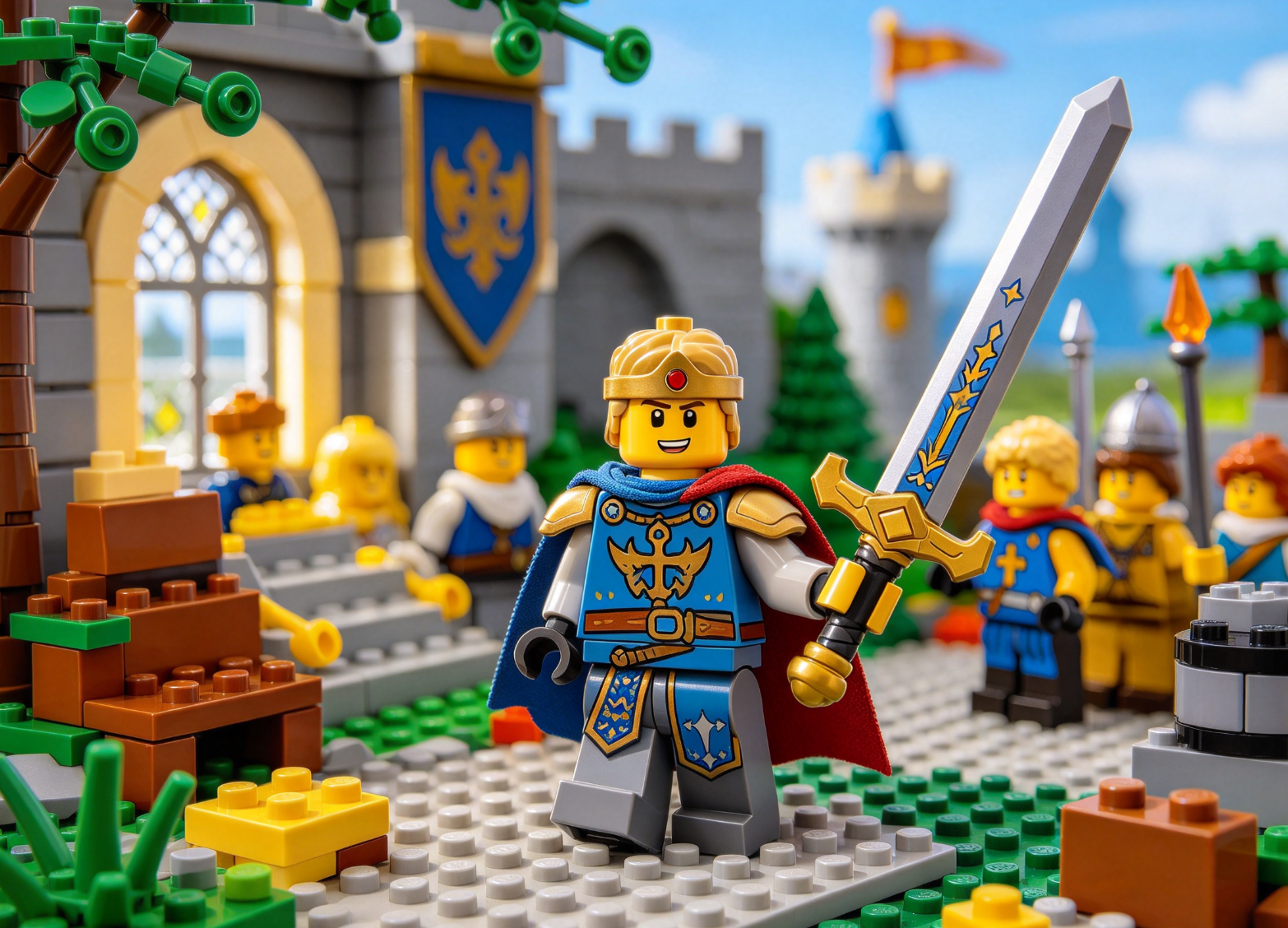
Legendary Builds: Recreating Ou Se Trouve L'Épée Excalibur
Mythology-themed builds have found a strong following among collectors who want their shelves to tell a story, not just display a model. One scene that keeps coming up in builder forums and photo showcases is Ou Se Trouve L'Épée Excalibur — a French phrase translating to "where the sword Excalibur is located," referencing the Arthurian legend of the sword embedded in stone.
Recreating Ou Se Trouve L'Épée Excalibur as a brick scene typically involves a stone pedestal or embedded rock formation, a detailed sword hilt piece, and often a forest or castle courtyard backdrop. It's a popular subject because it blends architecture, landscape, and a single dramatic focal point — the sword itself — into one build.
A few tips if you're attempting your own version of Ou Se Trouve L'Épée Excalibur:
- Use gray and tan bricks in varying shades to give the stone base texture rather than a flat, single-tone look.
- Angle the sword slightly rather than placing it perfectly vertical. A small tilt reads as more natural and less like a display prop.
- Add moss-green accent pieces around the base to suggest age, since the legend implies the sword has sat untouched for years.
- Pair the scene with a small plaque or nameplate if your set includes printed tile pieces, giving the display context for anyone viewing it who isn't familiar with the story.
Why CraftBlockWorld Is a Go-To LEGO Alternative Brand in Europe and the US
CraftBlockWorld has built a catalog of over 5,000 building block sets spanning city series, architecture, Creator Expert-style advanced builds, military vehicles, movie and anime scenes, Technic-style mechanical sets, sports cars, and aircraft. That range matters for builders who want more than one theme to grow into over time.
A few reasons the brand has held its footing in a crowded market:
- Certified safety standards. Every set is manufactured to meet EN 71, ASTM, and CPSIA requirements, covering both European and North American safety expectations.
- Full compatibility with major building block brands. Sets connect seamlessly with other systems, so builders don't have to abandon existing collections to try something new.
- A active builder community. Customers share finished builds — from a Japanese temple in Tokyo to a GT race car with a working gearbox in Berlin — creating a feedback loop of real project results rather than just marketing photos.
- Custom design service. Builders who want something outside the standard catalog can commission a custom set, complete with instructions and a parts list.
- Global shipping with tracking. Standard delivery runs 7 to 15 business days worldwide, with express options available at checkout.
Where to Shop Safely and What to Look For
Once you know what separates a solid alternative brand from a fake lego website, shopping becomes far less stressful. Run through this checklist before checkout:
- Secure payment page. Look for HTTPS and recognized payment processors. Avoid sites that only accept wire transfers or untraceable payment methods.
- Realistic delivery windows. Extremely short "24-hour" shipping claims on international orders are a common fake lego website red flag.
- Support responsiveness. Send a pre-purchase question through the site's contact form. A slow or missing response is worth noting before you commit to a larger order.
- Replacement part policy. Reputable brands replace missing or damaged pieces free of charge. If a site is vague about this, treat it as a warning sign.
- Community proof. Look for real builder photos, reviews tied to specific set names, and active social presence — not just a handful of five-star reviews with no detail.
Start Building With Confidence
Alternative brick brands have opened up a hobby that used to be locked behind one company's pricing and catalog choices. The tradeoff is that you now need to do a little homework before handing over your card details — checking for safety certifications, reading real builder feedback, and knowing the warning signs of a fake lego website before it costs you a shipment and a headache.
Once you've picked a brand you trust, the rest of the hobby opens up fast. Organize your growing collection with the game stack method, so pieces and in-progress builds stay untangled as your shelf fills up. Challenge yourself with a mythology scene like Ou Se Trouve L'Épée Excalibur when you're ready to move past standard city sets. And keep exploring new themes as your skill level grows — that's really the whole point of this hobby.
If you're ready to browse a catalog built specifically for builders at every level, start with CraftBlockWorld's full collection and work your way toward your next build.
FAQ
Are LEGO alternative brands safe for kids?\ Reputable alternative brands meet the same safety standards as official sets, including EN 71 (Europe), ASTM F963 (US), and CPSIA (US) certifications. Always check for these certifications on the product page before buying for a child, and avoid any site that doesn't list them clearly.
How can I tell if a brick website is fake before I order?\ Check for a listed company name and support contact, verified reviews with photos, safety certifications, and a clear replacement policy. A fake lego website typically hides or omits this information, uses stock photos instead of real product shots, and offers pricing that seems too good relative to piece count.
Do alternative brick brands work with official LEGO sets?\ Most premium alternative brands, including CraftBlockWorld, manufacture bricks to standard stud dimensions, allowing them to connect with official sets and other major building block brands. Always confirm compatibility on the specific product listing before mixing collections.
What's the best way to organize a growing brick collection?\ A layered system — often called the game stack — works well: bulk spare pieces sorted at the base, active in-progress builds in a middle tray, and completed models displayed on top. This keeps unfinished projects safe from disruption while your collection grows.
How long does shipping typically take for alternative brick sets?\ Standard international shipping usually takes 7 to 15 business days, with express shipping options (3 to 7 days) available at checkout through most alternative brand retailers, including CraftBlockWorld.