How to Plan and Build a Medieval Brick House Display Using Non-LEGO Brands
Plan, evaluate, budget, and style a medieval brick house display with non-LEGO brands — quality checks, compatibility, sellers, zoning, palette, lighting and detail work.
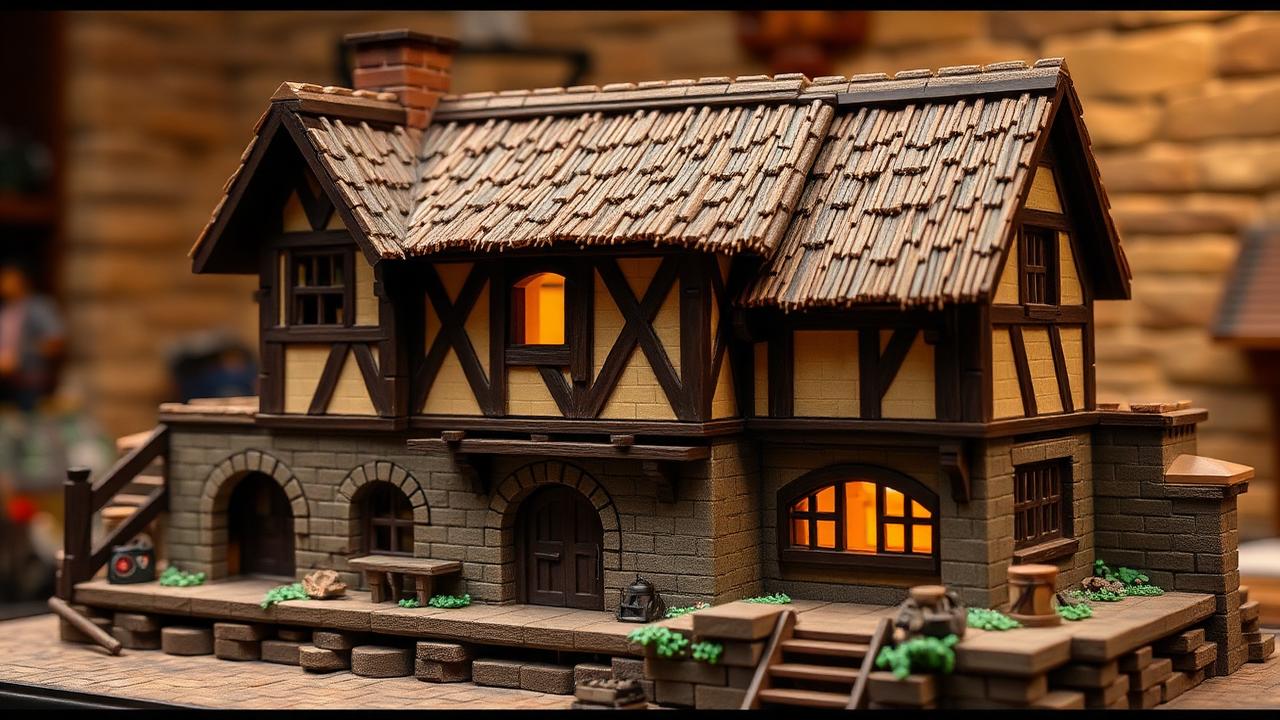
Medieval builds hit different. Stone walls, timber frames, arched doorways, flickering torch details — the aesthetic taps into something deeply satisfying for builders who want texture, history, and narrative in a display. The problem? Official sets rarely deliver the depth serious builders want, and when they do, the price climbs fast.
This guide walks you through every practical step: how to evaluate brick quality, verify compatibility across brands, avoid low-grade products, plan a layered medieval brick house layout, organize your display like a pro, and shop without wasting money. Whether you're building a single cottage or a full village scene, these steps apply.
Why Alternative Brands Make Sense for Medieval Builds
The medieval theme rewards density. Thick walls, irregular stonework, multi-level interiors, stacked terrain — you need parts in high volume. Buying exclusively from official lines is financially unsustainable for anything beyond a small set.
Knock off lego products flood the market, but that term covers two very different things. There's deceptive counterfeiting — sets sold with misleading packaging that impersonates official products — and there are legitimate third-party brands that build openly under their own names. Knowing the difference shapes every buying decision in this hobby.
Reputable alternative brands have caught up in quality for exactly the kind of build a medieval brick house demands. Rough textures, earth tones, brick-pattern elements, arched pieces, wooden plank tiles — these part types are well-represented in the alternative market. Browse our adult building block collection for sets that match this aesthetic.
Step 1 — Define Your Medieval Layout Before Buying a Single Set
Most failed builds start with impulse buying. The medieval theme is especially prone to this because sets look good in isolation but clash when placed next to each other.
Pick One Visual Register and Hold to It
- Rustic village — low stone walls, thatched roofs, muddy ground textures, warm brown and tan tones. Intimate scale.
- Castle town — fortified architecture, cobblestone streets, gate towers, elevated terrain. Grey and dark grey dominate with earthy accents.
- Dark ages / gothic — heavy stonework, pointed arches, gloomy palette, suitable for more dramatic or fantasy-adjacent displays.
Pick one before you buy. Your color palette, part selections, and display height all follow from this choice.
Plan in Zones
- Central dwelling or manor — the structural anchor, tallest point, most detail density
- Surrounding grounds — well, market stalls, garden plots, stone fences
- Road or path system — creates visual flow and directs the eye through the scene
- Perimeter features — forest edge, low walls, watchtower, dungeon entrance
Step 2 — Evaluate Brick Quality for Medieval-Specific Needs
Clutch Power on Irregular Pieces
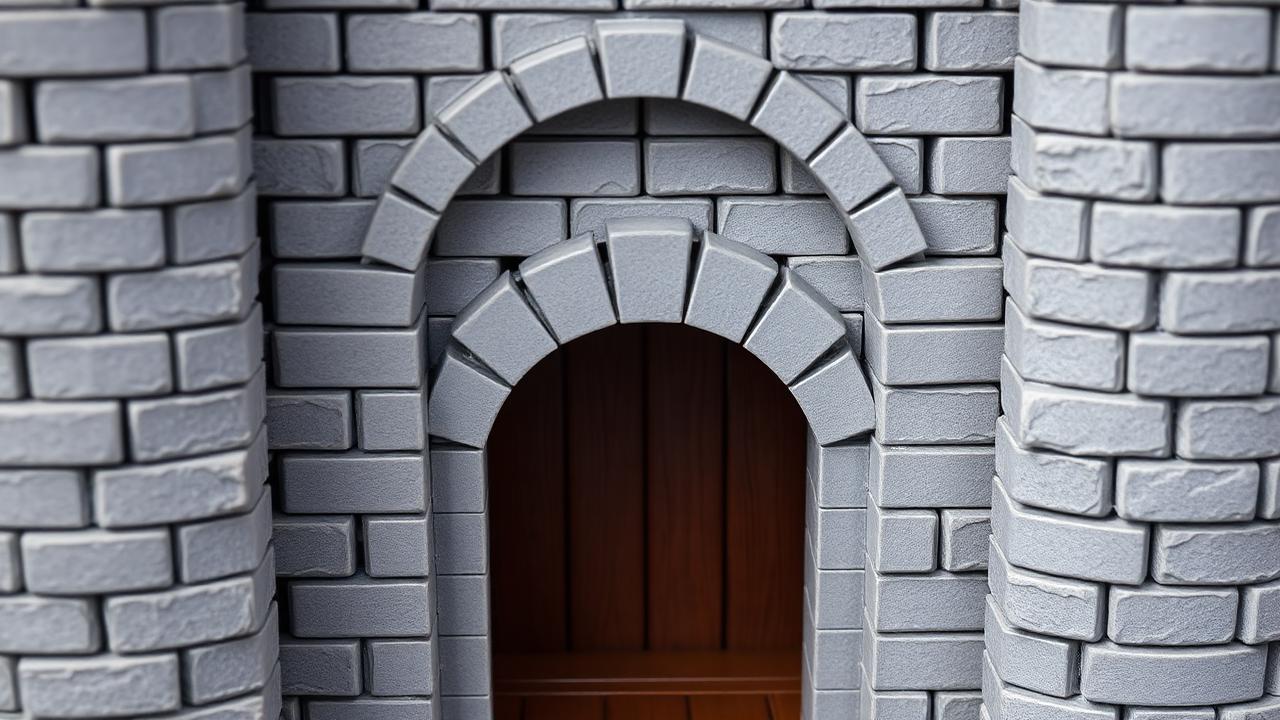
Medieval builds use a lot of non-standard elements — textured wall panels, arch pieces, slope bricks for roofing, 1x1 round pieces for gravel effects. Specifically look for:
- Slope bricks that hold flat without warping
- Arch pieces with consistent curve geometry
- Textured or printed elements with crisp, centered surface printing
- 1x1 plates and clips with solid clutch
Color Consistency Across Orders
Tan, dark tan, dark bluish grey, and reddish brown are the backbone of most medieval builds — request sample orders from new brands before buying at volume.
Baseplate Flatness
Display builds live or die on baseplate quality. Test one before ordering multiples.
Step 3 — Verify Cross-Brand Compatibility
Reputable knock off lego alternatives match official LEGO stud diameter and module height closely. For static display work like a medieval scene, cross-brand mixing is rarely a problem at structural level. Watch out for:
- Technic pins and axles — use one brand per mechanism
- Minifigure accessories — test before buying in bulk
- Flat tiles and printed surfaces — gloss and color may differ between brands
For deeper brand context, see our guide to non-LEGO alternative brands.
Step 4 — Shop Intelligently and Avoid Counterfeits
How to Tell the Difference
Counterfeits: packaging that imitates official LEGO; no manufacturer brand name; listings using "LEGO" deceptively; price 20–40% of retail with no stated brand.
Legitimate alternatives: sold under their own brand (Cada, Wange, MOULD KING, Xingbao); clear product listings; community recognition; stated return policies.
Red Flags on Marketplace Listings
- Price-per-piece below $0.03 with no brand information
- Photos showing official packaging but listing far below retail
- Seller with no purchase history reviews
- "Compatible with LEGO" as the only product identifier
Dedicated hobby retailers and brand-specific storefronts — like our curated product catalog — operate with named brands, clear listings, and builder-oriented service.
Step 5 — Organize Your Display Like a Game Stack
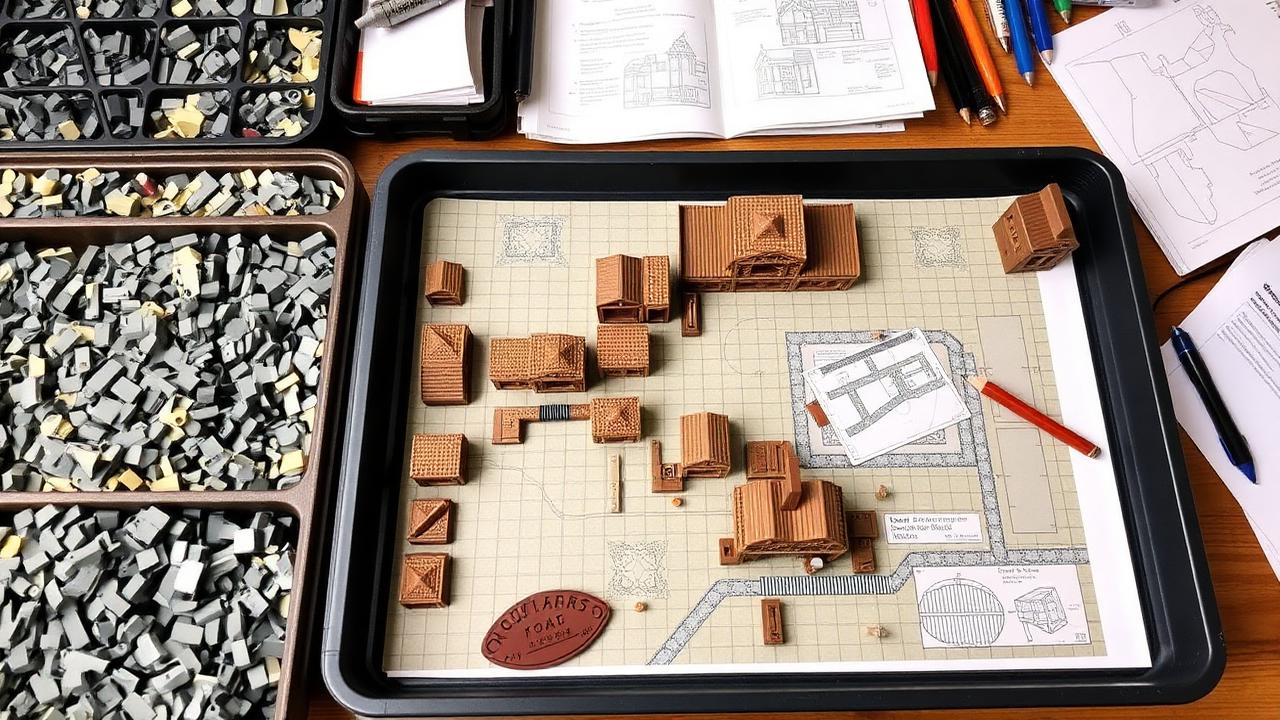
One technique serious builders use for large medieval displays is treating the layout like a game stack — a layered, modular arrangement where each section sits at a defined elevation.
The Three-Layer Framework
- Ground layer — roads, pathways, open ground, water features
- Raised layer — building footprints, courtyard walls, elevated terrain
- Feature layer — central tower, manor roof, tree canopy tops, watchtower peak
Transition Pieces Matter
Plan specifically for sloped terrain bricks, retaining walls, staircase or cobblestone path elements, and foliage to break up flat transitions.
Display Base Options
32x32 or 48x48 compatible base plates work well. Some builders use custom-cut foam or wooden panels as a sub-base for larger sections.
Step 6 — Balance Budget Against Display Ambition
| Tier | Cost per piece | Suitable for |
|---|---|---|
| Budget / unbranded | <$0.03 | Not recommended for structural builds |
| Mid-tier alternatives | $0.04–$0.07 | Solid for full display builds |
| Premium alternatives | $0.08–$0.12 | Focal-point sets, high-detail sections |
| Official LEGO | $0.11–$0.16 | Benchmark reference |
Build in Phases
Phase 1: Central structure. Phase 2: Immediate surroundings. Phase 3: Secondary buildings. Phase 4: Detail work — minifigures, accessories, foliage, lighting.
Step 7 — Detail Work That Elevates the Final Display
Forced Perspective
Build structures at the back of your display at 75–80% scale — they read as farther away and create the illusion of a deeper scene.
Wear and Weathering Through Color
- Dark tan and medium brown tiles scattered into grey stonework at ground level
- 1x1 round bricks in dark brown or dark grey for irregular texture
- Mix light bluish grey and dark bluish grey within the same wall section
Lighting for Atmosphere
Warm-toned LED brick lighting works beautifully for medieval scenes — interior glow through windows, amber torch elements at entries, subtle underlighting at ground level.
Minifigure Placement Tells the Story
A blacksmith at the forge, a guard at the gate, a merchant at the market stall — specific placement communicates the scene's story. For workflow strategies across all themes, see our master adult building block guide.
Conclusion: Build It Zone by Zone
The medieval brick house look is achievable at serious scale with reputable knock off lego alternatives — the legitimate third-party kind that sells openly under real brand names. Define the aesthetic, zone the layout, evaluate brands on clutch quality and color consistency, and organize your display using a layered game stack structure that creates visual depth. Build in phases. Hold to your palette. The display will take shape.
FAQ
Q: Can I mix different alternative brick brands in the same medieval display?
A: Yes — for static display builds, standard brick geometry is consistent across reputable alternative brands. Avoid mixing brands within the same mechanical subassembly. Check colors match across brands before ordering in bulk.
Q: What does "knock off lego" actually mean — is it the same as a counterfeit?
A: Not always. The term covers both deceptive counterfeits and legitimate third-party alternatives sold openly under their own brand names. The distinction is transparency.
Q: How many pieces do I need to start a medieval brick house build?
A: A single well-detailed cottage typically uses 600–1,200 pieces. A farmhouse with surrounding grounds runs 1,200–2,000. Start with a 1,000–1,500 piece set and expand zone by zone.
Q: What is a game stack display arrangement and why does it work for medieval builds?
A: A game stack organizes your layout across defined elevation layers — ground level, raised footprints, and tall feature structures — creating visual depth that reads from any distance.
Q: Which brick colors are most important to have in volume for a medieval display?
A: Dark bluish grey and light bluish grey for stonework, tan and dark tan for earthworks and wood, reddish brown for timber-frame details, medium and dark brown for accents, sand green and dark green for foliage, and translucent orange or yellow for torch elements.