How to Choose and Use Building Blocks: A Complete Guide for Kids and Adults
Building blocks never really went away — they just grew up. While screens dominate most leisure time now, millions of parents, engineers, designers, and collectors across Europe
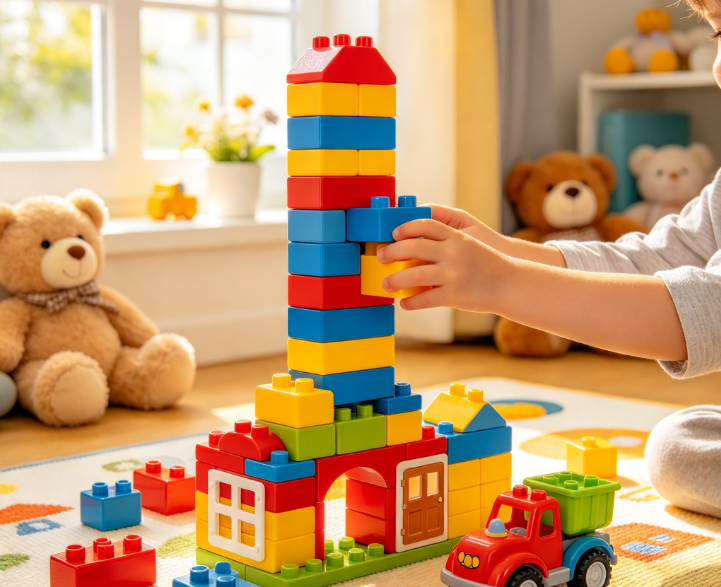
Building blocks never really went away — they just grew up. While screens dominate most leisure time now, millions of parents, engineers, designers, and collectors across Europe and North America are stacking bricks instead of scrolling feeds. Why? Because building blocks offer something digital play can't replicate: tactile creativity, patience, and a finished product you can actually hold.
Whether you're picking out your first set for a five-year-old or starting your own adult collection of skyline replicas, this guide walks through exactly how to choose, use, and organize children's building blocks and advanced construction sets — plus how to get started with construction pour adulte builds if you're entering the hobby later in life.
Why Building Blocks Still Matter in the Digital Age
It's worth pausing on this before diving into the "how." Building sets solve a problem that didn't exist a generation ago: how do you get hands-on, screen-free focus time in a household full of devices?
For kids, that means fine motor skill development, spatial reasoning, and patience — all wrapped in something that feels like play rather than homework. For adults, it's often the opposite problem in reverse: too much screen time, too little tactile, low-stakes creative output. A 3,000-piece build doesn't check email. It doesn't notify you. It just sits there until you finish it, one brick at a time.
This dual appeal — education for kids, decompression for adults — is why the building block market has quietly become one of the most resilient hobby categories in both the US and Europe. CraftBlockWorld sits right at that intersection, with sets built for five-year-olds and 55-year-olds alike.
How to Choose the Right Children's Building Blocks for Your Child's Age
Not all sets are created equal, and matching a set to a child's actual developmental stage matters more than matching it to the box art.
Ages 3–5: Look for oversized bricks with simple, intuitive connections. At this age, the goal is tactile exploration and basic cause-and-effect ("if I push these together, they stay together"). Piece count should stay low — think 20 to 50 pieces — since frustration kills interest fast at this stage.
Ages 6–9: This is where most children's building blocks sets hit their stride. Kids can now follow multi-step picture instructions and handle smaller pieces without constant supervision. Vehicle kits, simple city builds, and themed sets (dinosaurs, space, animals) tend to hold attention well here.
Ages 10–14: Complexity can scale up significantly. Kids in this range are ready for sets with moving parts, multi-stage builds, and even basic mechanical elements like gears or pulleys. This is also the age where interest starts splitting into clear categories — some kids want vehicles, others want architecture, others want fantasy builds.
One practical tip: don't just buy for the age printed on the box. If your child already has building experience, size up. If it's their first set, size down — a frustrating first experience can kill interest in the hobby entirely, and that's the opposite of what you want.
How to Set Up the Perfect Building Space at Home
A dedicated building space does more for long-term engagement than any single set ever will. You don't need a dedicated room — just a consistent, low-friction setup.
Start with a hard, flat surface. Carpet swallows small pieces and makes sorting miserable, so a table or large baseboard works best. Lighting matters more than people expect — overhead lighting casts shadows across detailed instruction manuals, so a desk lamp angled from the side helps enormously during intricate builds.
Keep an empty tray or shallow box nearby for loose pieces that haven't been sorted yet. This sounds minor, but it's the single biggest factor in whether a half-finished build survives until the next building session or ends up vacuumed off the floor.
For families, a shared building table in a common area (rather than tucked in a bedroom) tends to encourage more frequent, casual building sessions — kids build in 15-minute bursts between other activities rather than needing a scheduled "building block time."
How to Use Building Blocks for STEM Learning and Creative Play
Building blocks are, without much exaggeration, one of the most effective informal STEM tools available. Here's how to actually use that potential rather than just hoping it happens passively.
Engineering concepts: Have kids predict whether a structure will stand before they finish it, then test it. This introduces basic load-bearing and stability concepts without ever using those words.
Math through play: Counting pieces, following symmetrical patterns, and scaling a build up or down all reinforce math skills kids are learning in school — without feeling like a worksheet.
Open-ended creativity: Once a child has followed instructions for an official set a few times, encourage them to build something with no instructions at all. This is where real creative problem-solving kicks in, and it's a core reason schools have started incorporating construction toys into STEM curriculums across both the US and Europe.
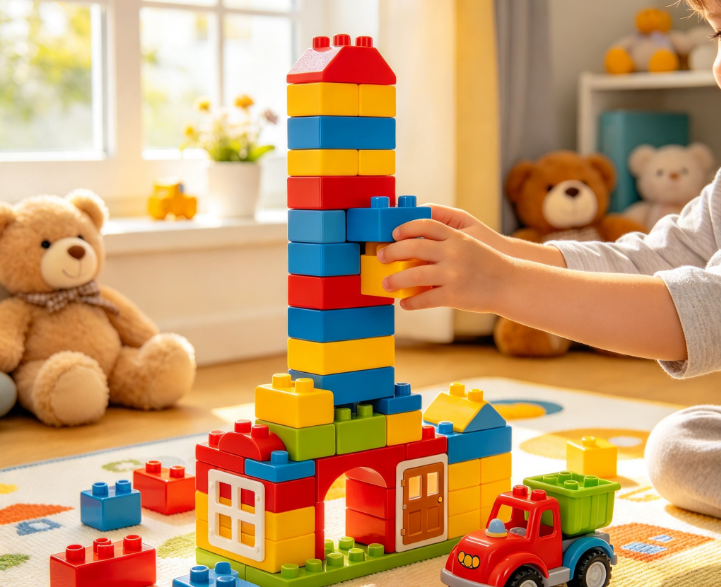
CraftBlockWorld's Technic and Mechanical sets are particularly suited to this — functional gears and motorized elements give kids a physical, visible way to understand mechanical systems that's hard to replicate with a textbook diagram.
How Adults Can Get Into Construction Pour Adulte Hobby Builds
Adult builders aren't a niche anymore — they're one of the fastest-growing segments of the hobby, and the appeal is straightforward: a complex build is a low-stakes way to focus on something analog after a day of screens and meetings.
If you're new to construction pour adulte, don't start with a 5,000-piece architectural replica. Start in the 1,000–2,000 piece range with a subject you genuinely care about — a car you've always liked, a building you've visited, a franchise you grew up with. Motivation matters more than difficulty when you're building the habit.
Set realistic session expectations. Most adult builders don't finish large sets in one sitting — treat it like a TV series rather than a movie. A 30–45 minute session a few evenings a week adds up faster than people expect.
Community matters here too. A huge part of the adult building hobby is sharing finished builds, discussing techniques, and seeing what others have modified or customized. Browse CraftBlockWorld's Creator Expert collection for sets designed specifically with experienced adult builders in mind.
How to Organize and Store Your Building Blocks Collection
Once a collection grows past a few sets, organization stops being optional. Disorganized pieces are the single biggest reason builders — kids and adults alike — abandon the hobby.
Sort by color and size first, not by set. This sounds counterintuitive, but most experienced builders agree that cross-set sorting by color/size makes future builds (especially custom ones) far faster than keeping each set bagged separately.
Use stackable, labeled bins. Clear bins with labeled compartments for common piece types (plates, bricks, specialty pieces, minifigures) save enormous time during both building and cleanup.
Keep instructions digital. Paper manuals get lost or damaged fast. Most building block brands, CraftBlockWorld included, keep digital instruction archives available online, so a lost manual doesn't mean an abandoned build.
For larger collections — especially collector or display pieces — consider a dedicated shelving unit with enclosed glass or acrylic fronts. This keeps dust off finished models and protects them in households with kids or pets.
How to Mix and Match Sets for Custom Builds (LEGO-Compatible Alternatives)
One of the most underused benefits of modern building blocks is cross-compatibility. Most major brands, including CraftBlockWorld, manufacture bricks that connect seamlessly with other leading building block systems — which means your collection isn't locked into a single brand's catalog.
This opens up genuine creative freedom. A city skyline doesn't need to come from one box — pull buildings from an Architecture set, vehicles from a City Series set, and custom landscaping pieces from wherever you can find them. Explore CraftBlockWorld's full product catalog to see how pieces across different themed collections can combine into something no single set offers on its own.
For creators who want to go further, custom design services (like the one CraftBlockWorld offers) let you submit your own concept and receive a full parts list and instruction set — turning a personal idea into something buildable without any new manufacturing or tooling required on your end.
Bringing It All Together
Building blocks occupy a strange, valuable space in a very digital world — they ask for patience, reward attention, and produce something real at the end. Whether you're choosing a first set for a five-year-old, setting up a dedicated building space at home, or getting into construction pour adulte builds for the first time, the fundamentals stay the same: match the set to the skill level, organize as the collection grows, and don't be afraid to mix sets for something entirely your own.
CraftBlockWorld's catalog spans all of this — from beginner-friendly City Series sets to advanced Creator Expert builds designed for serious adult hobbyists. Visit CraftBlockWorld's homepage to browse the full range and find the right starting point for your next build.
Frequently Asked Questions
What age should kids start with building blocks?\ Most children can start with oversized, simple children's building blocks around age 3. True instruction-based building typically becomes manageable around age 6, once fine motor skills and attention span have developed further.
Are CraftBlockWorld sets compatible with other major building block brands?\ Yes. CraftBlockWorld bricks are designed to connect seamlessly with other leading building block systems, making it easy to combine sets from different collections into custom builds.
Is construction pour adulte actually a legitimate hobby, or just marketing?\ It's a well-documented and fast-growing hobby category. Adult builders make up a significant share of the market, drawn to complex builds for stress relief, creative expression, and the satisfaction of completing detailed, large-scale models.
How do I keep a large building blocks collection organized?\ Sort pieces by color and size rather than by individual set, store them in labeled stackable bins, and keep instruction manuals in digital form to avoid losing them over time.
Can building blocks really support STEM learning?\ Yes. Building sets reinforce engineering concepts like stability and load-bearing, basic math through counting and symmetry, and open-ended problem-solving once kids move beyond following printed instructions.