Exploring Top Building Toy Brands Like LEGO for Creative Play
Discover leading building toy brands similar to LEGO. Dive into alternatives offering unique play experiences, educational benefits, and value for money in the US and European markets.
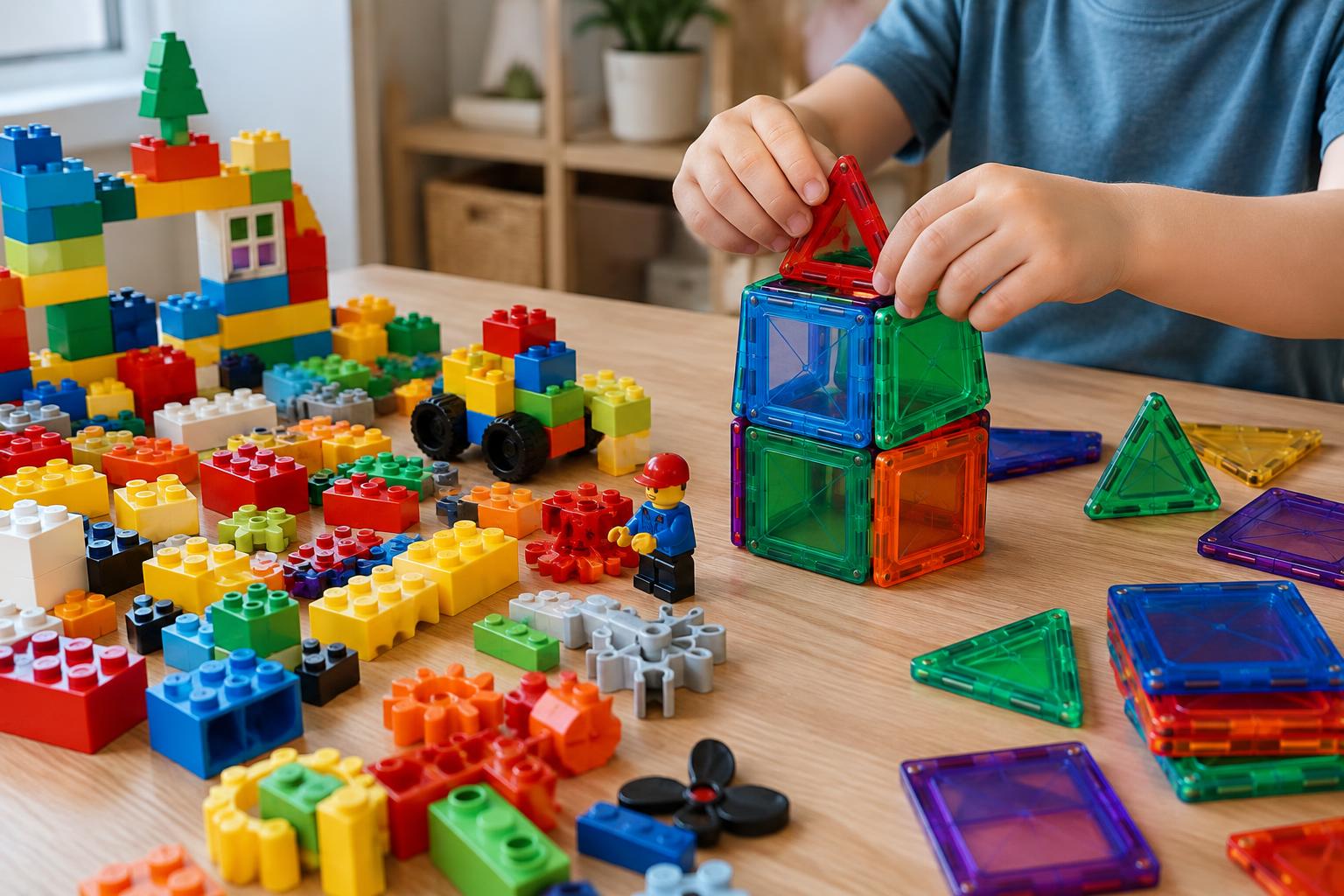
LEGO has long been the undisputed titan of the building toy world, captivating generations with its iconic interlocking bricks and endless possibilities. Its global appeal spans children and adults alike, making it a cornerstone of creative play. However, the toy landscape is rich with innovation, and there are many fantastic brands like LEGO that offer unique building experiences, often at different price points, with distinct themes, or focusing on alternative developmental benefits. For parents, educators, and hobbyists in the US and European markets, understanding these alternatives can open up a world of new creative adventures and provide valuable variety.
Whether you're looking for compatibility with existing LEGO sets, a completely new building challenge, or simply trying to find a more budget-friendly option without sacrificing quality, exploring various building block brands is a worthwhile endeavor. This article delves into celebrated and emerging brands like LEGO, highlighting their unique features, advantages, and what makes them stand out in the competitive market.
The Enduring Appeal of Building Toys
Building toys, regardless of brand, possess an innate educational and entertainment value. They foster crucial skills such as fine motor coordination, spatial reasoning, problem-solving, and creativity. Children learn about engineering principles, basic physics, and structural integrity through hands-on experimentation. Beyond the tangible skills, building blocks also encourage imaginative storytelling and open-ended play, promoting cognitive development and social interaction when shared among peers.
The satisfaction derived from constructing something from individual pieces, following instructions, or creating entirely original designs, is universal. This intrinsic appeal is why the market for building toys continues to thrive, even as digital entertainment options proliferate. The variety offered by different brands like LEGO ensures that there's a perfect building solution for every age, skill level, and interest.
Leading Building Block Brands: Alternatives to LEGO
While LEGO sets the benchmark, numerous other companies have carved out significant niches by offering compelling products. Here's a look at some of the most prominent:
Mega Bloks (by Mattel)
Mega Bloks is arguably one of the most recognizable names among brands like LEGO. Produced by Mattel, Mega Bloks are particularly well-known for their larger, chunky bricks designed for toddlers and preschoolers (Mega Bloks First Builders). These larger pieces are easier for small hands to manipulate, reducing frustration and promoting early motor skill development and sensory exploration. As children grow, Mega Bloks also offers more advanced sets (Mega Construx) that target older children and collectors with intricate designs and popular licenses like Pokémon, Call of Duty, and Halo. The Mega Construx lines often feature highly detailed minifigures and specialized pieces, making them a strong competitor in the collector segment.
- Key Features: Large blocks for toddlers, licensed themes for older children, often more affordable than comparable LEGO sets.
- Target Audience: Toddlers (First Builders), older children and collectors (Mega Construx).
- Compatibility: Generally not compatible with LEGO bricks due to different peg and hole sizes, though some Mega Construx lines may have limited cross-compatibility with certain LEGO elements.
K'nex
K'nex offers a distinctly different building experience from the traditional brick-based systems. Instead of solid blocks, K'nex uses rods and connectors that snap together, allowing for the creation of flexible and dynamic structures. This system is excellent for teaching engineering concepts, physics, and kinematics. Children can build elaborate contraptions, working vehicles, roller coasters, and functional machines, fostering a deeper understanding of how mechanical systems operate.
The open-ended nature of K'nex encourages experimentation and creative problem-solving. Its unique interlocking mechanism allows for curves, bends, and pivots that are challenging to achieve with standard brick systems. K'nex also offers educational lines used in classrooms to demonstrate scientific principles.
- Key Features: Rods and connectors, focus on mechanical engineering and motion, flexible and dynamic creations.
- Target Audience: Children aged 7 and up, particularly those interested in engineering, physics, and moving parts.
- Compatibility: Not compatible with LEGO or other brick systems.
Playmobil
While not a traditional interlocking brick system, Playmobil deserves mention as a significant player in the imaginative and constructive play market, often considered alongside brands like LEGO. Playmobil sets focus heavily on storytelling and role-playing, featuring detailed figures, vehicles, buildings, and accessories that create immersive play worlds. Children can explore themes ranging from medieval castles and pirate ships to modern city life and fantastical creatures.
The emphasis is on assembly of larger pieces and then engaging in narrative play, rather than building with individual bricks from scratch. Playmobil figures are iconic, with their distinct smiles and posable limbs, and the quality of their plastic components is exceptionally high, ensuring durability for years of imaginative adventures.
- Key Features: Focus on imaginative role-play, highly detailed figures and accessories, durable construction.
- Target Audience: Primarily children aged 4-10 who enjoy storytelling and miniature worlds.
- Compatibility: Not compatible with LEGO.
Sluban, Cobi, and Other LEGO-Compatible Brands
For those specifically looking for cost-effective alternatives that are compatible with existing LEGO collections, several manufacturers produce bricks that fit seamlessly with LEGO elements. Brands like Sluban, Cobi, and Lepin (though Lepin has faced legal challenges) are popular choices, especially in European markets, but increasingly available in the US.
- Sluban: Known for its wide range of military-themed sets (which LEGO generally avoids) and cityscapes, Sluban offers good quality bricks at a competitive price. Their minifigures have a slightly different aesthetic but are generally compatible with LEGO accessories.
- Cobi: A Polish manufacturer, Cobi is highly regarded for its exceptional quality and historically accurate military vehicle models, including tanks, planes, and ships. Cobi bricks are fully compatible with LEGO, and their attention to detail and robust construction make them a favorite among military model enthusiasts. Many consider Cobi to be one of the highest-quality LEGO alternatives available.
- "No-Name" & Lesser-Known Brands: The market is awash with various smaller brands, often found on online marketplaces like Amazon or AliExpress. Quality can vary significantly, but many offer decent bricks that are compatible with LEGO, providing an affordable way to expand a brick collection.
When considering these compatible brands, it's essential to look at the reviews regarding brick clutch power, material quality, and instruction clarity. While many offer great value, some may have minor imperfections compared to LEGO's consistently high standards.
Magnetic Building Tiles (e.g., Magna-Tiles, Connetix)
Stepping away from interlocking bricks, magnetic building tiles offer a different dimension of constructive play. Brands like Magna-Tiles, Connetix, and PicassoTiles feature colorful plastic shapes (squares, triangles, hexagons) with magnets embedded along their edges. These magnets allow children to create 2D patterns on a flat surface or build intricate 3D structures that defy gravity.
Magnetic tiles are fantastic for developing spatial reasoning, understanding geometric shapes, and exploring concepts of magnetism. They are often recommended for younger children as they require less dexterity than traditional interlocking bricks, yet offer immense creative potential. Their open-ended nature encourages free play and experimentation.
- Key Features: Magnetic connection, 2D and 3D construction, focus on geometry and spatial awareness.
- Target Audience: Toddlers through elementary school age.
- Compatibility: Most magnetic tile brands are generally compatible with each other, assuming similar magnet strengths and tile sizes.
Plus-Plus
Plus-Plus is a Danish brand that offers a unique interlocking system based on a single shape: a double plus sign (+). These simple, repetitive pieces can be connected in almost infinite ways to create intricate 2D mosaics or complex 3D structures. The beauty of Plus-Plus lies in its simplicity and the challenge of building complex forms from a basic element. It encourages abstract thinking, pattern recognition, and fine motor skills. Available in both "midi" (larger) and "mini" (smaller) sizes, it caters to different age groups.
- Key Features: Single shape, versatile 2D and 3D construction, fosters abstract thinking.
- Target Audience: Children aged 3 to adult.
- Compatibility: Not compatible with other building systems.
Tegu Magnetic Wooden Blocks
For those seeking a more tactile and aesthetically pleasing option, Tegu offers beautifully crafted magnetic wooden blocks. Made from sustainably sourced hardwoods, these blocks incorporate hidden magnets, allowing for fluid and gravity-defying constructions without external connectors. Tegu blocks are smooth, warm to the touch, and naturally inspire open-ended play and artistic expression. They combine the traditional appeal of wooden blocks with the innovative possibilities of magnetism, making them a premium choice for creative development.
- Key Features: Wooden, magnetic, tactile, encourages open-ended artistic construction.
- Target Audience: Children aged 1 and up, and adults appreciating quality wooden toys.
- Compatibility: Compatible within the Tegu system.
Factors to Consider When Choosing Building Toys
When searching for brands like LEGO, several factors should guide your decision to ensure the best fit for your needs:
- Age Appropriateness: Consider the child's developmental stage. Larger, simpler blocks (e.g., Mega Bloks First Builders) are best for toddlers, while intricate sets from Cobi or advanced K'nex designs suit older children and adults.
- Type of Play Desired:
- Structural/Engineering: K'nex, Technic-style LEGO alternatives.
- Imaginative/Role-play: Playmobil, themed sets from Mega Construx or Sluban.
- Abstract/Artistic: Plus-Plus, magnetic tiles, Tegu.
- Traditional Brick Building: Cobi, Sluban, other LEGO-compatible brands.
- Cost and Value: While LEGO is a premium brand, many alternatives offer excellent quality at a lower price point. Consider the cost per piece and overall set value. For example, craftblockworld often features comparisons that help identify great value options.
- Quality and Durability: Good building toys should withstand regular play. Look for brands known for robust plastic, good clutch power for bricks, and durable components.
- Compatibility: If expanding an existing LEGO collection is important, focus on brands that explicitly state LEGO compatibility (e.g., Cobi, Sluban). Otherwise, embrace unique systems that offer different building challenges.
- Theme and Licensing: Many brands offer sets based on popular movies, video games, or historical themes. This can be a significant draw for children and collectors.
- Educational Benefits: Different brands excel in fostering specific skills. K'nex for engineering, magnetic tiles for geometry, and traditional bricks for fine motor skills and spatial reasoning.
- Eco-Friendliness: Some newer brands are focusing on sustainable materials, such as bio-plastics or sustainably sourced wood. If environmental impact is a concern, research these options.
The Evolution of Building Toys and Brands Like LEGO
The building toy market is constantly evolving, with new innovations and designs emerging regularly. Beyond the established names, many smaller, independent companies are entering the scene, often with crowdfunding campaigns or niche offerings. These innovators are exploring:
- Sustainable Materials: Bio-plastics derived from plants, recycled materials, and sustainably harvested wood are becoming more common, catering to an environmentally conscious consumer base.
- Digital Integration: Some building toy brands are incorporating augmented reality (AR) or coding elements into their physical sets, blending traditional play with modern technology.
- Modular Systems: Beyond standard bricks, new modular systems allow for highly flexible and customizable constructions, breaking away from rigid designs.
- Adult Building Sets: The "kidult" market (adults who enjoy toys) is growing rapidly, leading to more complex, detailed, and display-worthy sets from many manufacturers, including unique artistic or architectural models.
Platforms like craftblockworld are excellent resources for staying updated on these trends, discovering new brands, and finding comprehensive reviews that help compare products beyond the mainstream offerings. Finding alternatives to brands like LEGO is no longer just about finding a cheaper option; it's about discovering unique play patterns and educational opportunities.
Conclusion
While LEGO holds a special place in the hearts of builders worldwide, the market is rich with exciting and innovative alternatives. Exploring other brands like LEGO offers an opportunity to discover new building mechanics, different thematic focuses, and unique developmental benefits. From the robust military models of Cobi to the engineering marvels of K'nex, the imaginative worlds of Playmobil, or the tactile beauty of Tegu, there is a vast array of high-quality options available for every builder. By considering factors such as age appropriateness, desired play type, and compatibility, consumers in the US and Europe can confidently navigate this vibrant market. Ultimately, the goal is always to inspire creativity, foster learning, and provide countless hours of engaging, constructive fun. Whether you stick with brands like lego or venture into new territories, the joy of building remains timeless.
Frequently Asked Questions (FAQ)
What are the main alternatives to LEGO building blocks?
Major alternatives to LEGO include Mega Bloks, K'nex, Playmobil, and magnetic building sets like Magna-Tiles. Each offers a distinct building experience and set of characteristics.
Are LEGO alternatives compatible with official LEGO bricks?
Compatibility varies greatly. Some brands, like Cobi or Sluban, are designed to be largely compatible with LEGO bricks. Others, such as K'nex or Playmobil, have unique interlocking systems and are not directly compatible.
What factors should I consider when choosing building blocks other than LEGO?
Consider factors like age appropriateness, type of play (e.g., structural engineering, imaginative role-play), theme availability, brick quality, price point, and whether you prefer proprietary systems or cross-compatibility.
Are building blocks good for child development?
Absolutely. Building blocks are excellent for developing fine motor skills, spatial reasoning, problem-solving abilities, creativity, and even early engineering concepts. They also encourage imaginative play and storytelling.
Where can I find high-quality building block options?
Many reputable toy retailers and online stores carry a wide range of building block brands. Websites like Amazon, Argos, Smyths Toys, and dedicated hobby stores are good starting points. For detailed comparisons and unique discoveries, platforms like craftblockworld can also be incredibly helpful.