The Enduring Appeal of Bloc de Construction in Play and Learning
Discover the world of bloc de construction, their educational benefits, and how these versatile building blocks foster creativity and skill development for all ages.
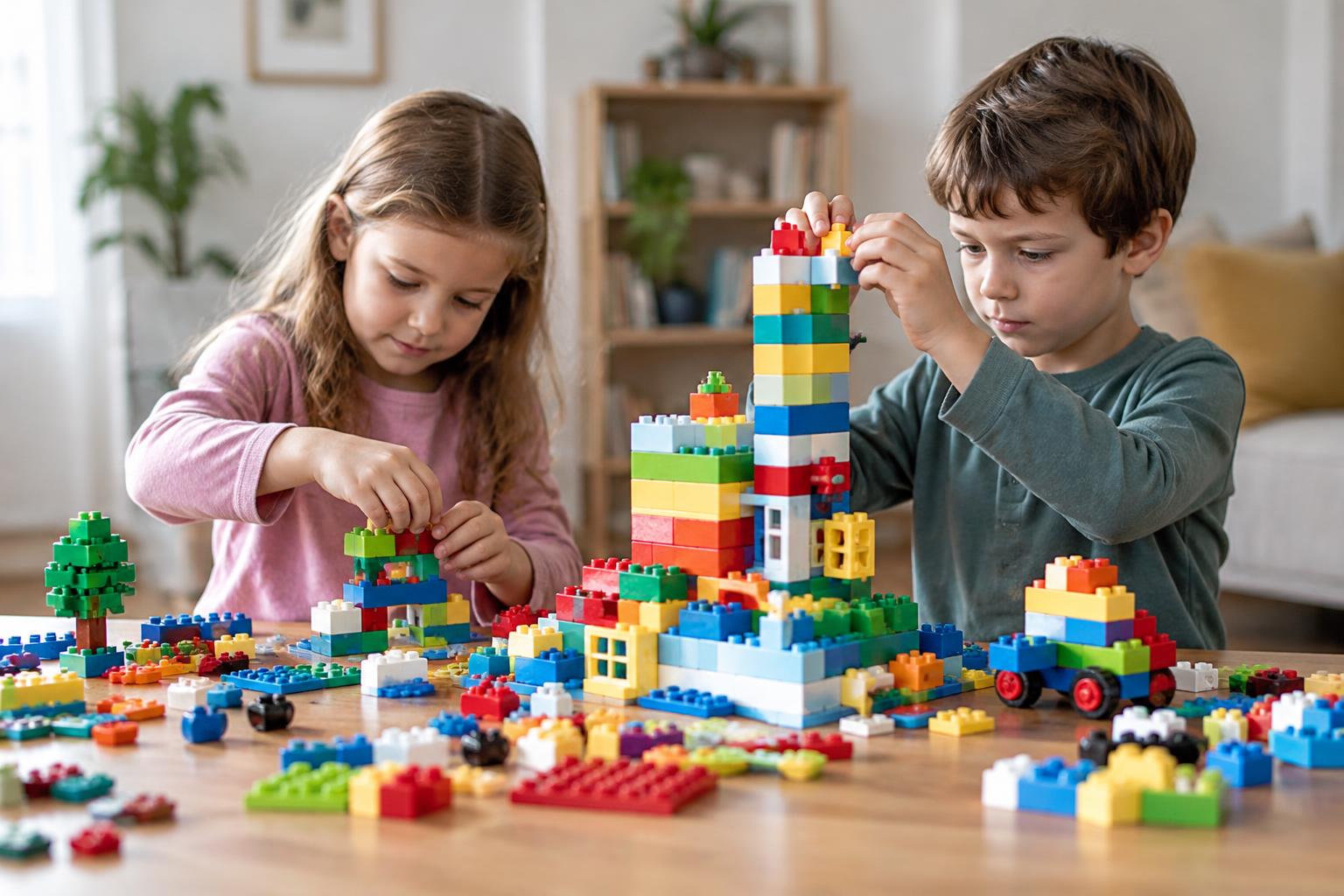
In a rapidly evolving world dominated by digital screens and virtual experiences, the timeless charm and profound benefits of physical toys remain as significant as ever. Among these, bloc de construction, or building blocks, stand out as fundamental tools for development, creativity, and imaginative play. From the simplest wooden cubes to intricate interlocking systems, these versatile components have captivated generations, offering endless possibilities for creation and exploration. This article delves into the multifaceted world of building blocks, exploring their educational value, historical significance, and enduring appeal across all age groups.
The concept of stacking and combining individual pieces to form larger structures is intuitively engaging. It taps into a primal human desire to build, understand, and master one's environment. For children, engagement with bloc de construction goes beyond mere entertainment; it's a critical pathway for developing essential cognitive and physical skills. For adults, it can be a meditative and satisfying pursuit, a tangible break from abstract professional demands. We will explore how platforms like craftblockworld are championing the return to hands-on play, offering a diverse array of building experiences that cater to every builder.
The Foundations of Fun: What Exactly are Bloc de Construction?
At its core, a bloc de construction is a unit designed to be combined with other similar or complementary units to create larger structures. While the term might evoke images of specific popular brands, it broadly encompasses any modular toy designed for construction. These can range from traditional wooden blocks, which have been a playroom staple for centuries, to advanced plastic interlocking bricks that allow for incredibly detailed and robust models.
A Brief History of Building Blocks
The history of building blocks is as old as civilization itself, rooted in the human instinct to construct. Early forms of educational blocks can be traced back to the 18th century, with significant innovations appearing in the 19th century. Friedrich Fröbel, the inventor of the kindergarten, introduced "gifts" – a series of geometric wooden blocks – designed to teach children about shapes, numbers, and spatial relationships. These early pedagogical tools laid the groundwork for the modern construction toys we know today.
The 20th century saw a revolution in material science and manufacturing, leading to the rise of plastic interlocking bricks. These new materials allowed for greater precision, durability, and a wider range of shapes and connections, opening up unprecedented creative horizons for builders worldwide. The popularity of these innovative sets solidified the bloc de construction as a global phenomenon, beloved by children and adults alike.
Beyond Play: The Educational Benefits of Building with Blocks
The value of bloc de construction extends far beyond simply keeping children occupied. They are powerful educational tools that foster a wealth of developmental skills, making them indispensable in homes, schools, and therapeutic settings. Engaging with these toys provides a hands-on learning experience that solidifies abstract concepts through tangible interaction.
Developing Fine Motor Skills and Hand-Eye Coordination
One of the most immediate benefits of playing with building blocks is the enhancement of fine motor skills. Manipulating small pieces, fitting them together, and carefully placing them requires precision and dexterity. This repeated action strengthens the small muscles in the hands and fingers, which are crucial for tasks like writing, drawing, and using tools later in life. Simultaneously, the visual-spatial task of aligning blocks helps to refine hand-eye coordination.
Fostering Spatial Reasoning and Problem-Solving
Constructing a tower, a house, or a vehicle requires children to think in three dimensions. They learn about balance, stability, symmetry, and scale. This active engagement cultivates spatial reasoning – the ability to understand and mentally manipulate objects in space – a skill vital for subjects like geometry, physics, and architecture. When a structure collapses, it's not a failure but a learning opportunity. Children must identify the flaw, analyze what went wrong, and then experiment with different approaches to find a solution, thereby honing their problem-solving abilities.
Stimulating Creativity and Imagination
Unlike toys with a single, predetermined use, building blocks are open-ended. There are no instructions (unless following a specific model) and no right or wrong way to play. This freedom encourages children to unleash their imagination, transforming abstract shapes into castles, spaceships, or fantastical creatures. They learn to visualize an idea and then bring it to life, developing their creative thinking and innovative spirit.
Promoting STEM Learning
Long before children encounter formal STEM (Science, Technology, Engineering, and Mathematics) education, they are introduced to its core principles through construction play. Building blocks inadvertently teach foundational concepts in:
- Engineering: Understanding structural integrity, load-bearing capacity, and design principles.
- Mathematics: Recognizing shapes, patterns, symmetry, basic arithmetic (counting blocks), and fractions (dividing a large block into smaller ones).
- Physics: Experimenting with gravity, balance, force, and motion.
This hands-on, experiential learning makes abstract scientific and mathematical concepts tangible and understandable, laying a strong foundation for future academic success.
Developing Social and Emotional Skills
When children play together with bloc de construction, they learn vital social skills. They collaborate on projects, share ideas, negotiate for specific pieces, and resolve conflicts. This cooperative play fosters communication, teamwork, and empathy. Emotionally, the process of building can instill a sense of accomplishment and pride when a structure is completed, boosting self-esteem and perseverance.
Choosing the Right Bloc de Construction: A Guide for Parents and Educators
With a vast array of building blocks available on the market, selecting the most appropriate set can be daunting. The choice often depends on the child's age, developmental stage, interests, and the specific learning objectives. Websites like craftblockworld offer a curated selection that can help in this decision-making process.
Wooden Blocks: The Classic Choice
Pros: Durable, natural, aesthetically pleasing, often larger for younger hands, excellent for teaching basic geometry and weight distribution. They encourage imaginative, free-form play without the constraints of interlocking systems. Cons: Can be heavy, may not hold together as rigidly as plastic blocks for complex structures, limited in connection types.
Plastic Interlocking Bricks: The Modern Marvel
Pros: Extremely versatile, wide range of colors and shapes, allow for intricate and stable constructions, compatible across different sets from the same manufacturer, highly engaging for complex projects. Cons: Can be expensive, small pieces may be a choking hazard for very young children, can sometimes limit creativity to specific models if instructions are always followed.
Magnetic Blocks/Tiles: The Innovative Option
Pros: Easy to connect and disconnect, great for exploring magnetic principles, ideal for learning about 2D and 3D shapes, allows for quick construction and deconstruction. Cons: Can be more expensive, strength of magnets varies, limited in the types of structures that can be built compared to interlocking bricks.
Foam Blocks: Safe and Soft
Pros: Lightweight, soft, safe for toddlers, often oversized for large-scale construction, excellent for gross motor skill development and imaginative play in a safe environment. Cons: Less durable than other materials, limited in precise construction, can be easily deformed.
When selecting a bloc de construction set, consider the age guidance provided by the manufacturer, the quality of the materials, the variety of shapes and colors, and the overall educational potential. Opt for sets that encourage open-ended play rather than just following instructions, ensuring that the child can truly express their creativity.
Bloc de Construction for All Ages: From Toddlers to Adults
The beauty of building blocks lies in their universal appeal. They are not merely "children's toys"; they offer engaging and beneficial experiences for individuals across the entire age spectrum.
Toddlers and Preschoolers: Sensory Exploration and Basic Stacking
For the youngest builders, large, easily stackable blocks (often wooden or foam) are ideal. At this stage, play focuses on sensory exploration, developing gross motor skills, and understanding basic concepts like cause and effect (e.g., watching a tower fall). They learn about balance and simple spatial relationships through trial and error. The simplicity of the blocks allows them to focus on manipulation and tactile feedback.
School-Aged Children: Advanced Structures and Problem Solving
As children grow, their cognitive abilities expand, allowing for more complex construction. They can follow instructions for intricate models or embark on ambitious free-form projects. This age group benefits immensely from building structures that require planning, structural integrity, and creative embellishment. They engage in more sophisticated problem-solving, learning from mistakes and refining their designs. This is where sets offering diverse pieces, colors, and functionalities truly shine.
Teenagers and Adults: The Art of Master Building
For many, the joy of bloc de construction never fades. Adults engage in highly detailed and challenging builds, often driven by personal interests (movies, architecture, vehicles) or the pursuit of artistic expression. The process can be a relaxing and meditative hobby, a way to de-stress, or even a community activity. Adult builders often appreciate the engineering marvel of complex sets and the artistic challenge of creating custom designs. It’s a testament to the enduring power of these toys that they continue to captivate and challenge even the most experienced builders.
The Future of Building Blocks: Innovation and Integration
While traditional blocks remain popular, the world of bloc de construction is continually innovating. Manufacturers are exploring new materials, incorporating technology, and designing blocks that enhance specific learning outcomes.
- Smart Blocks: Some modern building sets incorporate electronics, allowing children to build circuits, program robots, or create interactive structures that respond to light, sound, or touch. This blends the physical act of building with an introduction to coding and robotics.
- Sustainable Materials: A growing focus on environmental responsibility has led to the development of blocks made from recycled plastics, bamboo, or other eco-friendly materials, ensuring that play can be both fun and sustainable.
- Augmented Reality Integration: Some companies are experimenting with AR apps that bring digital elements to physical block creations, allowing children to interact with their builds in new virtual dimensions.
These innovations ensure that building blocks remain relevant and exciting, continuing to provide valuable developmental benefits in a technologically advanced world. Regardless of the bells and whistles, the core value of hands-on creation with a bloc de construction remains unchanged.
Conclusion
From the simplicity of a stacked tower to the complexity of a meticulously designed replica, the enduring appeal of bloc de construction is undeniable. These versatile tools are more than just toys; they are gateways to learning, creativity, and development for individuals of all ages. They teach fundamental skills, encourage problem-solving, spark imagination, and foster social interaction. In a world increasingly reliant on digital interfaces, the tactile, tangible experience of building with blocks offers a crucial counterbalance, nurturing essential cognitive and physical capabilities. Whether you're a parent seeking to enrich your child's playtime, an educator looking for effective learning aids, or an adult finding solace in creative construction, the world of building blocks, as championed by platforms like craftblockworld, offers boundless opportunities for discovery and accomplishment. Invest in this timeless form of play, and watch as ideas transform into tangible realities, one block at a time.
Frequently Asked Questions (FAQ)
What are the primary benefits of bloc de construction for children?
Bloc de construction enhance fine motor skills, spatial reasoning, problem-solving, creativity, and hand-eye coordination. They also encourage cooperative play and imaginative thinking.
Are bloc de construction suitable for all age groups?
Yes, building blocks are designed for a wide range of ages, from toddlers with large, easy-to-handle blocks to older children and adults who enjoy complex, intricate construction sets.
How do bloc de construction contribute to STEM learning?
They introduce fundamental STEM concepts like engineering principles (stability, structure), mathematics (shapes, symmetry, patterns), and physics (gravity, balance) through hands-on experimentation and design.
What materials are commonly used for bloc de construction?
Common materials include wood, plastic (like ABS), foam, and even magnetic components. The choice of material often depends on the target age group and desired play experience.
Where can I find high-quality bloc de construction for my child?
You can find high-quality bloc de construction at reputable toy stores, educational suppliers, and online retailers such as craftblockworld, which specializes in various types of building toys.