How to Build a Steampunk Model Train (Plus a Bamboo House to Match)
Learn how to build a cool steampunk model train and matching bamboo house with brick sets. Step-by-step tips on parts, color, and display.
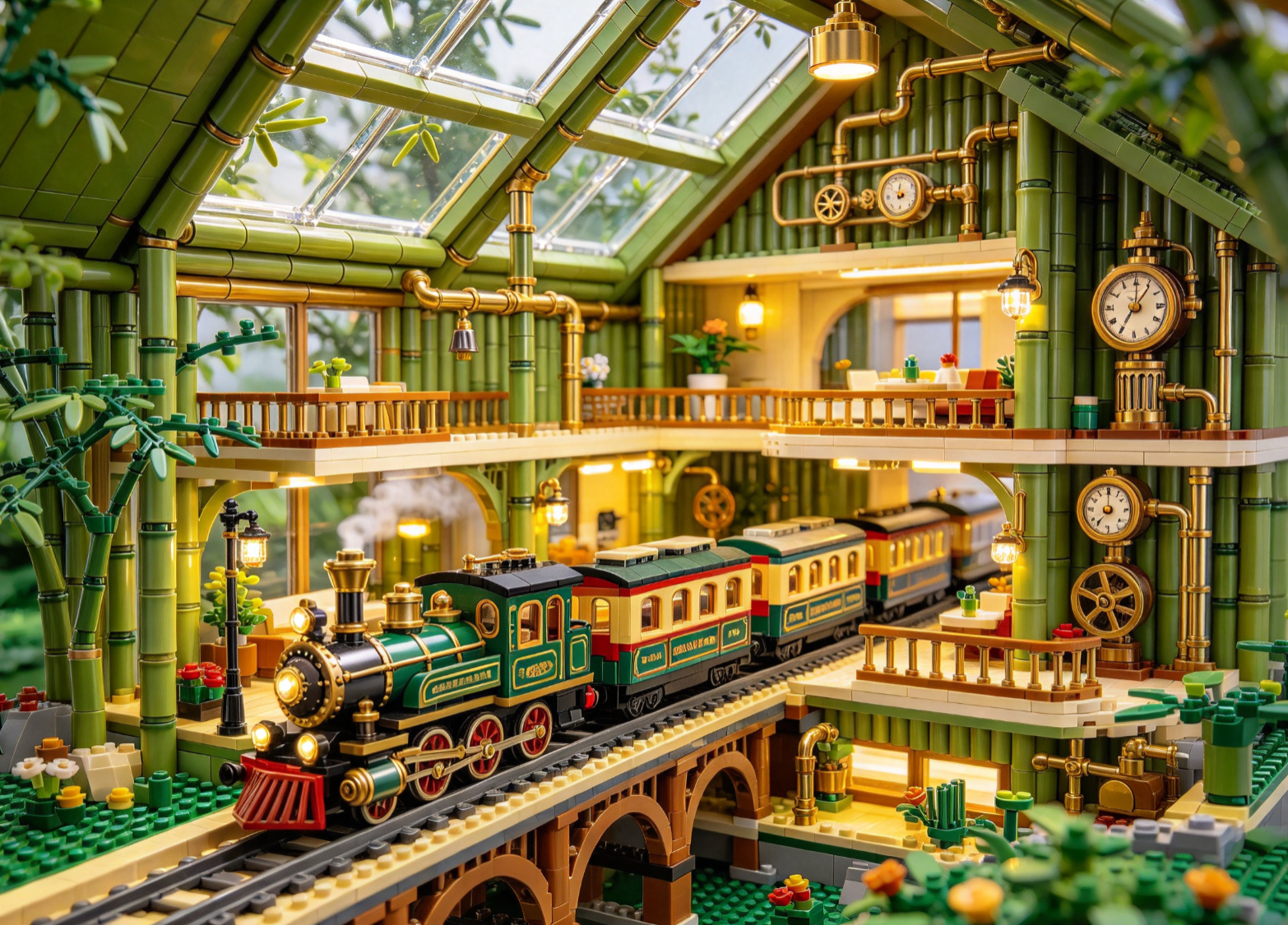
TL;DR: Building a steampunk model train starts with choosing a brick set that has gears, pipes, and brass-toned pieces, then layering in copper-colored details, exposed mechanisms, and weathered textures. Pair it with a maison en bambou moderne-inspired steampunk house using natural wood tones and brass accents for a cohesive display. CraftBlockWorld's Creator Expert and Mechanical & Technic lines both offer solid starting points for this build style.
Steampunk has quietly become one of the most requested themes among adult brick builders, and it's easy to see why. It blends Victorian-era elegance with industrial machinery, giving builders permission to mix brass gears, exposed pipework, and warm wood tones in ways that regular city or architecture sets simply don't allow. If you've been eyeing a cool steampunk build but weren't sure where to start, this guide walks through everything from picking parts to displaying the finished piece.
We'll cover two connected builds: a steampunk model train — the genre's signature project — and a steampunk-inspired modern bamboo house that works as a display companion or standalone build. Both projects use standard, sourceable brick pieces, so you won't need rare parts or custom molds to get the look right.
What Is Steampunk and Why It's Having a Moment
Steampunk imagines a version of history where steam power never gave way to electricity. Think Victorian fashion, brass fittings, exposed gears, and machinery that looks like it was built by hand rather than mass-produced. In the brick-building world, this translates into models with visible mechanical parts, warm metallic colors (copper, brass, bronze), and a deliberately weathered, lived-in look.
Part of the appeal for builders is creative freedom. Unlike a licensed set with a fixed color scheme, steampunk builds reward improvisation. A gear doesn't need to function to look purposeful. A pipe doesn't need to connect to anything to suggest movement. This makes the theme popular with builders who enjoy designing their own models rather than following instructions step by step — a group that overlaps heavily with the creators building custom MOCs (My Own Creations) in online communities.
The theme has also gained traction because it photographs well. The mix of dark metals, warm wood, and brass detailing creates strong visual contrast, which is part of why steampunk builds do well on social media and in community showcases.
How to Choose the Right Brick Set for a Steampunk Model Train
Before buying anything, it helps to know what you're actually looking for in a base set. A steampunk model train doesn't require a train-specific kit — most experienced builders start with a general locomotive or vehicle set and modify it heavily.
Look for these features in a base set:
- Wheel and axle assemblies — Train sets or Technic-style sets with rotating wheels give you a mechanical foundation to build around.
- Gear pieces — Even non-functional gears add instant mechanical detail. Sets from a Mechanical & Technic collection typically include a wide range of gear sizes.
- Brass, copper, or bronze-toned pieces — These colors are the backbone of the steampunk look. If your set doesn't include them, they're usually easy to source separately.
- Piping and hose elements — Flexible tube pieces mimic steam lines and boiler connections.
- A reasonably large piece count — Anything under 500 pieces will limit how much detail you can layer on. Sets in the 1,000–2,000 piece range give you enough raw material to work with.
One practical tip: buy slightly more of your base set than you think you need. Steampunk builds tend to grow in scope once you start adding detail, and running out of a specific brick color mid-build is a common frustration.
Step-by-Step: Building Your Steampunk Model Train
Once you've settled on a base set, the actual build process breaks down into five manageable stages.
Step 1: Build the chassis first
Start with the wheel base and undercarriage exactly as instructed in your base set, even if you plan to modify the body later. A stable chassis makes everything else easier, since you won't be fighting a wobbly foundation while adding heavier detail pieces on top.
Step 2: Rough out the boiler and cab shape
Steampunk locomotives are usually built around a rounded boiler section and a boxier cab. Use larger, curved pieces for the boiler and stack basic brick shapes for the cab before adding any detail. This gives you a silhouette to work against, so you know where detail pieces will actually be visible.
Step 3: Add mechanical layering
This is where the model starts looking distinctly steampunk. Attach gears to the sides of the boiler, even purely decorative ones. Run flexible tubing from the boiler to the wheel assemblies to suggest steam lines. Layer small cylindrical pieces to imply pistons or pressure valves.
Step 4: Introduce color contrast
Steampunk builds rely on contrast between dark, weathered metal tones and warm brass or copper accents. Keep the main body in darker grays or browns, then use brass-toned pieces sparingly for rivets, trim, and highlighted mechanical parts. Too much brass flattens the effect — it works best as an accent, not a base color.
Step 5: Finish the cab details
Add a chimney stack, a headlamp, and window framing to the cab last. These smaller details tie the whole model together and give it a sense of scale, since they're recognizable train features that anchor the more fantastical mechanical elements.
Taking It Further: Adding Cool Steampunk Details and Finishing Touches
Once the core train is complete, small additions make the biggest difference in pushing the model from "train with brass bits" to genuinely cool steampunk territory.
Consider adding:
- Exposed rivets — Small round plates or studs attached along seams suggest riveted metal plating, a signature steampunk texture.
- A weathered paint effect — If you're comfortable with light custom painting on ABS pieces, a thin wash of dark brown or black over brass tones mimics age and rust. Test on a spare piece first.
- Asymmetrical pipework — Real steampunk designs rarely look symmetrical. Running pipes at slightly different angles or lengths on each side makes the model feel hand-built rather than manufactured.
- A driver figure in period costume — A minifigure in Victorian-style clothing, if your set includes one, reinforces the era and gives the model a sense of story.
- Smoke or steam effects — Translucent white or gray pieces stacked above the chimney can suggest steam without needing any moving parts.
How to Design a Modern Bamboo House in Steampunk Style
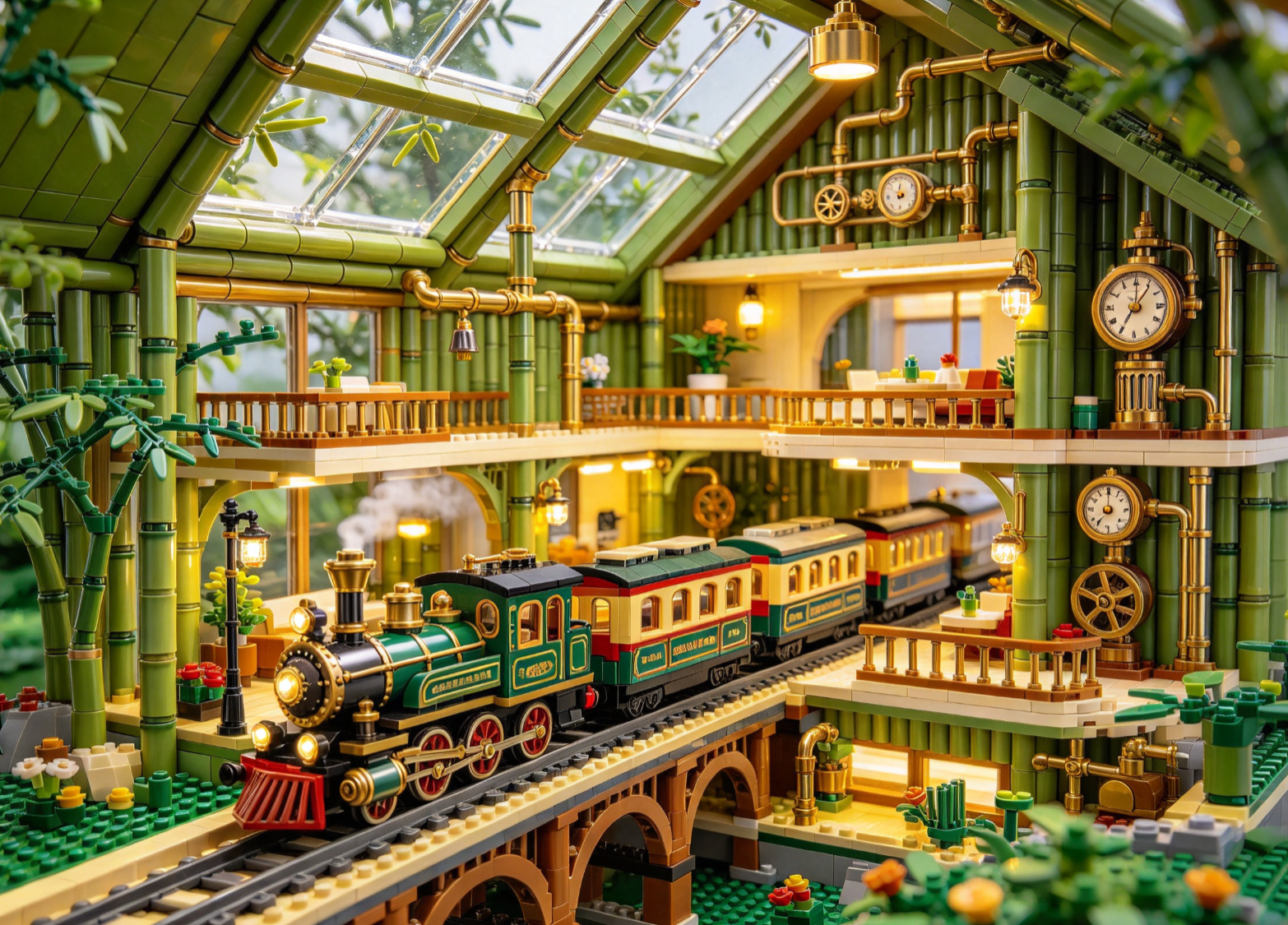
A steampunk train looks even better with a matching structure to display it against, and a modern bamboo house is a surprisingly good pairing. The natural, warm tone of bamboo-style brick pieces echoes the brass and copper of the train, while the clean architectural lines of a modern house provide contrast against the train's mechanical clutter.
This is where the maison en bambou moderne concept comes in — a modern bamboo house redesigned with steampunk touches rather than a purely minimalist look.
Start with the structural shell
Use light tan, sand, or warm brown bricks to mimic bamboo paneling on the exterior walls. Keep the roofline simple and angular, since modern architecture relies on clean geometry rather than ornate detailing. This flat, minimal base gives you room to add steampunk elements without the house looking cluttered or busy.
Layer in steampunk architectural details
Rather than leaving the house purely modern, introduce a few industrial touches:
- Exposed pipe framing along one exterior wall, running vertically like a support structure
- A small rooftop water tower or tank, a classic steampunk silhouette that works well on flat modern roofs
- Brass window frames instead of plain gray or black, tying the house visually to the train
- A greenhouse or workshop extension built from translucent green or clear pieces, suggesting a small mechanical workshop attached to the main structure
Balance warm and cool tones
The biggest design risk with this build is overcrowding the color palette. Keep the bamboo-style tan and brown as your dominant tones, use brass and copper as accents only, and add just one or two darker gray or black elements (like the pipe framing) to ground the mechanical details. This restraint is what separates a maison en bambou moderne steampunk build from a build that just looks disorganized.
For builders who want a broader sense of how architectural sets balance detail and structure, CraftBlockWorld's Architecture category is worth browsing for base shells and proportion reference, even if the finished sets themselves aren't steampunk-themed.
Tips for Displaying and Photographing Your Build
A steampunk steampunk model train and matching house deserve a display setup that does the detail work justice.
For display:
- Place the train on a slightly raised platform or track section rather than flat on a shelf. This gives the model a sense of motion and makes the wheel detailing visible.
- Position the bamboo house at an angle rather than square-on, so viewers can see both the front facade and the side pipework in one view.
- Use warm-toned display lighting (soft yellow rather than cool white) to enhance the brass and copper tones instead of washing them out.
- Shoot during golden hour or with warm artificial light — steampunk color palettes respond much better to warm light than daylight-balanced white light.
- Get low-angle shots of the train's wheel assembly and gearing; this is usually the most detailed part of the build and often gets skipped in favor of wide shots.
- Include a partial shot of both builds together to show the color and material relationship between the train and the house.
Why CraftBlockWorld Is the Go-To LEGO Alternative for Steampunk Builders
Steampunk builds demand a wide color palette, a large piece count, and access to detail pieces that aren't always included in themed sets. CraftBlockWorld's catalog of 5,000+ building block sets spans Creator Expert, Mechanical & Technic, and Architecture lines, giving builders enough range to source gears, piping, brass-toned bricks, and structural shells without piecing together parts from a dozen different brands.
All CraftBlockWorld bricks are fully compatible with major building block brands, so mixing pieces from different sets — a near-requirement for custom steampunk builds — works without compatibility issues. Sets meet EN 71, ASTM, and CPSIA safety standards, which matters for builders working alongside younger family members on collaborative projects.
For builders who want to go beyond a single train or house, CraftBlockWorld's blog has additional steampunk-specific guides, including a walkthrough on building a Lego Old West scene with a steampunk locomotive that pairs mechanical detailing with a Western theatre backdrop — useful reference for anyone planning a larger steampunk diorama.
Custom design support is also available for builders who want a specific steampunk model built to their own specifications, with full instructions and a parts list provided.
Bring Your Steampunk Vision to Life
A steampunk model train and a matching maison en bambou moderne aren't projects you finish in an afternoon, and that's part of the appeal. Both builds reward patience — testing gear placement, adjusting pipe angles, and finding the right balance of brass against wood tone until the whole scene feels cohesive rather than assembled.
Start with a solid base set, build the structural shell first, and add mechanical or architectural detail in layers rather than all at once. The result is a display piece that looks handcrafted, tells a small story, and holds up to close inspection — exactly what makes cool steampunk builds stand out in a shelf full of standard sets.
Frequently Asked Questions
Do I need a train-specific brick set to build a steampunk model train?\ No. Most builders start with a general Technic or vehicle-style set for the wheel and axle base, then modify the body with gears, pipes, and brass-toned pieces to achieve the steampunk look.
What colors work best for a steampunk build?\ Dark grays, browns, and blacks as your base tones, with brass, copper, or bronze used sparingly as accent colors. Overusing brass tends to flatten the contrast that makes steampunk builds visually distinct.
How many pieces should I expect to need?\ Sets in the 1,000–2,000 piece range typically provide enough material for a detailed train build. Larger structures, like a matching bamboo house, may need a similar or greater piece count depending on scale.
Can steampunk brick sets be combined with other themes?\ Yes. Steampunk pairs well with Western, Victorian, and architectural themes. Builders often combine a steampunk locomotive with period-appropriate buildings, like the modern bamboo house design covered above.
Are CraftBlockWorld bricks compatible with other building block brands?\ Yes. CraftBlockWorld bricks are designed to connect seamlessly with all major building block brands, which makes it easier to source specific colors or detail pieces from multiple sets for a custom steampunk build.